Amid a turbulent week for global fixed-income markets, the Gulf Cooperation Council (GCC) nations have demonstrated remarkable resilience against a widespread bond sell-off that originated in Japan and rippled through major economies. While regional debt instruments experienced modest yield increases, the fundamental strength of Middle Eastern economies has contained the financial contagion to manageable levels.
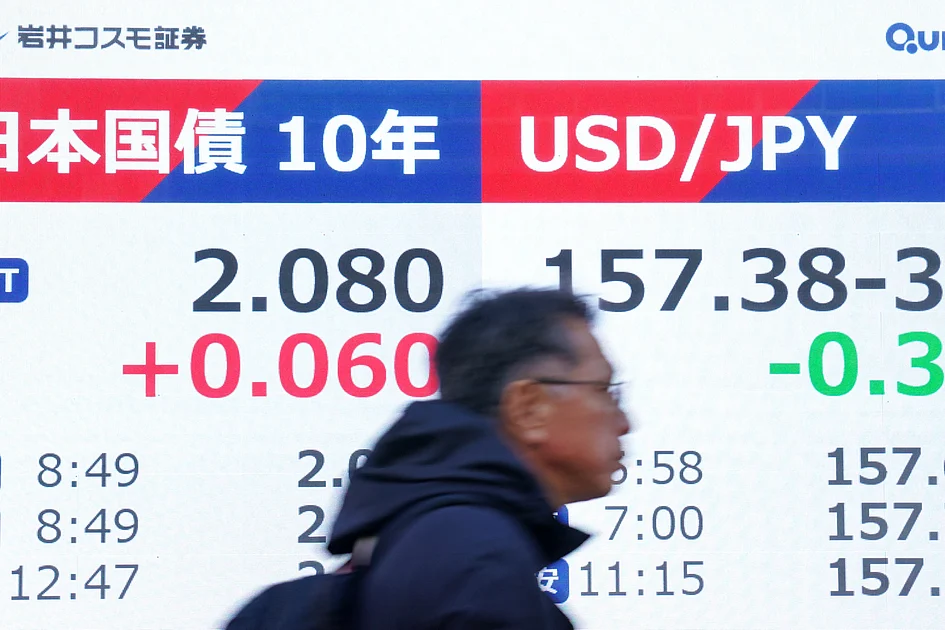
The market volatility commenced when Japanese Government Bond (JGB) yields surged dramatically following Prime Minister Sanae Takaichi’s unexpected announcement of a snap election coupled with ambitious stimulus and tax-reduction proposals. This triggered a chain reaction that subsequently impacted US Treasuries and European sovereign debt, creating one of the most significant fixed-income disruptions in recent months.
According to Emirates NBD’s Market Economics analysis, the 10-year JGB yield climbed to 2.296%, representing an 11 basis point weekly increase and nearly 25 basis points since January’s commencement. More dramatically, 30-year Japanese yields escalated by 28 basis points in just one week and approximately 40 basis points year-to-date.
The contagion effect extended to US Treasury markets, where geopolitical tensions exacerbated the sell-off. President Donald Trump’s continued threats of tariffs against European allies contributed to the uncertainty, pushing the 10-year Treasury yield upward by 5 basis points to 4.276% with an 11 basis point increase since January began.
Middle Eastern markets experienced comparatively moderate impact. Saudi Arabia’s 2036 USD bond witnessed a 6 basis point yield increase to 5.026%, while the UAE’s 2034 dollar-denominated bond rose 5 basis points to 4.385%. Türkiye’s 2036 dollar yield demonstrated the most significant regional movement, jumping 7 basis points to 6.872%. A Bloomberg index tracking regional debt declined approximately 0.5% weekly and 0.7% year-to-date.
Critical technical factors contributed to this relative outperformance. The GCC region has witnessed substantial bond issuance in January 2026, totaling $28.4 billion as of January 21st—representing 15% of 2025’s total issuance and significantly exceeding the $21 billion raised during the same period last year. This supply dynamic temporarily pressured prices but reflects robust market access rather than structural weakness.
The fundamental economic architecture of GCC nations provides substantial protection against global financial shocks. Saudi Arabia maintains a debt-to-GDP ratio of merely 33%, while Türkiye stands at approximately 25%—both dramatically lower than advanced economies. Even Bahrain, with a higher debt burden near 150% of GDP, is implementing comprehensive reforms including subsidy reductions, corporate tax implementation, and increased dividends from government-related entities.
Emirates NBD’s analysis concludes that investor confidence will quickly return to regional markets due to the attractive combination of relatively high yields and strong credit ratings. The institution anticipates that GCC spreads will remain near record lows once global conditions stabilize.
Edward Bell, Acting Chief Economist and Group Head of Research at Emirates NBD, emphasized that while global volatility persists, regional credit markets possess the necessary fiscal anchors and policy frameworks to withstand turbulence more effectively than their international counterparts.