Germany’s political landscape, long synonymous with steady, consensus-driven governance, is facing an unprecedented upheaval that threatens to reshape not only domestic politics but also the trajectory of the entire European Union. At the center of this chaos stands Chancellor Friedrich Merz, a former corporate lawyer whose 16-month tenure in office has already cemented his place in German polling history – for all the worst reasons.
With an approval rating plummeting to just 13%, Merz holds the unwanted distinction of being the least popular German chancellor since systematic public opinion polling began. Voter skepticism of his leadership emerged immediately after he took office, and his support has collapsed faster than that of any predecessor. Many German voters dismiss him as arrogant, disconnected from everyday struggles, and unable to deliver on the core promises that brought his conservative Christian Democratic Union (CDU) to power.
The scale of Merz’s and the CDU’s crisis was laid bare in three consecutive regional election defeats over the past two weeks. Preliminary results from Mecklenburg-Vorpommern on Sunday delivered the most humiliating blow yet: the CDU failed to clear the 5% electoral threshold required to win seats in the state parliament, an unthinkable rebuke for a party that has long dominated German regional and national politics.
While the traditional center-right collapses, the nationalist, anti-immigration Alternative for Germany (AfD) has capitalized on voter anger to surge to historic gains. The far-right party, which German federal authorities have partially classified as an anti-democratic extremist movement, emerged as the largest faction in two of the three recent regional elections. In Saxony-Anhalt, it is now poised to enter government – a first for the party since its founding in 2013. Nationally, the AfD now leads all opinion polls, a development that sends deep alarm across Germany given the country’s traumatic legacy of Nazi authoritarianism.
AfD co-leader Alice Weidel seized on the recent gains to declare that her party has displaced the CDU as Germany’s true “Volkspartei” – a catch-all people’s party. The party rejects the far-right label, arguing it is simply the alternative that disillusioned voters have been craving. It accuses Merz of failing on two critical voter priorities: reviving Germany’s once-dynamic but now stagnant economy, the historic engine of European growth, and delivering workable solutions to widespread public anxiety over immigration and public safety.
“It is high time for political change,” Weidel said Monday, echoing a growing sentiment across the country.
Merz’s hold on the chancellorship is now widely seen as precarious. Rumors of an internal party coup to replace him with a more popular CDU figure have circulated for weeks, though no potential challenger has publicly stepped forward, waiting to gauge sufficient support within party ranks. Even if Merz manages to cling to power, analysts agree his political credibility, influence, and room to maneuver within Germany’s fractious coalition government have been permanently eroded.
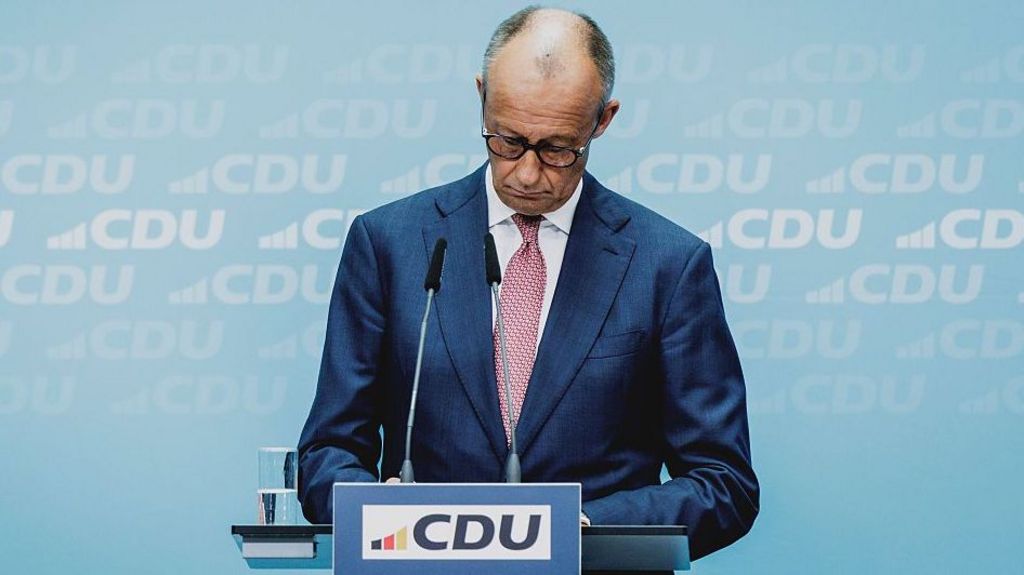
Looking visibly deflated in an uncharacteristically downbeat televised address delivered even before final election results were confirmed, Merz struck a defiant tone Sunday evening, saying he would press ahead with planned tax, welfare, and economic reforms to restore German prosperity. “What we need now is backbone, steadfastness and patience,” he said. But German voters’ patience is wearing increasingly thin.
The current crisis is not an overnight development. For decades after World War II, German voters reliably backed traditional center-left and center-right parties, but public disillusionment has grown steadily for years. Resentment began building after the 2007-2008 global financial crisis, when mainstream parties were seen as prioritizing bank bailouts over struggling families, whose savings and living standards declined steadily.
The 2015 European migration crisis deepened those divides, when Germany welcomed more than one million refugees and migrants. While many integrated successfully, a series of high-profile attacks linked to some migrants – including a foiled 2024 plot to attack a Munich Christmas market with Islamist motives – left many Germans feeling anxious and unprotected.
More recently, Russia’s full-scale invasion of Ukraine in 2022 delivered a crippling blow to Germany’s economic model. The country lost access to cheap Russian energy that its manufacturing and export sectors depended on, while US trade tariffs and rising economic competition from China have further squeezed growth. Today, Germans face some of the highest energy costs in Europe, leaving widespread economic insecurity in their wake.
On the left, the hardline Die Linke party has also made gains, capitalizing on voter discontent with centrist politics to win recent control in Berlin, squeezing the CDU from both sides of the political spectrum.
The ripple effects of Germany’s political upheaval extend far beyond its borders. As the EU’s largest economy, the bloc’s biggest net budget contributor, and the largest international donor to Ukraine, political instability in Berlin has immediate consequences for the entire European project. Amid growing pressure on public finances, Merz has already pushed for deep cuts to wealthy EU member states’ contributions to the bloc’s budget, at a time when Brussels is calling for increased spending on common defense, migration management, and AI technology development.
EU officials in Brussels have grown increasingly concerned about the shifting political landscape, warning that at a moment of rising global threats from Russia and China, energy volatility from Middle East conflicts, and perceived unpredictability from the United States under Donald Trump, European unity is more critical than ever.
This month’s German regional election results also kick off a pivotal year of elections across the EU, with major member states including France, Italy, Spain, and Poland all set to hold national polls. Pollsters predict widespread gains for nationalist, Eurosceptic, and anti-immigration parties across the bloc – a shift that is being closely watched by leaderships in Moscow and Beijing.