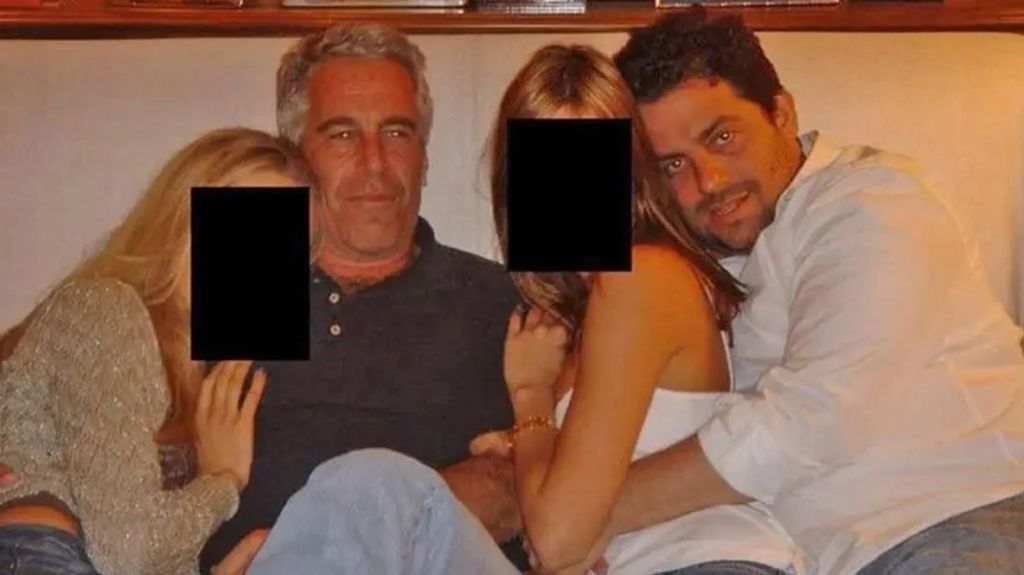
Newly unsealed court documents from the Jeffrey Epstein case have revealed compromising photographs featuring filmmaker Brett Ratner in the company of the convicted sex offender. The images, released by the U.S. Department of Justice on Friday, depict the “Rush Hour” director seated alongside Epstein and two unidentified women on a sofa, with all female identities deliberately obscured for privacy protection.
These documents form part of a massive trove of evidence pertaining to Epstein, who died in federal custody in 2019 while awaiting trial on sex trafficking charges. The release coincides with the controversial debut of Ratner’s latest project, “Melania: 20 Days to History,” a documentary offering behind-the-scenes access to the former First Lady during the transition to her husband’s presidency.
The timing proves particularly challenging for Ratner, marking his professional return since facing multiple allegations of sexual misconduct during the peak of the #MeToo movement in 2017—claims he has consistently denied. His documentary has already faced significant criticism from both film reviewers and political analysts concerning its connections to the Trump administration and its funding sources.
Beyond Ratner, the documents shed new light on Epstein’s associations with numerous high-profile figures, including business magnate Elon Musk, former UK Cabinet Minister Lord Peter Mandelson, Microsoft founder Bill Gates, and Prince Andrew (formally known as Andrew Mountbatten-Windsor). Among the most striking revelations are images apparently showing the former Duke of York in a compromising position with a woman.
The document release also revisits the case of Jean-Luc Brunel, the French modeling executive who was found dead in his Paris prison cell in 2022 while under investigation for allegedly procuring young women for Epstein. Brunel, who co-founded modeling agencies with Epstein’s financial backing, appeared alongside both Ratner and Epstein in previously released photographs from the same location.
Legal provisions mandate that all released files undergo thorough redaction to protect victim identities and preserve ongoing investigations, though victim advocates have noted some survivors’ identities were inadvertently disclosed.