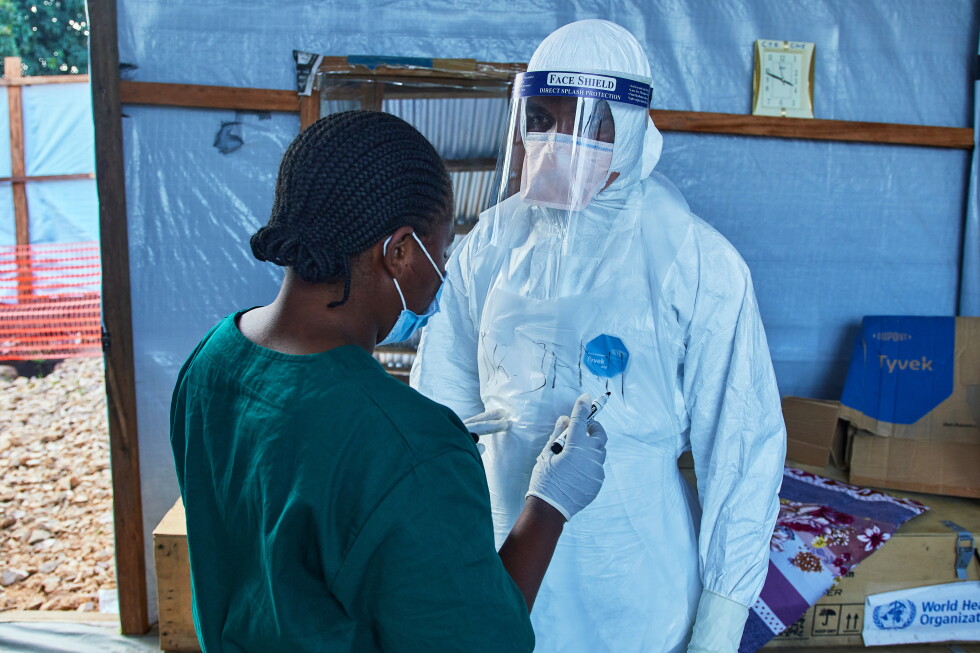
GENEVA — The World Health Organization’s top emergencies official issued a stark warning Tuesday, stating that the ongoing Ebola outbreak in the eastern region of the Democratic Republic of the Congo is still moving faster than international and local response teams can contain, following a firsthand assessment trip to one of the crisis’s hardest-hit areas. Chikwe Ihekweazu, WHO’s emergencies chief, returned this week from Bunia, located in Ituri province, the epicenter of the current outbreak, where he uncovered deeply troubling trends driving the virus’s spread.
According to Ihekweazu, the most worrying observation from his visit is that a large share of newly reported fatalities are people who never accessed formal medical care, passing away in their home communities before they could reach a treatment facility. As of this week, he added, roughly 80 percent of all new confirmed cases are not linked to existing contact tracing lists, meaning they originate from unknown transmission chains that response teams have not been able to track or pre-empt.
The DRC has been fighting this outbreak of the rare Bundibugyo Ebola variant since undetected community transmission began in early May, with no approved vaccine or specific antiviral treatment currently available for this strain. The Africa Centres for Disease Control and Prevention labeled the event the fastest-expanding Ebola outbreak the African continent has ever seen last week.
Congolese health authorities released updated figures Monday showing at least 1,926 confirmed and probable infections across three affected provinces, with a total of 702 recorded deaths. The outbreak has already spilled across national borders, with confirmed cases detected in neighboring Uganda, raising concerns of a wider regional spread. Last week, the U.S. Centers for Disease Control and Prevention announced that a U.S. citizen working for a humanitarian organization in the DRC had tested positive for the virus, though no additional details about the patient’s condition or location were released.
Ihekweazu noted that his trip to Bunia revealed mixed progress: while response capacity has expanded significantly in recent weeks, systemic barriers continue to prevent teams from getting ahead of the virus. Local treatment capacity now stands at nearly 800 beds, with new spaces added every week, and laboratory testing capacity has jumped dramatically from just one operational lab at the start of the outbreak to 14 fully functional facilities. Other core response operations have also seen incremental improvements.
Still, Ihekweazu emphasized that even with these gains, response teams have not managed to overtake the virus’s spread. “Despite our best efforts … we have not caught up in the race,” he told reporters in Geneva.
The response effort has been held back by a range of interconnected challenges, including a critical shortfall in funding, repeated violent attacks on health facilities operating in the region, ongoing armed conflict that makes large parts of eastern DRC inaccessible to response teams, and widespread mistrust of medical authorities among local communities. These barriers compounded this week, when dozens of staff members at an Ebola treatment center in northeastern DRC launched a strike Monday over months of unpaid salaries and performance bonuses, further disrupting care delivery.
The Congolese government only officially declared the outbreak on May 15, after the virus had been spreading undetected through local communities for multiple weeks, the WHO confirmed. Last week, researchers finally launched long-awaited clinical trials for experimental treatments, marking the first formal effort to test targeted interventions against the current circulating strain.