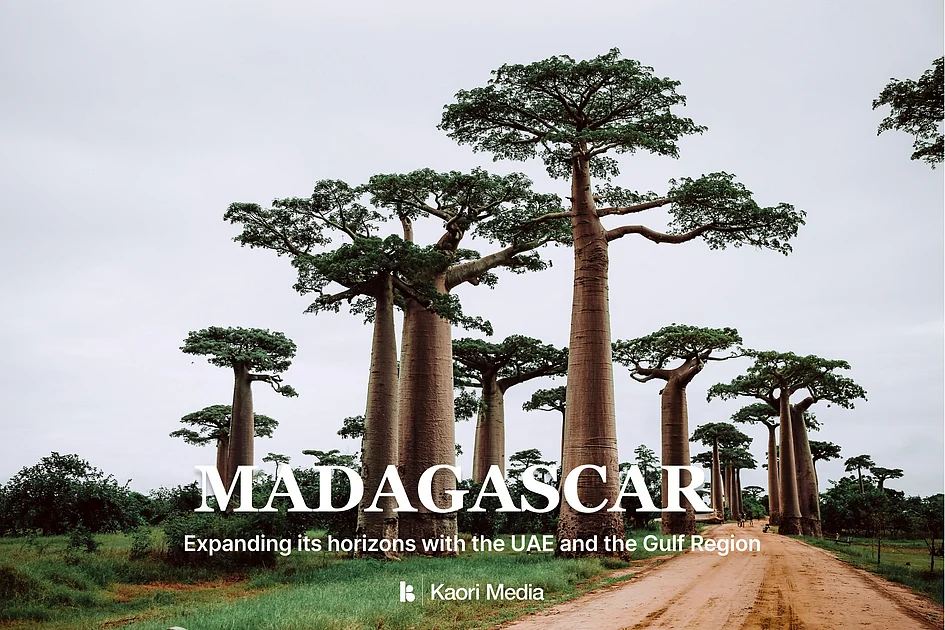
Madagascar is rapidly emerging as a strategic investment destination in the Indian Ocean region, with the United Arab Emirates playing a pivotal role in its economic transformation. The island nation has identified the UAE as a crucial partner in its ambitious development agenda, creating one of Africa’s most dynamic economic corridors that is reshaping trade patterns and stimulating unprecedented investment flows.
Recent economic indicators demonstrate Madagascar’s remarkable progress. According to the latest EDB Madagascar report, foreign direct investment reached a historic peak of $602 million in 2024, driven by vigorous activity across multiple sectors including agriculture, energy, telecommunications, and infrastructure development. The nation’s economic growth rate of 4.4% significantly outpaces regional averages, signaling its emergence as a promising market with substantial potential.
The commercial relationship with the UAE has experienced extraordinary expansion. Non-oil trade between the two nations surged by 90% year-on-year, climbing from $188 million in 2023 to $354 million in 2024. Overall bilateral trade reached $386.7 million, representing a 75% increase that firmly establishes the Emirates as one of Madagascar’s most vigorous trading partners. Enhanced air connectivity has been instrumental in this growth, with Emirates alone transporting 53,000 passengers annually, facilitating both business exchanges and tourism development.
The momentum accelerated during the Dubai Madagascar Business Forum in May 2025, which convened over 60 Malagasy enterprises and more than 100 Emirati business leaders. The event showcased Madagascar’s competitive advantages across multiple sectors including agro-industry, renewable energy, mining, tourism, digital services, and logistics. Participants emphasized the nation’s ambition to achieve emerging economy status by 2030 and solidify its position as a rising star in the Indian Ocean region.
Madagascar’s unique comparative advantages continue to attract global investors. The nation boasts world-renowned vanilla production, rare mineral deposits, exceptionally fertile agricultural land, rich fisheries, and unparalleled biodiversity. To leverage these assets, the government is implementing comprehensive investment incentives, modernized legal frameworks, public-private partnership models, and special economic zones. A strong emphasis on local value addition ensures that natural resource development translates into sustainable job creation and long-term prosperity.
Infrastructure modernization constitutes a central pillar of Madagascar’s development strategy. Major initiatives are underway to upgrade port and airport facilities while enhancing regional and international connectivity. The country has established itself as one of the most digitally advanced nations in its region, with expanding broadband and mobile coverage supporting innovation, entrepreneurship, and digital inclusion.
Energy security represents another strategic priority, with Madagascar targeting doubled electricity access by 2030 through expanded solar, hydro, and wind power generation. Solar mini-grids are already delivering electricity to remote communities, supporting educational institutions, healthcare facilities, and small businesses. Large-scale solar parks capable of producing up to 100MW annually support the national objective of achieving 70% clean energy by 2028. Between 2020 and 2024, renewable energy’s share in the national mix increased from 16% to 28%, backed by international financial institutions and private sector partners.
Tourism remains a powerful economic engine, ranking as the third-largest source of foreign exchange. The sector contributes 14.9% of GDP and sustains over 350,000 direct jobs. In 2024, Madagascar welcomed 308,275 international visitors, generating revenues exceeding $780 million. Robust flight connectivity, including seven weekly Emirates flights, 17 Ethiopian Airlines routes, and 17 weekly connections to Nosy Be, is positioning Madagascar among Africa’s most attractive destinations. Upcoming projects such as the Artisanal Village at Ivato International Airport and growing investments in eco-resorts and luxury hospitality underscore the commitment to sustainable tourism development.
The deepening Madagascar-UAE partnership is unlocking new opportunities in renewable energy, logistics, infrastructure, tourism, and high-value agriculture. As global investors seek new frontiers, Madagascar distinguishes itself as a land of opportunity abundant in natural resources, populated by a dynamic workforce, and committed to a future shaped by innovation, sustainability, and shared prosperity.