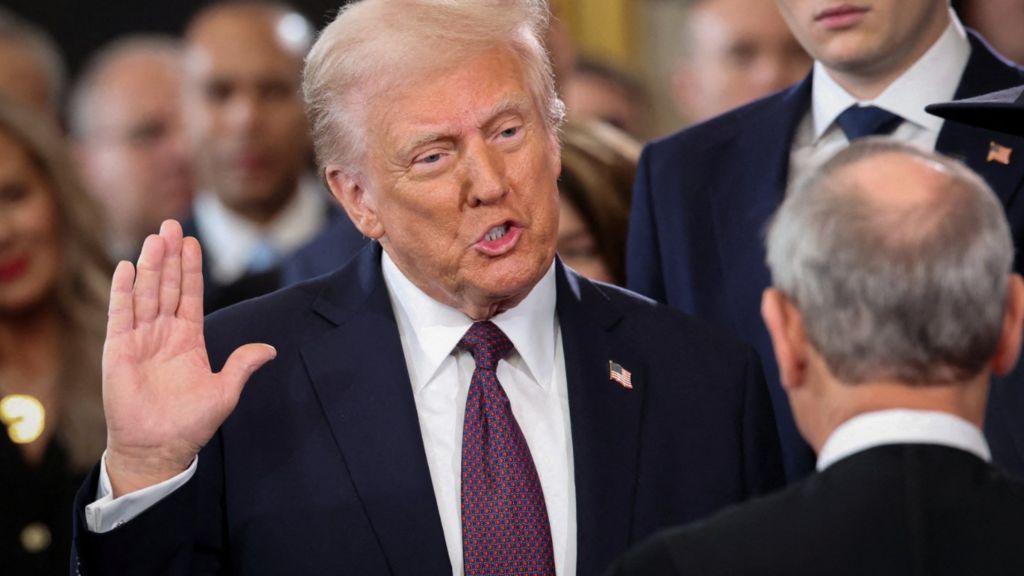
As President Donald Trump marks the first anniversary of his unprecedented second inauguration, the international community faces a paradigm shift in global governance. The administration’s aggressive territorial ambitions, particularly regarding Greenland, have triggered widespread diplomatic consternation and raised fundamental questions about the future of international law.
The Trump presidency has resurrected 19th century expansionist doctrines, with the Commander-in-Chief openly declaring intentions to acquire the world’s largest island through either purchase or coercion. This stance represents a radical departure from post-World War II norms, where allied nations respected territorial sovereignty. The administration’s justification centers on strategic necessity to counter Chinese and Russian influence in the Arctic, though methodology has drawn sharp criticism from traditional allies.
European leaders exhibit divergent responses to this geopolitical challenge. French President Emmanuel Macron has threatened comprehensive trade countermeasures, while British Prime Minister Keir Starmer attempts balanced diplomacy between supporting Greenland’s territorial integrity and maintaining bilateral relations. Italian Premier Giorgia Meloni attributes tensions to communication breakdowns rather than fundamental policy differences.
The administration’s foreign policy approach blends transactional diplomacy with overt power projection. Secretary of State Marco Rubio characterizes Trump’s methodology as action-oriented leadership, contrasting it with traditional political discourse. However, critics including Economist editor Zanny Minton Beddoes describe the approach as ‘mafia-style power politics’ that disregards multilateral frameworks.
This unilateralism has produced some tangible results, particularly in defense spending increases among NATO members and Middle East ceasefire agreements. Yet these achievements occur alongside concerning developments, including public threats against longstanding allies and fluctuating positions on international conflicts. The administration’s recent circulation of private diplomatic communications further undermines conventional statecraft.
As world leaders gather at Davos, Canadian Prime Minister Mark Carney articulated growing concerns about the erosion of international stability, noting that the world faces ‘a rupture, not a transition’ in global governance. With Trump scheduled to address the forum, allies continue employing persuasion, flattery, and pressure to moderate presidential ambitions—though success remains uncertain in this new era of geopolitical calculation.