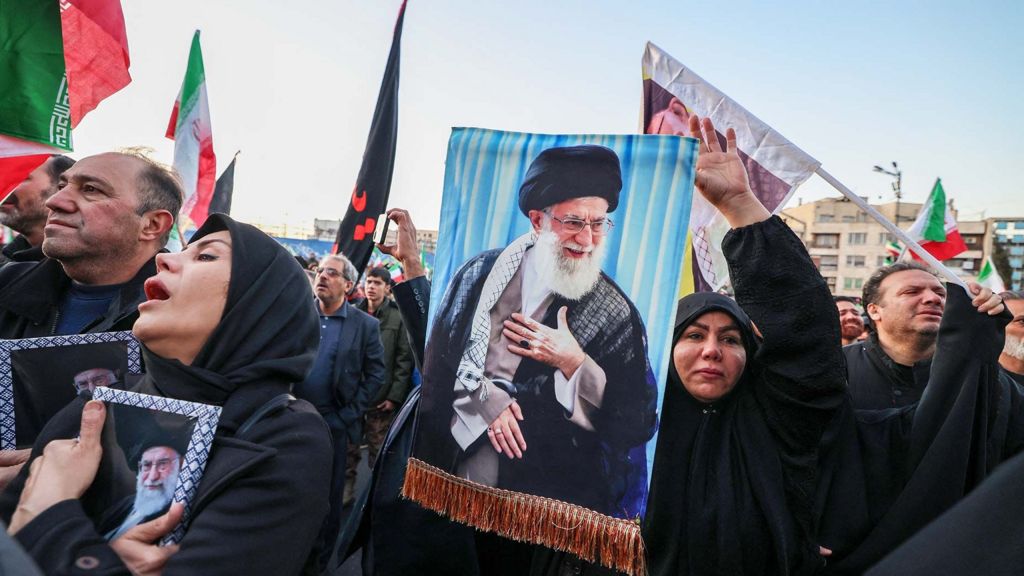
In a seismic development that has reshaped the Middle Eastern geopolitical landscape, coordinated military strikes by United States and Israeli forces have resulted in the death of Iran’s Supreme Leader Ayatollah Khamenei. The 86-year-old cleric, who ruled Iran for 36 years, was reportedly killed during targeted attacks on his compound, though Iranian officials initially denied the reports before confirming his “martyrdom” through tearful state television announcements.
The operation unfolded with precision strikes that caused significant damage to the Supreme Leader’s residence visible in satellite imagery. Following hours of conflicting reports and official denials, the confirmation came only after former US President Donald Trump broke the news on his social media platform. The Iranian government has declared forty days of mourning, with pro-government gatherings already emerging to grieve the leader’s passing.
Contrasting reactions have emerged globally. While government loyalists mourn, verified videos show celebrations erupting in Tehran, Karaj, and among Iranian diaspora communities worldwide, with many expressing hope that this marks the end of hardline Islamic rule. The dramatic events cap years of escalating tensions between Iran and Western powers, particularly following last June’s 12-day conflict that saw Israel eliminate nine nuclear scientists and numerous security officials.
Historical context reveals this contingency was long anticipated. Khamenei had reportedly prepared succession plans, including identifying three senior clerics as potential replacements and instructing the Assembly of Experts to be ready for any eventuality. Speculation about successors includes his son Mojtaba and other senior figures, though the ruling establishment will likely prioritize continuity and seamless transition to maintain their grip on power.
The Supreme Leader’s death represents the culmination of growing challenges to his rule, including massive protests against severe security crackdowns that killed thousands of Iranians. His deeply anti-Western, anti-Israel ideology shaped decades of regional policy, suppressing reform movements and confronting international powers.
As the Islamic Republic enters its most precarious period since the 1979 revolution, questions emerge about whether this leadership change could signal broader directional shifts for the 47-year-old theocratic state. Regardless of who emerges as successor, the primary objective will remain preserving the clerical establishment and powerful Revolutionary Guards control amid a rapidly escalating conflict that continues to unfold in unpredictable and dangerous ways.