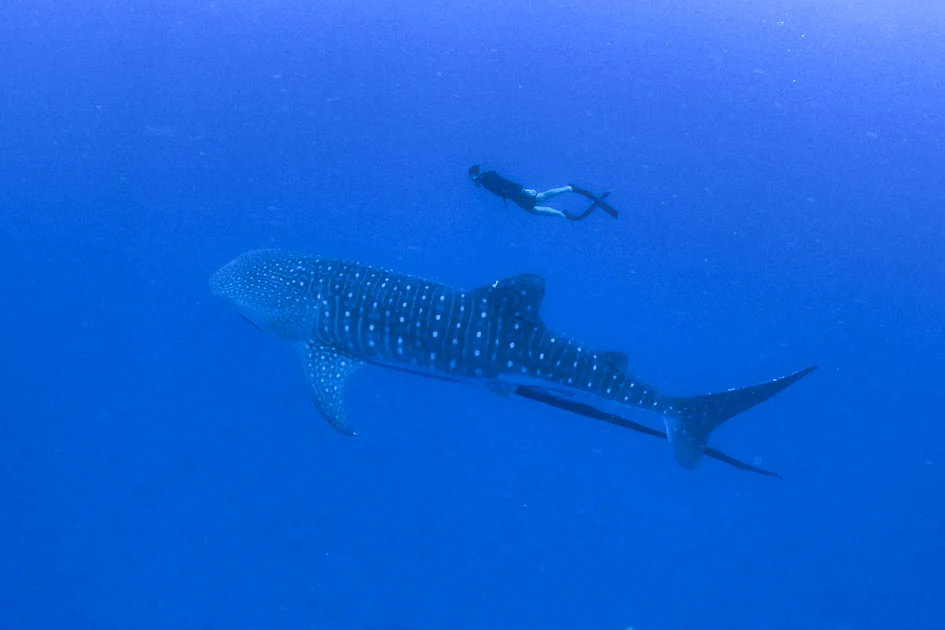
Off the coast of Tanzania’s Shungimbili Island Marine Reserve, an extraordinary encounter with the ocean’s largest fish species is redefining sustainable tourism. At Jumeirah Thanda Island, visitors during migration season (October-February) can participate in carefully managed swimming excursions with whale sharks – creatures reaching lengths comparable to minibuses yet possessing remarkably gentle dispositions.
Marine biologist Rianne Laan, resident expert at the private island sanctuary, emphasizes these filter-feeding behemoths pose no threat to humans. “Despite their imposing size, they exclusively consume small fish and plankton,” Laan explains. “The individuals we observe typically measure 8-10 meters, though the species can grow to nearly 20 meters.”
The operation employs sophisticated tracking methods, with local Tanzanian spotters scanning ocean surfaces for visual cues while researchers monitor shark movements through acoustic and satellite tags. Each whale shark possesses a unique identification pattern – a constellation of white spots functioning as a natural fingerprint.
Island operations manager Maya de Villiers stresses the importance of respectful interaction protocols. “Their primary defense mechanism involves diving to profound depths when disturbed,” she notes. “Maintaining silence and minimal disruption allows for prolonged observation of these magnificent creatures in their natural habitat.”
The experience transcends typical tourism, offering participants profound perspective on marine ecosystems. Sheikh Fahim bin Sultan Al Qasimi, present during recent excursions, contextualized the initiative within broader conservation efforts spanning from turtle rehabilitation in Dubai to marine protection in Tanzanian waters. “We are guests in their home,” he reflected. “This awareness should guide every human interaction with marine environments.”
Beyond the adrenaline of close encounters, the Thanda Island experience demonstrates how luxury tourism can successfully integrate conservation education, fostering humility and respect for oceanic ecosystems while supporting local research and preservation initiatives.