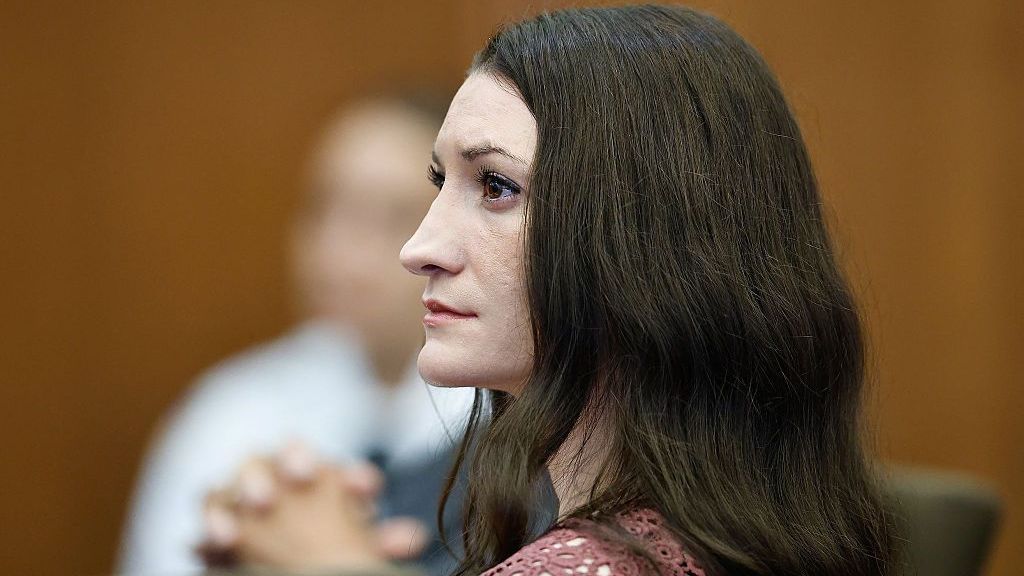
High-profile Massachusetts defendant Lindsay Clancy, the 36-year-old US woman who has acknowledged causing the 2023 deaths of her three young children, Cora, Dawson, and Callan, is scheduled to appear before Judge William Sullivan in a Massachusetts courtroom on Monday for a pivotal hearing that will resolve lingering uncertainty over the future of her high-stakes criminal case. The upcoming session will see prosecutors and Clancy’s defense counsel spar over competing legal paths, after Clancy’s first-degree murder trial collapsed in early September 2026 when a 12-person jury failed to reach the unanimous guilty verdict required under US criminal justice standards, prompting the judge to declare a mistrial.
At the core of the legal clash is the defense’s longstanding push to have all charges against Clancy fully dismissed. Led by veteran attorney Kevin Reddington, the defense team has previously invoked Massachusetts’ Rule 25, a procedural provision that mandates a not-guilty finding if prosecutors fail to present sufficient evidence to secure a conviction at trial — a request that was formally denied by the court in September. Reddington is now poised to argue that a second trial would violate Clancy’s Fifth Amendment constitutional protection against double jeopardy, which bars individuals from being prosecuted twice for the same alleged offense. The defense’s core argument throughout the proceedings has centered on the claim that Clancy was suffering from severe, untreated postpartum psychosis at the time of the children’s deaths, rendering her unable to form the intent to commit murder.
For their part, Massachusetts prosecutors have signaled with increasing clarity that they intend to pursue further legal action to secure what they frame as justice for the three young victims. In a formal court filing submitted last week, the prosecution argued that the mistrial was legally justified by the “manifest necessity” of a deadlocked, irreconcilably split jury, and that dismissing the case on double jeopardy grounds would be a miscarriage of justice. Prosecutors have not ruled out a range of potential outcomes for a second proceeding, including retrying the original first-degree murder charges before a new jury, negotiating reduced lesser charges, or even moving to dismiss some or all counts depending on the state of their evidence and consultation with the victims’ extended family.
Legal experts consulted by the BBC, including New York Law School mental health law professor Heather Cucolo and prominent Massachusetts criminal defense attorney Elyse Hershon, have widely predicted that Judge Sullivan will almost certainly rule the mistrial was properly declared, clearing the way for a retrial. Cucolo noted that the extraordinary national public attention the case has garnered, paired with widespread public demand for a conclusive legal resolution, makes a double jeopardy dismissal highly unlikely. Hershon added that Judge Sullivan, who has previously expressed a desire to move the case forward expeditiously, is expected to press both sides to reserve dedicated blocks of court time for a potential new trial as early as Monday, even if formal procedural motions are still pending. Reddington has already notified the court that he cannot be available to begin a new trial before June 2027 at the earliest, due to existing case commitments in his legal practice.
Plymouth County District Attorney Timothy Cruz has repeatedly emphasized that his office’s priority throughout the extended legal process is honoring the memory of Cora, Dawson, and Callan Clancy, and that prosecutors are conducting full due diligence to evaluate all available legal paths before making a final formal announcement on whether they will pursue a full retrial. Per Cruz’s past practice, a public statement or press conference detailing the prosecution’s next steps is expected to be held shortly after Monday’s hearing concludes. The case has captivated national audiences across the United States for more than a year, sparking widespread public debate over the intersection of maternal mental health, postpartum care access, and criminal liability for acts committed during severe postpartum psychiatric episodes.