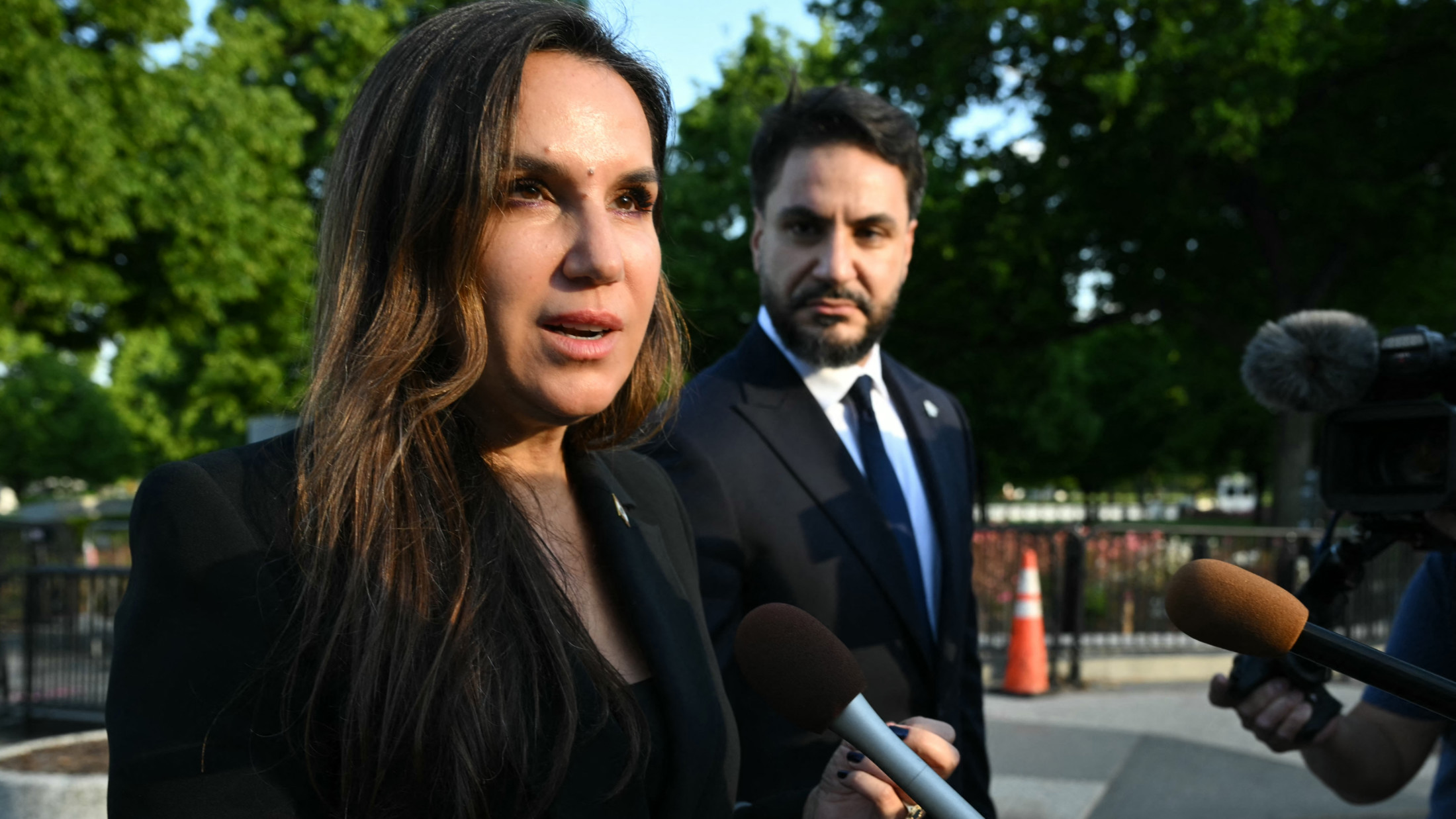
A routine legal complaint filed by a Lebanese attorney against his country’s top diplomat in the United States has ignited a cross-regional political firestorm, unleashing sharp new US pressure on Beirut to repeal a decades-old law that criminalizes direct contact with Israeli citizens. The high-stakes dispute comes just as Lebanese and Israeli military delegations prepare to gather this week at US Central Command headquarters in Tampa, Florida, for the next round of Washington-brokered negotiations, raising questions about the future of Lebanon’s longstanding boycott legislation.
The controversy traces back to a September 27 report from local Lebanese outlet Beirut Review, which claimed that Lebanese Ambassador Nada Hamadeh Moawad had placed a condolence call to her Israeli counterpart in Washington, Yechiel Leiter, after Leiter’s son was critically injured in a car-ramming attack at a checkpoint in the occupied West Bank. The report was quickly picked up by multiple Israeli media outlets, prompting Beiruti lawyer Hassan Bazzi to file an official complaint with Lebanon’s top public prosecutor in late September.
Bazzi’s complaint, which was eventually referred to military court government commissioner Claude Ghanem, did not seek to directly convict Moawad; instead, it asked the Lebanese judiciary to confirm whether the media accounts of the call were accurate. Speaking to Middle East Eye, Bazzi emphasized that as both a sitting ambassador and a member of Lebanon’s official negotiating team with Israel, Moawad’s actions carry unique weight. “She is not an ordinary citizen,” Bazzi said. “An ambassador and a negotiator should be fighting in the name of the Lebanese people and their pain, especially southerners,” who have born the brunt of decades of cross-border conflict. Neither Moawad nor Lebanon’s foreign ministry issued an official denial of the reported call, though Lebanese President Joseph Aoun has publicly defended the ambassador, confirming the contact never occurred and warned that anyone seeking to undermine the US-backed peace process is committing a crime against the Lebanese state.
Lebanon’s 1955 Boycott Law, the legislation at the center of the dispute, has stood for nearly 70 years, imposing penalties of three to 10 years of hard labor for any citizen who engages in contact with Israelis. In recent years, the law has been used to bring complaints against a range of public figures, including popular Lebanese singer Nancy Ajram earlier this 2024. While repealing the law only requires a simple parliamentary majority, no formal repeal legislation has ever been introduced for a vote. The law has taken on new relevance since April, when Moawad and Leiter became key participants in the US-brokered direct peace talks between the two nations. Those talks culminated in a landmark framework agreement signed in Washington on June 26, which outlines an Israeli military withdrawal from southern Lebanon, the deployment of the Lebanese army to the border region, Hezbollah disarmament, and a permanent end to cross-border hostilities.
The US response to Bazzi’s complaint was far swifter and more forceful than the lawyer anticipated, breaking with the typical slow pace of Lebanese judicial proceedings. State Department spokesperson Tommy Pigott called the decision to hear the complaint against an ambassador acting on behalf of her legitimate government “embarrassing,” arguing that Lebanon’s military judiciary should redirect its limited resources toward prosecuting Hezbollah operatives accused of threatening the Lebanese state. The US also labeled Bazzi a “pro-Hezbollah lawyer,” a label he has forcefully rejected, noting he has filed complaints against political actors across the Lebanese spectrum over corruption and security breaches since 2011, with no singular partisan agenda. More notably, a senior US official confirmed to The Times of Israel that Washington is actively considering imposing economic sanctions on the Lebanese judges assigned to hear the complaint, escalating pressure to dismiss the case.
In mid-October, Ghanem dismissed the complaint, ruling that even if the reported call had occurred, it would not qualify as a criminal offense under the 1955 law. The commissioner reasoned that the legislation only applies to commercial transactions with Israeli entities, not private or diplomatic contact. Bazzi has decried this ruling as an extremely dangerous departure from decades of legal precedent, arguing that the boycott law’s first clause explicitly includes “any other type of dealing” that has been broadly interpreted by successive governments and courts to cover cultural, athletic, and diplomatic contact. “This interpretation means that if the contact happened, it is not a criminal offense,” Bazzi said. “We would be opening up very serious security and political breaches by giving Lebanese people licence to contact anyone in the enemy state.” He has called for the investigation to be expanded under Article 278 of the Lebanese penal code, which criminalizes contact with agents of an enemy state.
The legal dispute has supercharged a months-long US campaign to pressure Lebanon into repealing the boycott law entirely. Earlier this year in March, a bipartisan group of US lawmakers pressed US Ambassador to Beirut Michel Issa to ramp up lobbying for the law’s suspension. In April, following a White House-hosted round of negotiations, former President (and current President) Donald Trump told reporters he had been unaware of the law and called for its immediate elimination. “It’s crazy to have such legislation and I will work to put an end to it,” Trump said. A day after Ghanem dismissed Bazzi’s complaint, Secretary of State Marco Rubio raised the issue in a formal phone call with President Aoun, describing the law as “impractical” and arguing it is repeatedly misused for politicized prosecutions that block progress toward peace. Ambassador Issa has echoed that sentiment, saying the law is indefensible amid direct US-sponsored talks, and has been lobbying Lebanese MPs, particularly those from anti-Hezbollah blocs, to support repeal.
Within Lebanon, the push to abolish the law has only garnered a small group of public supporters. Beirut MP Fouad Makhzoumi has called for an immediate suspension, arguing that official peace negotiations require clear legal protection for diplomatic engagement. A small number of anti-Hezbollah commentators and activists have gone further, calling for full outright repeal. However, most of Lebanon’s anti-Hezbollah parliamentary blocs have remained hesitant to publicly back repeal, choosing to defend Moawad without endorsing changes to the boycott law. Kataeb Party official Salim Sayegh said the party sees no need to revisit the ban on contact with the enemy at this stage. Free Patriotic Movement MP Jimmy Jabbour called the issue “not up for discussion at all” under current conditions. Progressive Socialist Party MP Bilal Abdallah noted any debate on the law can only happen after Israel completes its promised withdrawal from Lebanese territory and a formal non-aggression agreement is reached. Hezbollah and its political ally the Amal Movement have refused to engage in any debate on the issue, with MP Waddah al-Sadek noting that most lawmakers are unwilling to open a debate that would trigger a major domestic political crisis.
As the dispute over the law unfolds, the upcoming Tampa talks mark a key shift in the US-brokered negotiation process, moving from diplomatic bargaining to military implementation talks. The discussions will be led by US Marine Corps Major General Joseph Clearfield, with the Lebanese delegation expected to raise persistent Israeli violations of the “pilot withdrawal zones” outlined in the June framework agreement, where Israeli troops were supposed to hand over control to the Lebanese army. Lebanese officials cite ongoing Israeli attacks, cross-border incursions, and the killing of Lebanese civilians as evidence of these violations. According to Lebanese outlet L’Orient Today, Washington and Israel have made direct military-to-military coordination between the Lebanese and Israeli armies a core precondition for moving negotiations forward. At present, the political negotiation track remains effectively frozen, and implementation of the June framework agreement has stalled entirely.
US officials have explicitly called for direct military-to-military communication between the two sides, a requirement that directly conflicts with the long-standing judicial interpretation of Lebanon’s boycott law. For opponents of repeal, the Moawad affair is a clear warning of the pressures that will continue to mount as negotiations progress. Bazzi emphasizes his complaint was filed weeks before the current escalation of the repeal campaign, and was only intended to uphold a longstanding legal principle. That principle is now under growing pressure both at the Tampa negotiating table and from sustained US lobbying in Beirut. “If this call is true, it is a capitulation to the Israelis,” Bazzi said, “and a provocation to our feelings as southerners.”