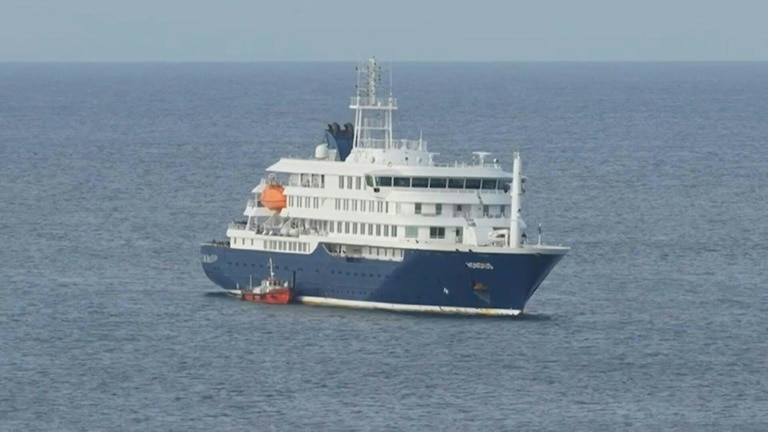
A new chapter of uncertainty unfolded this Thursday when another symptomatic passenger from the hantavirus-stricken cruise ship MV Hondius was evacuated to Europe, as the vessel makes its way toward the Spanish island of Tenerife and public health authorities around the world race to trace the spread of the rare, potentially fatal human-transmissible strain. Three deaths linked to the outbreak have triggered international alarm, though leading global health bodies have sought to reassure the public that a widespread global pandemic is highly unlikely, noting the virus is far less contagious than the SARS-CoV-2 virus that caused COVID-19.
Currently, people confirmed or suspected to have contracted the Andes hantavirus strain from the cruise are receiving medical care or completing isolation periods across five nations: Britain, Germany, the Netherlands, Switzerland and South Africa. The scope of potential exposure widened this week when Dutch flag carrier KLM confirmed one of its air stewards is undergoing testing for the virus after potential contact with an infected passenger on a commercial flight.
Hantavirus is an uncommon respiratory pathogen that most often transfers to humans from infected rodent populations. It can trigger severe health complications including respiratory failure, cardiac impairment and hemorrhagic fever. Currently, no licensed vaccine exists to prevent infection, and there is no targeted cure for the disease — available care is limited to managing and easing symptoms as the body fights the infection. The variant detected on the MV Hondius, the Andes strain, is a particularly rare variation capable of spreading directly from person to person.
Health investigators currently believe the index case, the first infected passenger, contracted the virus before boarding the vessel in Ushuaia, Argentina. The virus has an incubation period ranging from one to six weeks, allowing it to spread to other passengers and crew during the ship’s transatlantic voyage. According to a statement released by the cruise’s operator, Netherlands-based Oceanwide Expeditions, Thursday’s evacuation flight carrying the sick passenger landed in Amsterdam, 24 hours after three other infected passengers were evacuated from the vessel. The company also confirmed that no currently symptomatic individuals remain on board as the ship sails toward its scheduled stop in Tenerife.
The UK Health Security Agency has confirmed two passengers who returned to the United Kingdom from the cruise are asymptomatic and have been instructed to self-isolate as a precaution. Officials emphasized the overall risk to the general UK public remains “very low.”
Global health leadership has echoed this cautious optimism. World Health Organization Director-General Tedros Adhanom Ghebreyesus told Agence France-Presse on Wednesday that “the risk to the rest of the world is low,” and a full press briefing from Tedros was scheduled for Thursday. The United States Centers for Disease Control and Prevention echoed the assessment, noting that “at this time, the risk to the American public is extremely low.”
Back in Argentina, public health teams are preparing to test local rodent populations in Ushuaia, the coastal departure city where the MV Hondius began its voyage on April 1. The first death linked to the outbreak occurred on April 11, when a Dutch passenger who had boarded the ship with his wife died. At the time, the captain attributed the death to natural causes, so no public health alarm was raised, according to Ruhi Cenet, a Turkish travel vlogger who was a passenger on the voyage.
The cruise operator confirmed the man’s body was removed from the ship on April 24 at the South Atlantic island of Saint Helena, where 29 other passengers also disembarked. “These guests have all been contacted by Oceanwide Expeditions. We are working to establish details of all passengers and crew who embarked and disembarked on various stops of Hondius since March 20,” the company statement read.
Public health officials only activated a full response after the man’s wife, who disembarked to accompany her husband’s body to South Africa, also fell ill and died 15 days later. Hantavirus was confirmed as the cause of her death on May 4. Argentine health officials note the couple had traveled through Chile, Uruguay and Argentina before boarding the cruise. The infected woman traveled on a commercial Airlink flight from Saint Helena to Johannesburg while already showing symptoms. That flight carried 82 passengers and six crew, and contact tracers are working to reach every person on board to monitor for potential infection.
KLM’s confirmation of a testing steward marked the latest development in contact tracing efforts. The airline previously confirmed that one of the deceased passengers had been briefly on an April 25 KLM flight from Johannesburg to Amsterdam, but was removed from the aircraft before it departed. To date, there are still minor discrepancies in official counts of how many people were on the MV Hondius at different stages of the voyage. When the vessel anchored off Cape Verde, it carried 149 people including 88 passengers, according to the operator; however, the company confirmed that 114 passengers and an unspecified number of crew were on board when the voyage departed Argentina on April 1.