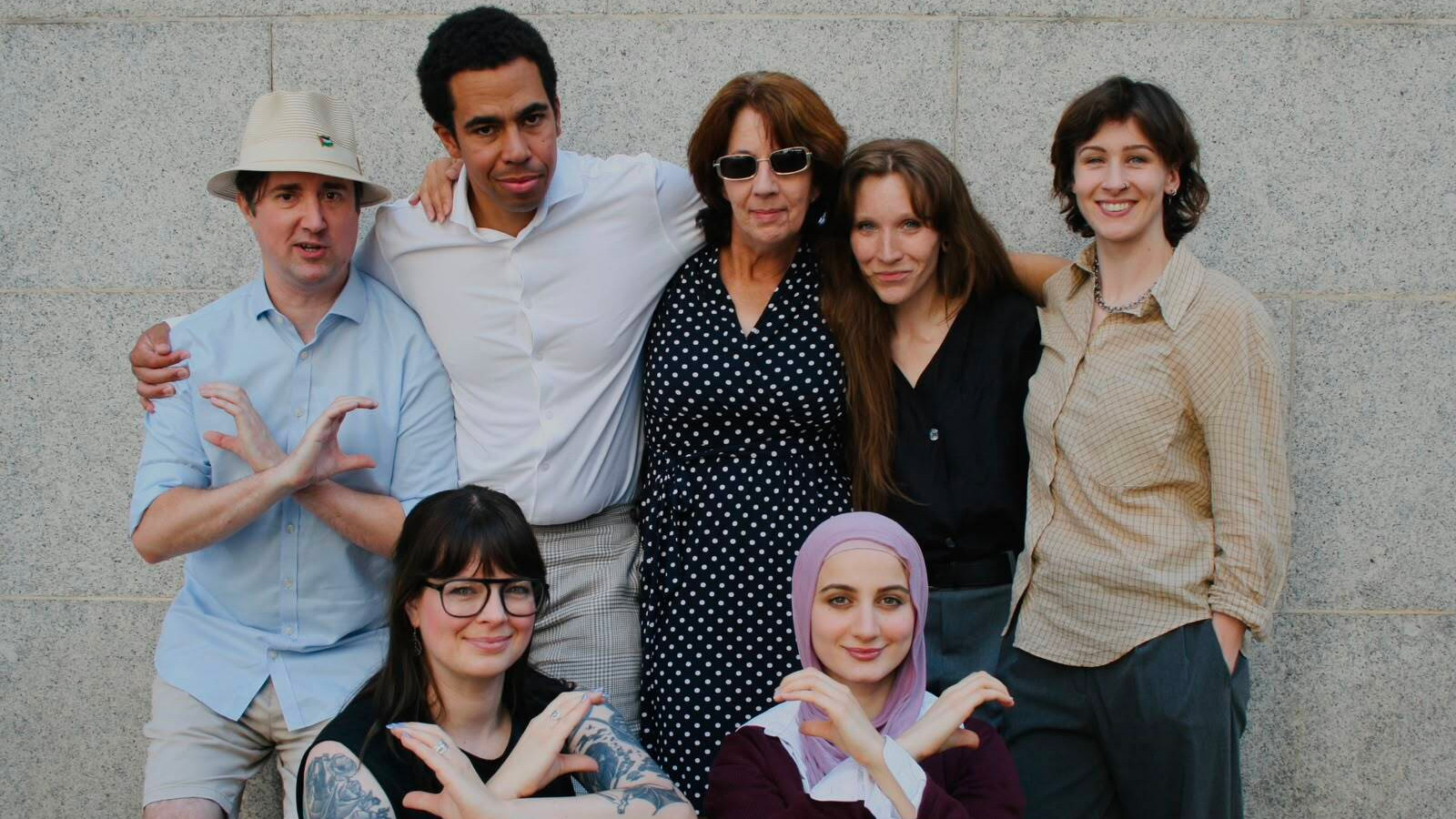
After eight weeks of proceedings and more than 37 hours of closed-door deliberations at London’s Old Bailey, a jury has been unable to reach unanimous or majority verdicts for seven Palestine Action activists charged over a 2024 coordinated break-in at an Israeli-owned arms manufacturing facility, leaving their fates unresolved and opening the door to a potential retrial.
The eight defendants — Hannah Davidson, 53; Ian Sanders, 47; Aleksandra Herbich, 41; Teuta Hoxha, 30; William Plastow, 35; Julija Brigadirova, 33; Sean Middlebrough, 33; and Madeleine Norman, 31 — faced allegations of criminal damage and violent disorder under the UK’s joint enterprise doctrine. Prosecutors argue the group did not physically enter the Elbit Systems facility in Filton, near Bristol, during the August 2024 action, but instead planned and supported other activist teams that carried out the on-site incursion. Per the prosecution’s case, the group split roles: a “red team” entered the factory to destroy weapons and equipment, while a “black team” diverted on-site security personnel, and the eight defendants coordinated the operation via encrypted Signal messaging groups and pre-action reconnaissance and equipment purchases. All eight defendants have consistently pleaded not guilty to all charges, and none have been accused of knowing the raid would involve violence against security staff.
Only one unnamed defendant, whose identity is protected by legal restrictions, was convicted of criminal damage on a 9-1 majority verdict. Plastow was already fully acquitted of violent disorder earlier in the trial after judges ruled there was insufficient evidence connecting him to the charge.
Defense teams dismantled the prosecution’s case point-by-point throughout the trial. For Brigadirova, defense lawyer Tom Copeland argued that prosecutors had presented no tangible evidence linking his client to the raid: there were no records of financial transactions tied to the action, and no planning messages from her registered Signal accounts. He drew attention to the fact that Brigadirova had attempted suicide in the weeks the prosecution claims the coordination took place, a detail prosecutors downplayed by labeling her mental health crisis merely “low mood.” Copeland joked dryly, “If the prosecution is right, perhaps she should be called the invisible coordinator.”
For Herbich, defense attorney Emma Fenn emphasized that the evidence showed her client’s role extended no further than cooking meals and cleaning at the activists’ rented Bristol Airbnb safe house. Co-defendant Norman corroborated this testimony, telling jurors Herbich “was cooking a lot of pasta. That’s all I saw her doing.” Fenn pushed back against the prosecution’s framing, noting “cooking doesn’t even come close” to qualifying as an intentional act supporting violent disorder or criminal damage, adding “There is nothing to connect her with tools or weapons” for the raid.
Plastow, who prosecutors acknowledge never traveled to Bristol around the time of the raid, told the court he first learned of the Filton site via a post on X the morning after the incursion. Forensic analysis of his electronic devices found no evidence he accessed encrypted planning documents, participated in Signal group calls, or searched for or communicated about the Filton site before the raid date. He admitted purchasing supplies for Palestine Action and handing them over to another activist, but told jurors he believed the equipment was for general movement use for future actions, not the Filton raid. His attorney Alex Rose reminded jurors the prosecution must prove beyond doubt that Plastow intended the equipment to be used for destructive action at the Elbit facility, a bar the evidence does not meet.
Multiple defendants gave harrowing testimony about their arrest and pre-trial detention, which far exceeded standard UK custody time limits: all seven of the defendants facing deadlocked juries were held on remand for up to 18 months. Arrested by counter-terrorism police, Hoxha said the group was terrified when the case was framed as a terrorism matter: “We didn’t know how an action could turn into a terrorism case. We were all terrorist prisoners.” Plastow described being arrested by roughly 20 armed counter-terrorism officers and held for six days in a windowless cell with lights that never turned off, comparing his treatment to that of fictional serial killer Hannibal Lecter. He also told the court he missed the final year of his terminally ill mother’s life while in remand, only being briefly released to be at her bedside before being sent back to prison before her death. Davidson broke down in tears while testifying, saying she and her co-defendants still live with PTSD from their arrest and detention. Hoxha was one of several defendants who launched hunger strikes to protest poor prison conditions during their detention.
This trial is the latest phase of legal proceedings stemming from the Filton raid. A separate trial for six other activists that made up the on-site “red team” concluded in May, resulting in four convictions for criminal damage, one conviction for unintentional grievous bodily harm, and two full acquittals. All six were previously cleared of aggravated burglary charges in an earlier February hearing, after that jury deadlocked on criminal damage and assault charges.
As supporters gathered outside the Old Bailey chanting in solidarity, the defendants tearfully embraced family and friends after the jury’s announcement, with their legal teams now awaiting confirmation on whether the Crown Prosecution Service will order a retrial for the seven defendants who could not receive verdicts.