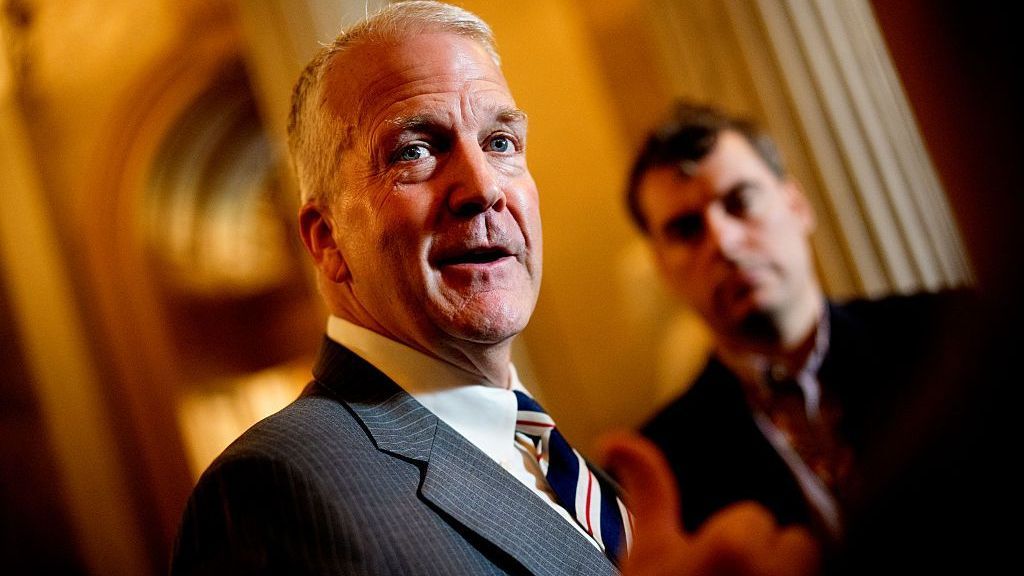
In a high-stakes ruling delivered just days ahead of the 2020 U.S. midterm elections, U.S. District Judge Sharon Gleason threw out a last-minute lawsuit filed by the Trump-era U.S. Department of Justice that sought to block certification of Alaska’s closely watched U.S. Senate race if incumbent Republican Dan S. Sullivan was defeated at the polls. The federal suit had centered on the unusual quirk of two candidates sharing nearly identical names on the three-way ballot: the sitting Republican senator, and little-known nonpartisan contender Daniel J. Sullivan, whom the DOJ claimed was a so-called “decoy” candidate planted to siphon votes away from the incumbent, creating widespread voter confusion. In her sharply worded decision, Judge Gleason emphasized that the federal government lacked statutory authority to force Alaska election officials to separate, audit, or investigate individual cast ballots in the contest, which also features high-profile Democratic candidate Mary Peltola. She further noted that the DOJ had failed to present any concrete, actionable plan to sort ballots cast for Daniel J. Sullivan while upholding Alaska’s longstanding legal guarantee of voter ballot secrecy, and that any such intervention would come far too late to avoid disrupting the electoral process: tens of thousands of Alaskan voters had already submitted their ballots via early in-person voting or mail-in absentee programs by the time the suit was filed. Moments after the ruling was released, the Department of Justice issued a public statement confirming it would immediately file an appeal, arguing that the judge had dismissed the case solely on procedural grounds rather than rejecting the DOJ’s core allegation that Daniel J. Sullivan entered the race as a frivolous, bad-faith participant explicitly designed to mislead voters. The agency went on to claim that Alaskan voters were entitled to a fair electoral process free from deliberate attempts to skew results through deceptive tactics. The lawsuit was publicly acknowledged by then-President Donald Trump weeks prior to the ruling, who told assembled reporters he had personally directed the DOJ to take legal action over the ballot naming issue, openly labeling Daniel J. Sullivan the “fake” candidate. The controversy surrounding the dual-named candidates had erupted in preceding weeks after a New York Times investigation found that operatives linked to Mary Peltola’s Democratic campaign had worked with third parties to recruit potential spoiler candidates for the Senate race. Peltola has repeatedly denied any knowledge of or involvement in an alleged coordinated scheme to place a second Dan Sullivan on the ballot, and Daniel J. Sullivan, a largely unknown figure in Alaskan political circles, has told reporters he has a history of voting for both Democratic and Republican candidates in prior elections. The Alaska Senate contest was widely flagged by national election analysts as one of the tightest, most consequential races of the midterm cycle, whose outcomes would determine which party held majority control of the U.S. Congress for the final two years of Trump’s presidential term, shaping the trajectory of federal policy for the remainder of his administration.
Judge tosses Trump administration’s lawsuit over two Dan Sullivans in Alaska race