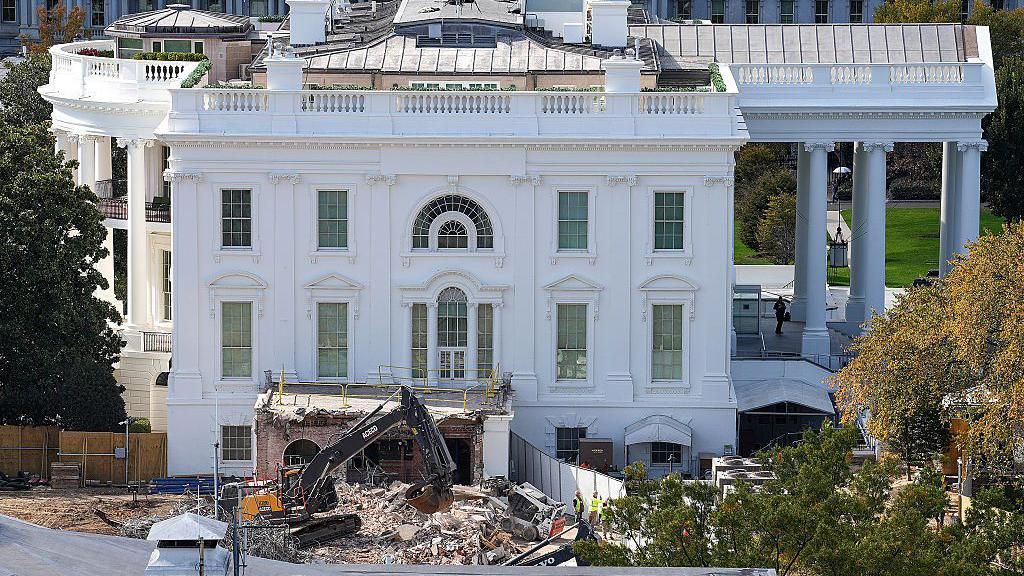
A landmark federal court ruling has temporarily paused a high-profile construction project to build a new presidential ballroom at the White House, after judge Richard Leon found the Trump administration skipped legally required approval processes before breaking ground. The case was brought by the National Trust for Historic Preservation, a congressionally chartered non-profit dedicated to protecting America’s historic landmarks, which argued the White House violated multiple federal laws by launching the project without mandatory review.
In a forceful 35-page ruling published Tuesday, Leon left little room for ambiguity about his decision: “Unless and until Congress blesses this project through statutory authorization, construction has to stop!” he wrote, emphasizing that while the U.S. president serves as a steward of the White House for future generations, he does not hold personal ownership of the iconic property. Leon concluded the preservation group was likely to prevail in the full trial, noting no existing federal statute grants the president the authority he claims to alter the White House grounds without congressional approval. The temporary halt will go into effect in 14 days, giving the administration time to file its planned appeal.
The project, which was launched last October after the 1902-built East Wing was demolished, has grown substantially from its original plan: what was first proposed as a 500-person ballroom is now designed to hold 1,350 guests. The White House estimates the total cost will hit $400 million, all covered by private donations rather than taxpayer funds. Last week, Trump confirmed the project also includes a large underground military complex, saying the above-ground ballroom would effectively serve as a cover for the classified subterranean structure. Demolition and foundation work have already been completed, with above-ground construction scheduled to start next month.
In its lawsuit, the National Trust laid out three core legal grievances: the White House failed to submit construction plans to the National Capital Planning Commission, skipped a required environmental impact assessment, and never obtained explicit congressional authorization for the project. The group also argued the project violates the U.S. Constitution, which reserves authority over federal property to the legislative branch. Following the ruling, National Trust president Carol Quillen called the decision a victory for all Americans. “This is a win for the American people on a project that forever impacts one of the most beloved and iconic places in our nation,” Quillen said in an official statement.
Shortly after the ruling was released, former president (current U.S. president) Donald Trump pushed back aggressively against the decision on his Truth Social platform and in comments to reporters. Trump denied he needs congressional approval for the project, and vowed to appeal the ruling to a higher court. He defended the project as being under budget, ahead of schedule, and entirely funded by private donors, claiming it will become the finest event space of its kind in the world. He also argued the current temporary event space, a tented arrangement, is inadequate for upcoming high-profile events, including the upcoming state visit of Britain’s King Charles III next month. “We don’t want him to sit in a pool of water” if it rains, Trump told reporters, adding the existing facilities cannot properly host visiting world leaders.
The Trump administration had previously attempted to justify rushing the project by claiming delays would threaten U.S. national security, a argument Leon rejected outright. Calling the claim “grasping at straws,” Leon wrote sarcastically, “The existence of a ‘large hole’ beside the White House is, of course, a problem of the President’s own making!” Trump also hit out at the National Trust for opposing a separate renovation project at the Kennedy Center, which he recently renamed to honor himself. He claimed the performing arts center had fallen into disrepair over decades, and his project is only meant to restore and improve the space. The ruling marks a major constitutional check on executive authority to alter the White House grounds, setting up a high-stakes legal battle over separation of powers as the project nears its next construction phase.