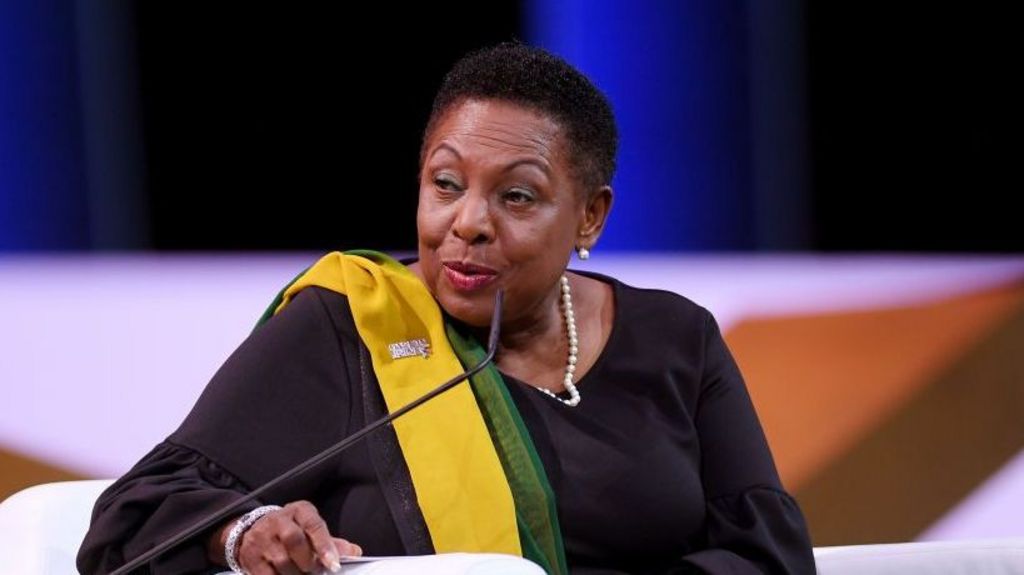
On an upcoming official visit to the United Kingdom, a Jamaican government delegation headed by Culture Minister Olivia Grange will deliver a landmark legal petition on slavery reparations to King Charles III, opening a new formal chapter in the island nation’s decades-long campaign for accountability for historic colonial harm.
As the current head of state of Jamaica, King Charles will be asked to formally refer three critical legal questions to the Judicial Committee of the Privy Council (JCPC), Jamaica’s highest appellate court. The questions center on three core points: whether the transatlantic enslavement of African people in Jamaica was lawful under historic English law, whether the practice violated existing international legal standards, and whether the United Kingdom holds a current legal obligation to provide reparations for the harms endured.
Crucially, the petition itself does not demand immediate financial payments, but instead seeks a formal legal ruling that Grange says could clear the path for a long-overdue resolution for the centuries of violent abuse inflicted on enslaved African ancestors. Unlike popular misconceptions, King Charles has no personal discretionary power to accept or reject the referral request, a fact confirmed by coordination between Buckingham Palace and Jamaica’s Governor General to ensure the petition is properly processed through established constitutional channels.
Grange outlined the stakes of the step in comments to media, noting that once the JCPC delivers its response to the three questions, Jamaican officials will map out the next phase of the campaign. She also highlighted a little-known historic context that strengthens the nation’s case: when the British Empire abolished chattel slavery across most of its territories in 1833, the British government issued £20 million in compensation to enslavers for the loss of their “property” — a debt that the British public only finished paying off in 2015.
“Up to 2015, Britain was paying the slave masters, because we were being considered property,” Grange said. “The question really should be: if in modern times we’re still paying back the slave masters for the property that was our people, our ancestors, for property that was because of the abolition of slavery, then why shouldn’t we be pursuing some remedy at this time?”
Beyond the reparations petition, Grange’s UK agenda includes a high-profile meeting with leadership at the British Museum to advance long-running negotiations over the repatriation of cultural artifacts looted from Jamaica during the colonial era. “They are priceless, they are significant to the story of Jamaica and we are working to bring them home,” Grange said of the contested items.
Buckingham Palace has signaled a cooperative approach to the petition, echoing King Charles’ long-stated public position on addressing the legacy of slavery. A Palace spokesperson noted: “His Majesty has on many occasions expressed his personal and wholehearted commitment to promoting greater understanding around the issue of slavery and finding ways to address historic wrongs for the benefit of communities today.” In a 2024 public address, the King went further, calling on global leaders to commit to “finding creative ways to right inequalities that endure” stemming from colonialism.
The current push for reparations comes nearly a decade after a previous British government led by then-Prime Minister David Cameron rejected all calls for reparations during a 2015 visit to Jamaica. While Cameron described slavery as “abhorrent in all its forms,” he argued that Jamaica should “move on from this painful legacy and continue to build for the future,” a position that drew widespread criticism from reparations campaigners across the Caribbean.