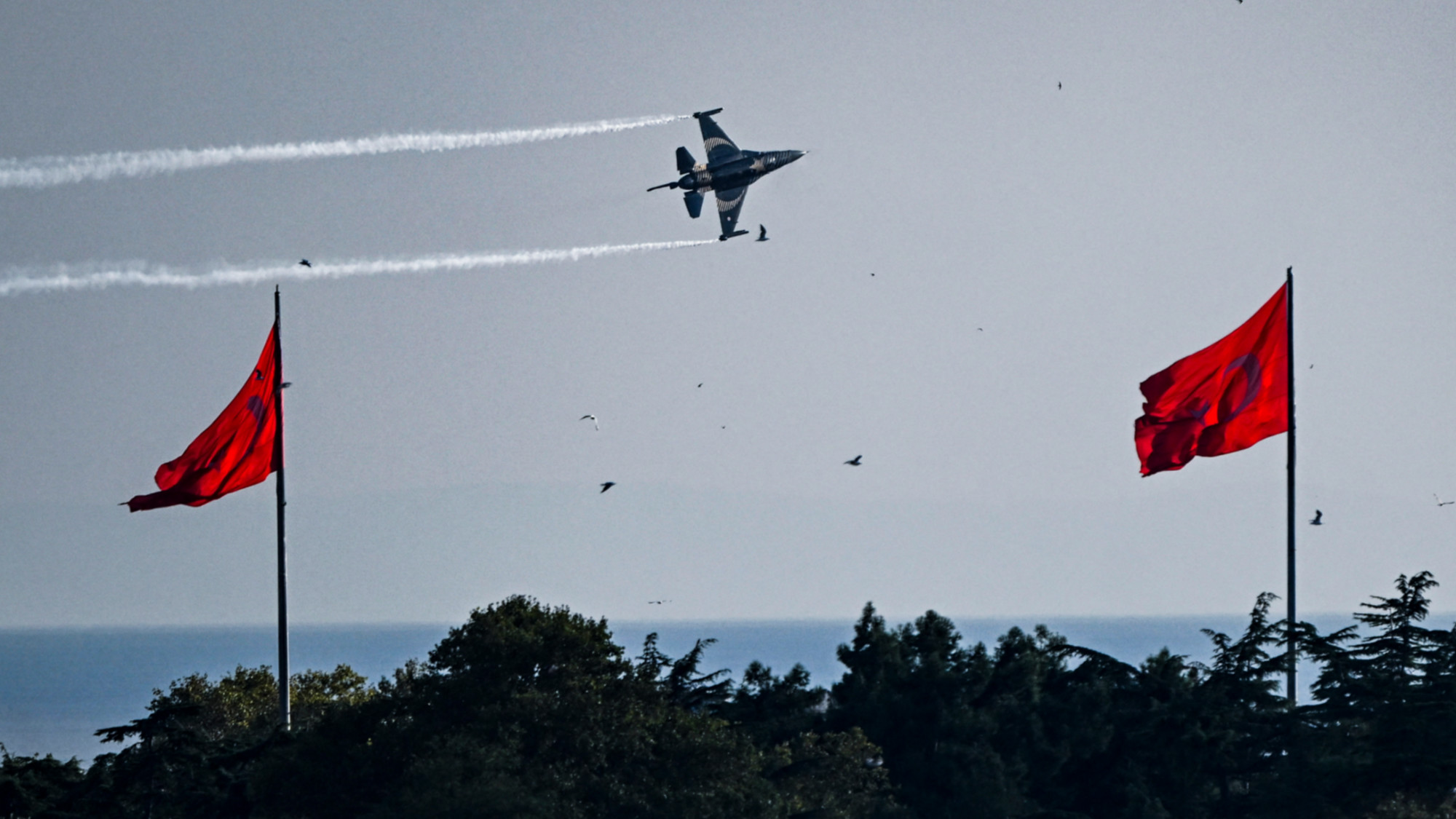
New allegations emerging from Israeli public broadcasting have brought fresh tensions to the already volatile geopolitics of the Middle East, claiming Turkey had prepared to deploy aerial military backing to Iran if Israeli and US-backed Kurdish militias launched an incursion into Iranian territory earlier this year during the planned war against Tehran.
In a report published Sunday by Kan 11, Israel’s public broadcaster, Turkish authorities issued a formal warning that they would take active military steps to block any cross-border Kurdish incursion into Iran – a move that ultimately derailed a joint Israeli-US military plan that had been in development for months ahead of the war’s outbreak in February. Unnamed Israeli sources cited in the Kan 11 report noted that Turkey came remarkably close to direct intervention in the conflict, with senior Turkish officials openly debating a proposal to supply Iran with aerial defense capabilities to counter incoming Israeli and US airstrikes.
The explosive new claims dovetail with repeated public statements from former US President Donald Trump, who has for weeks taken credit for convincing Turkish President Recep Tayyip Erdogan to stay out of the conflict. Speaking earlier this month at the NATO summit held in Ankara under Erdogan’s hosting, Trump told assembled reporters that Turkey was fully prepared to join the fight against Israeli and US forces, adding “Maybe they didn’t do that because of me.”
This is not the first time Trump has highlighted his role in deterring Turkish intervention. During a White House press briefing last month, Trump noted that Erdogan – whom he has repeatedly referred to as “my friend” – was positioned to enter the war on Iran’s side, a alignment rooted in long-standing Turkish tensions with Israel. “I asked him to stay out. He stayed out,” Trump stated at the time.
As the exchange of strikes between US and Iranian forces entered its tenth consecutive day, bilateral tensions between Israel and Turkey have simultaneously ramped up, with senior Israeli officials increasingly framing Ankara as a fast-growing threat to Israeli national security. This is not the first allegation of Turkish interference in the joint Israeli-US plan: last month, Israeli outlet i24News already reported that Turkey had foiled the Kurdish incursion backed by Jerusalem and Washington, derailing months of joint planning by Israel’s Mossad intelligence agency and the US Central Intelligence Agency.
A separate earlier investigation by The New York Times confirmed that the plan to support a Kurdish incursion into Iran was part of a broader Israeli-US strategy to oust the current ruling government in Tehran. The outlet also reported that the plan included provisions to reinstate former Iranian president Mahmoud Ahmadinejad to power.
Turkey’s alleged actions during the Iranian conflict are far from the only source of Israeli unease about Ankara. Israeli officials have repeatedly expressed discomfort with the close personal and diplomatic ties between Erdogan – a well-known outspoken critic of Israeli policy – and Trump, viewing the relationship as evidence of Turkey’s expanding regional and global influence.
Last week, Israeli right-wing newspaper Makor Rishon published a warning that Turkish influence across the Middle East and Africa has grown far beyond its traditional footprint. “Turkey’s influence is no longer limited to the Eastern Mediterranean and Syria, but extends to the Horn of Africa, the Sahel and North Africa,” the outlet noted, pointing to Ankara’s growing overseas military deployments, large-scale economic investments, and high-profile diplomatic initiatives as clear proof of its expanding reach.
On Monday, two Kan 11 correspondents, Roi Kais and Itay Blumental, posted on social media platform X that what they called Erdogan’s antisemitic leadership is driving a rapid expansion of Turkish military and political influence in both Egypt and Syria, arguing that Ankara is actively building “a chokehold” that surrounds Israel.