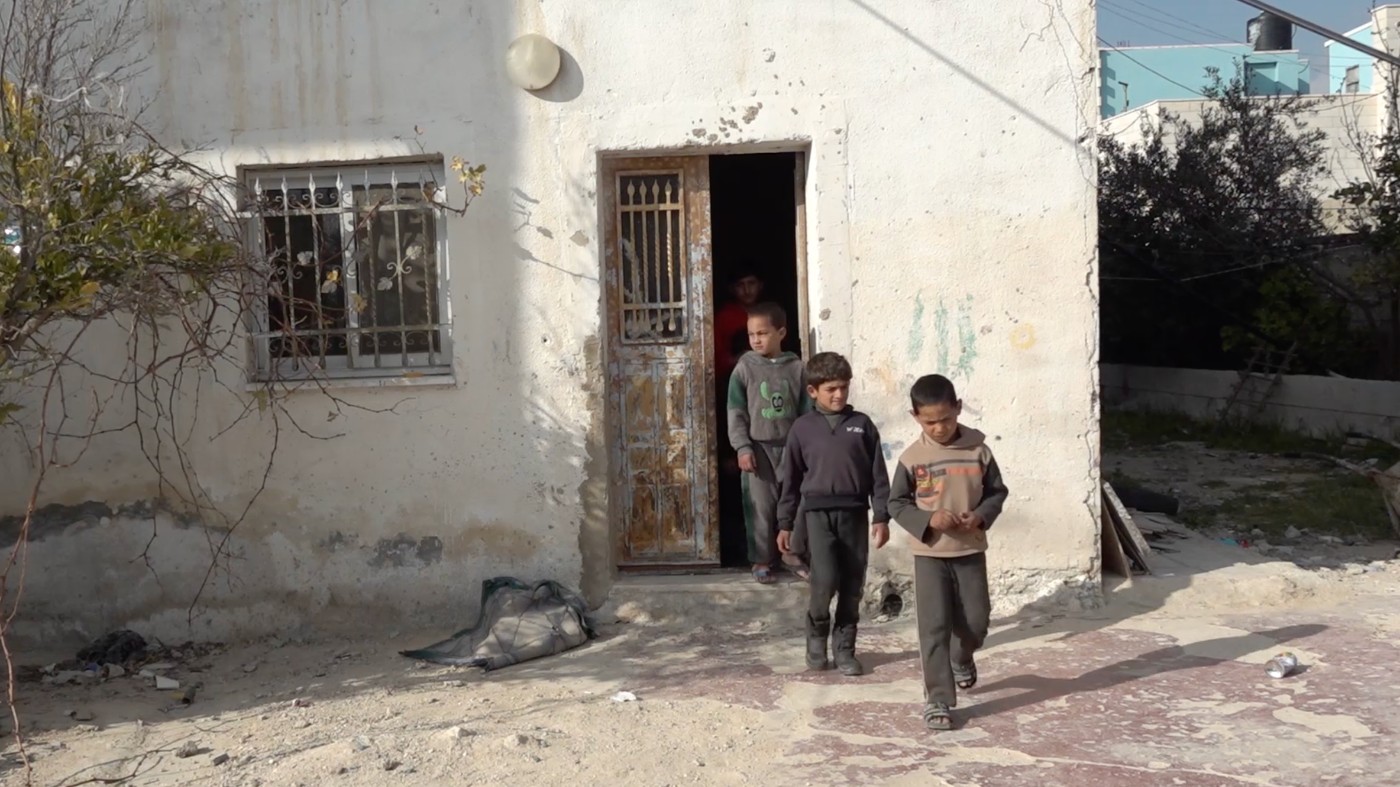
In the occupied West Bank, Palestinian families are recounting traumatic experiences of having their homes forcibly commandeered by Israeli military units. The practice, which has intensified following recent regional hostilities, involves soldiers occupying civilian residences for use as temporary operational bases.
Khalid Jamal, a resident of al-Rehiyya south of Hebron, describes a 2:42 AM raid where 20 soldiers surrounded his family home. “The door was forced open. I woke up to find the house surrounded in an abnormal way,” Jamal recounts. His family of seventeen was forcibly relocated to a single ground-floor room where they endured freezing temperatures without adequate bedding while soldiers maintained constant guard.
Simultaneously, military activity occurred throughout the upper levels of the home. “There was something being hammered above. We could hear banging, but I don’t know what it was,” Jamal noted, later discovering broken tiles and damaged children’s beds. The occupation lasted approximately 24 hours, during which soldiers consumed provisions and left behind empty Hebrew-labeled food cans.
This pattern repeated in Fawwar refugee camp, where Mohammed Jodeh’s family received a 3:00 AM evacuation order. Israeli forces informed them their home would serve as a military barracks for three days. “We were shocked because it was the first time we had been forcibly expelled,” Jodeh stated, noting previous intrusions had never involved complete displacement.
The strategic placement of these home seizures—particularly at camp entrances and elevated locations—suggests tactical military purposes. Palestinian residents interpret these actions as psychological warfare intended to undermine their sense of security and assert Israeli dominance. “The first objective is to make us feel that we are living in an unsafe place,” Jodeh analyzed. “The second is to assert their presence, to say: we are here.”
These incidents occur within a broader context of heightened tensions following cross-border exchanges between Israel and Iran, which have resulted in Palestinian casualties from missile debris. The Israeli military has historically utilized home seizures during West Bank operations, though recent occurrences appear more frequent and systematic.
Despite the psychological impact and property damage, affected families demonstrate remarkable resilience. “I am not thinking of leaving, absolutely not,” Jamal affirmed. “There is nothing I fear for, except my children.” This sentiment echoes throughout communities where such occupations have become an unfortunate reality of daily existence.