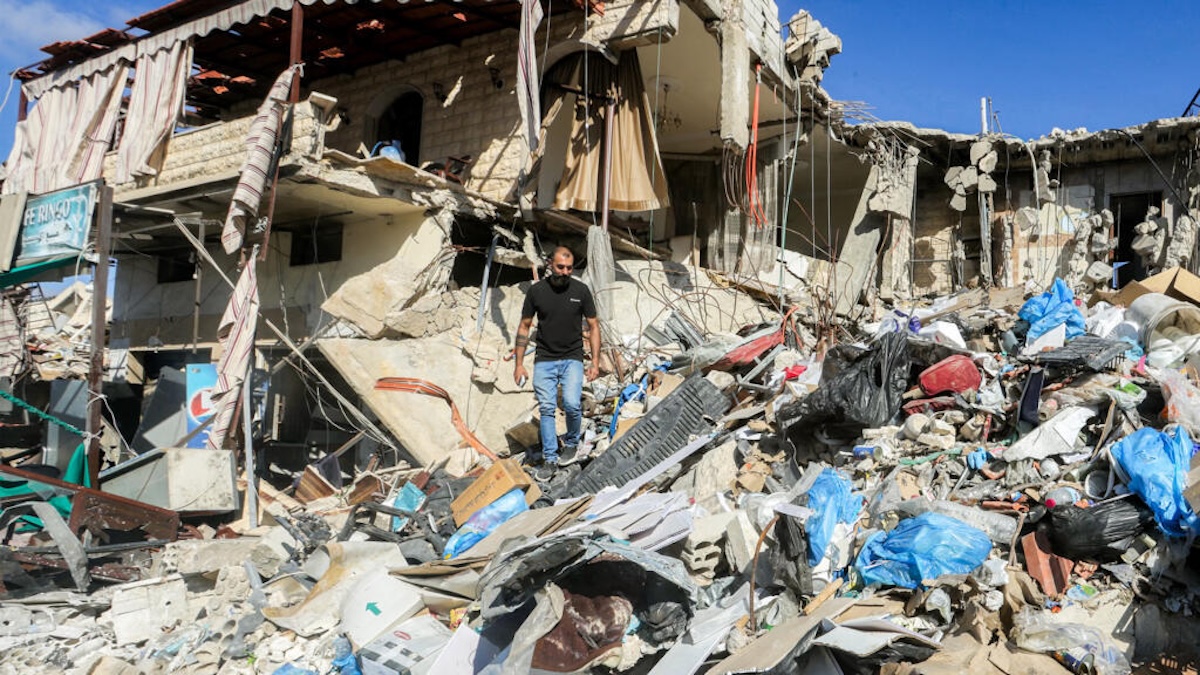
On Thursday, just hours after the United States and Iran signed a landmark memorandum of understanding to guide negotiations ending a regional war launched in late February, the Israeli military launched two targeted drone strikes across southern Lebanon, leaving one person dead and three others injured, according to local official media.
Lebanon’s state-run National News Agency confirmed the details of the attacks: the first strike hit the town of Beit Yahoun, where an Israeli drone dropped an explosive device that wounded two local residents. A second attack targeted a vehicle at a roundabout connecting the villages of Kfartebnit and Arnoun, killing one passenger and leaving a second in critical condition.
The unprovoked attacks have immediately raised urgent questions about the future of the new US-Iran peace deal, whose text explicitly includes provisions for Lebanese security and requires an immediate end to all military operations across the country. The MOU, signed by both leaders during a diplomatic gathering in France late Wednesday, formalizes a binding commitment to end all active hostilities on every front—including Lebanon—between the two nations and their respective allies. It also requires all signatory parties to abandon threats of force, respect each other’s territorial sovereignty, and guarantee the full territorial integrity and political independence of Lebanon.
Israeli Prime Minister Benjamin Netanyahu has long faced accusations of actively working to derail diplomatic progress between Washington and Tehran, and he has openly defied the terms of the new framework, refusing to issue any commitment to withdraw Israeli military forces currently occupying large swathes of southern Lebanon. Since Israeli military operations against targets in Lebanon began on March 2, Lebanese official data records that nearly 3,800 people have been killed in these attacks, hundreds of whom are children.
Reuters reported Thursday that Israeli officials are currently holding closed-door negotiations with the United States to push for permission to maintain a permanent military presence in southern Lebanon. An anonymous senior Israeli official close to Netanyahu told the outlet that the Israeli government would not back away from its demands, including keeping troops deployed in the strategic area south of Lebanon’s Litani River. A second senior Israeli official added that the final outcome of these negotiations will depend entirely on whether US President Donald Trump is willing to pressure Israel into compliance, by threatening concrete repercussions if Jerusalem refuses to adhere to the interim peace pact’s terms.
During a press conference held Wednesday, one day after the MOU was signed, Trump struck a diplomatic tone when speaking about Netanyahu, calling the Israeli leader “a very good man” and an “amazing prime minister.” He did, however, acknowledge the ongoing rift over Lebanon, saying, “We have a little dispute over Lebanon. I say, ‘You can do a little softer touch, Bibi. You don’t have to knock down a building every time somebody walks into it that’s from Hezbollah.’”
Iran has already issued a clear warning that the entire MOU will be invalidated if Israel refuses to fully withdraw all its forces from Lebanese territory and end all military attacks. Speaking Thursday, Esmaeil Baqaei, spokesperson for Iran’s Foreign Ministry, said that the United States bears full responsibility for forcing Israel to uphold the commitments Washington made to Tehran in the signed document, saying “It is the responsibility of the US to force Israel to respect the US commitments to Iran in this document.”