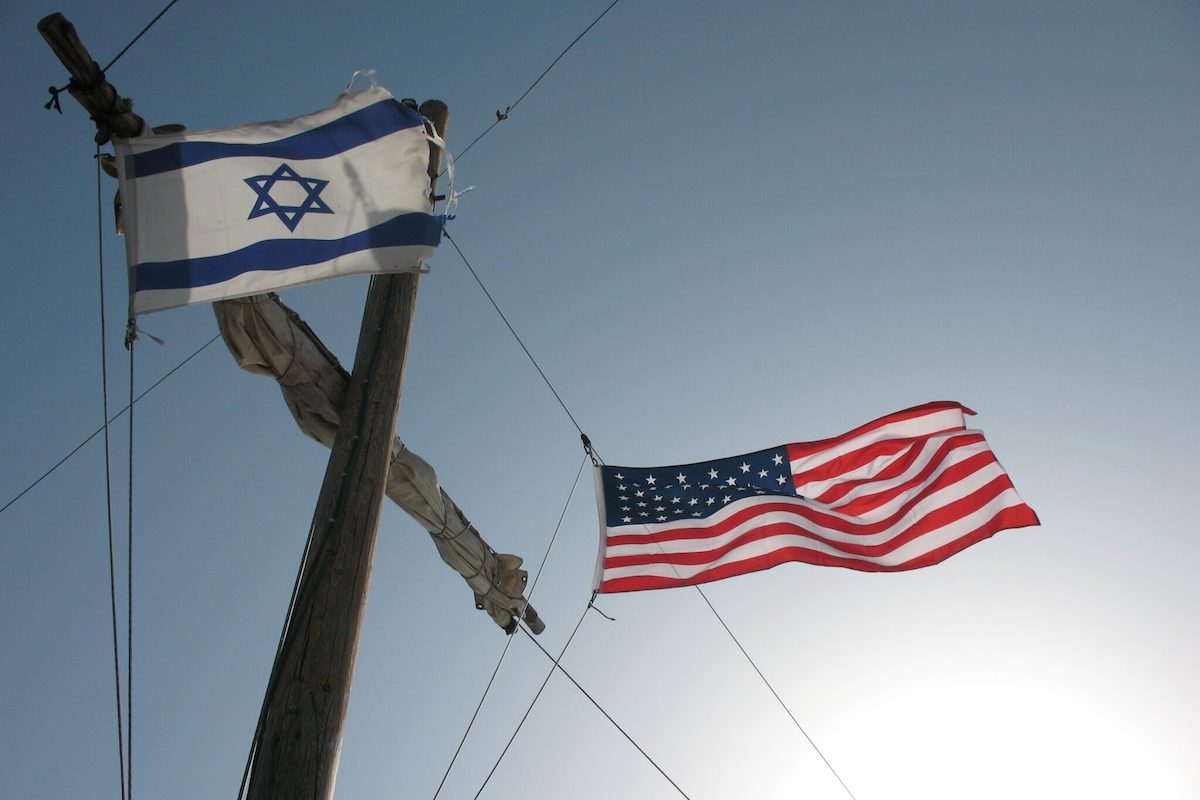
For more than 40 years, a quiet, unspoken assumption has anchored every core pillar of Israeli national security strategy: that the United States would forever remain the unchallenged hegemonic power in the Middle East. Under this order, Washington would not only guarantee Israel’s long-held qualitative military advantage over all regional rivals, but also absorb the diplomatic fallout of Jerusalem’s policy choices and maintain the regional balance of power aligned strictly with American interests. Today, that foundational assumption is steadily eroding – and Israeli policymakers have been far slower than necessary to confront this new strategic reality.
American dominance in the Middle East was never total, but it shaped every corner of regional order for decades. Washington built an interconnected architecture of military bases, massive arms sales, binding security guarantees, and consistent diplomatic cover that allowed it to act as the final arbiter of power from the eastern Mediterranean Levant to the oil-rich Gulf states. That framework, however, has been slowly unraveling for 20 years, a decline accelerated by multiple cascading shifts: the costly failure of the 2003 Iraq War, the widespread exhaustion of the post-9/11 global war on terror, an American public weary of open-ended, endless military commitments in the Middle East, and a long-running strategic reorientation toward the Indo-Pacific that successive presidential administrations from Barack Obama’s forward have pursued in fits and starts.
As Washington’s influence recedes, competing global powers have moved to fill the emerging power vacuum. China is now the top trading partner for all Gulf Cooperation Council states, while Russia has carved out lasting, influential military and political footholds in both Syria and Libya. Regional governments have not missed this shift, and have already begun adjusting their foreign policies to hedge against an increasingly multipolar region.
The 2023 Saudi-Iranian rapprochement, brokered directly by Beijing rather than mediated through Washington, delivered the clearest warning yet that Gulf states no longer view American diplomacy as the only viable path to regional security cooperation. Today, the United Arab Emirates, Qatar, and even Egypt maintain genuinely multi-aligned foreign policies: they purchase Chinese infrastructure investment, Russian grain exports, and American military hardware simultaneously, and calibrate their public stances on issues ranging from Gaza to Iran to satisfy audiences in Beijing and Moscow as much as they do in Washington.
For Israel, this shifting regional order carries profound strategic implications. For decades, Israel has flourished within the framework of American hegemony. Its qualitative military edge is enshrined in binding U.S. law, it has enjoyed near-automatic diplomatic protection from Washington at the United Nations Security Council, and its economy has benefited from preferential trade agreements and decades of substantial American military aid. All of these advantages were made possible not only by the deep bilateral ties between the two nations, but by the fact that a hegemonic United States could easily absorb the diplomatic, reputational, and strategic costs of unconditional backing for Israel – at a time when no rival power was positioned to exploit the friction this created between Washington and the broader Arab and Muslim world.
That permissive strategic environment is now vanishing. In an increasingly multipolar Middle East, the costs of the U.S.-Israel alliance have become far more visible, and far more easily exploited by competing powers. Every veto the U.S. casts on Israel’s behalf at the UN is now leveraged by Beijing and Moscow to argue to Global South governments that American-led global institutions apply core principles of international law selectively and unfairly. Every round of conflict in Gaza or Lebanon becomes an opening for rival powers to position themselves as far more responsive to Arab and Muslim public opinion than Washington is willing to be, as seen clearly in Chinese and Russian diplomatic outreach to the Gulf and Islamic world during the 2023-2024 Gaza war.
Even Israel’s landmark regional diplomacy, most notably the Abraham Accords, was built on a core premise that has now been severely strained: that normalization with Gulf states could proceed on a separate track from the decades-long Palestinian question, under an American security umbrella that would make this political compromise survivable for Arab leaders. The Gaza war has stretched this premise to breaking point. Arab publics across the region remain far more passionate about securing Palestinian statehood than the architects of normalization agreements anticipated. And in a world where Arab governments now have access to alternative great power patrons and alternative export markets, they have far less incentive to absorb damaging domestic political costs purely to maintain favor with Washington.
This shifting landscape does not call for panic – but it demands urgent rethinking. None of these changes mean that American commitment to Israel is on the verge of collapse, or that Israel’s existing military superiority is in immediate jeopardy. But they do mean that the strategic context in which Israeli policy has operated since 1967 is fundamentally changing, and that proactive foresight will deliver far better outcomes than continued strategic inertia.
A realist assessment of this new order points to three core takeaways for Israeli policymakers. First, Israel’s long-term security will depend far more on stable, negotiated agreements with its regional neighbors – including a credible, lasting resolution to the Palestinian question – than on any permanent assumption of American unrivaled primacy in the region. Second, overreliance on unconditional American backing is a declining asset, as Washington’s regional influence continues to wane and American domestic politics grow increasingly divided over U.S. support for Israel. Third, in a Middle East with multiple competing great power patrons, Israel’s regional legitimacy will become a far more durable foundation for national security than military deterrence alone.
Of course, this reading of regional trend lines is not universally accepted, and it remains contested among strategic analysts. Advocates of the traditional approach argue that American commitment to Israel rests on durable public and congressional support that shows no sign of fundamental erosion. They note that China and Russia have demonstrated little appetite or capacity to replace the comprehensive security guarantees that the U.S. has long provided the region, and that claims of American decline in the Middle East have been overstated many times before.
Other analysts argue that Israel’s own military superiority and independent deterrent capabilities, not its alliance with any external patron, remain the true foundation of its national security. They add that normalization between Israel and Gulf states is rooted in genuine shared concerns over Iranian regional ambitions, rather than a fragile arrangement dependent entirely on American mediation.
Both perspectives deserve fair consideration as the regional balance of power continues to shift. This new multipolar order is still taking shape, and only proactive, adaptive strategy will allow Israel to navigate its new challenges effectively.