Israel has set its sights on scaling up exports of its advanced layered air defence systems, with the United Arab Emirates emerging as its next key target following a landmark $3.5 billion agreement with Athens, two unnamed U.S. officials with direct knowledge of ongoing negotiations told Middle East Eye in an exclusive report.
Tripartite talks involving Israel, the UAE and the U.S. are currently centered on closing a critical gap in the Emirates’ multi-tiered defence capabilities, according to the serving U.S. official. The recently finalized Greek deal is being framed by Israeli defence officials as a blueprint for future international exports of the country’s cutting-edge defence technology and design frameworks.
Calling the burgeoning air defence export sector a “profit machine” for Tel Aviv, the former U.S. official noted that Israeli systems hold a distinct competitive edge over U.S.-manufactured alternatives: they are not only more affordable, but also far easier to export to third-party countries.
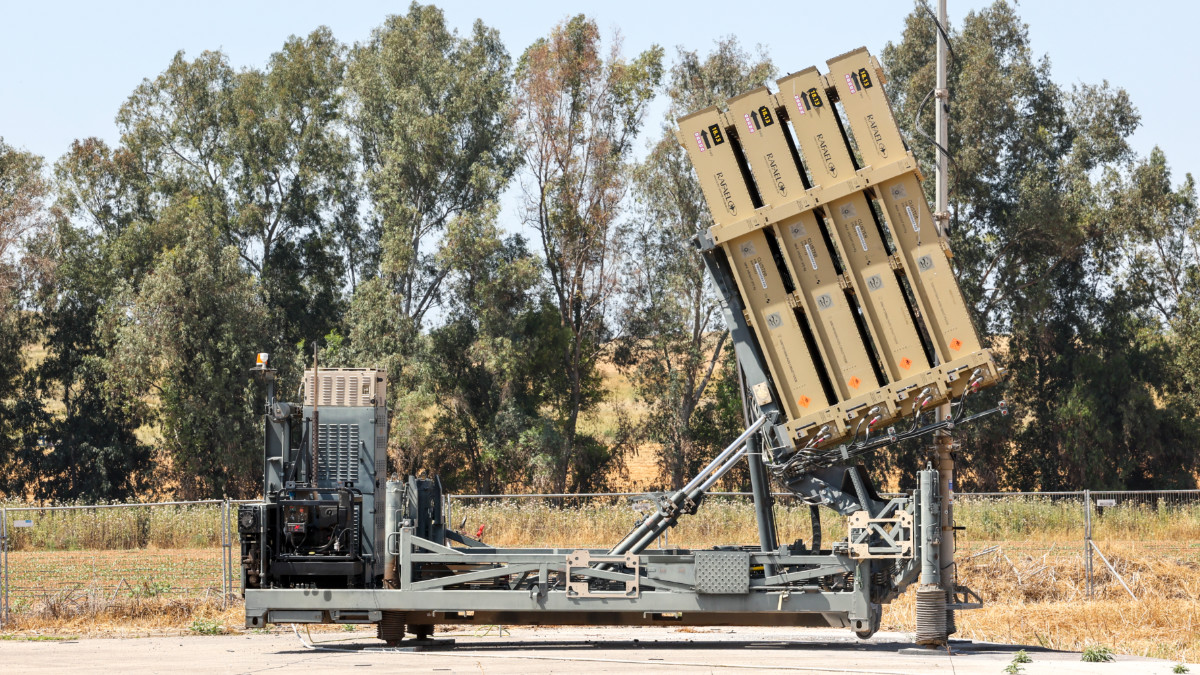
The UAE stands out as the most viable candidate for the next major sale due to deepening existing defence cooperation between Abu Dhabi and Tel Aviv. Earlier this year, amid heightened tensions between Israel and Iran, the U.S. confirmed that Israel deployed Iron Dome missile defence batteries and accompanying technical personnel to the Emirates to bolster regional security. Additional reporting has confirmed Israel also supplied the UAE with a specialized drone detection platform, and the two countries signed a formal agreement in May to jointly develop and procure new weapons systems.
Currently, the UAE operates U.S.-built Patriot and Terminal High Altitude Area Defence (THAAD) air defence systems, and acquired Israel’s Barak air defence system back in 2022. Even with these platforms in place, the country still lacks a fully integrated layered air defence network that can counter a full spectrum of modern threats, the serving U.S. official explained.
These ongoing talks highlight Israel’s broader strategy to weave its defence technology into a growing network of regional and global strategic partners. At present, the alliance stretches from Greece and the Republic of Cyprus in the eastern Mediterranean to the UAE and India in the Persian Gulf and South Asia respectively. This emerging network comes as a new bloc, led by Saudi Arabia and including Turkey and Pakistan, recently announced the Mecca Pact, a mutual defence agreement widely viewed as a potential counterweight to Israel’s expanding partnerships. While Riyadh has framed the pact as an effort to deepen collective defence cooperation, it has yet to announce major arms or infrastructure deals under the agreement, and neither Ankara nor Islamabad has publicly confirmed their commitment to supporting Saudi Arabia against Houthi attacks from Yemen.
Unlike simpler single-function defence systems, layered air defence networks are highly complex, integrating multiple interconnected components including command and control infrastructure, advanced sensors, radar systems, interceptor missiles, and launch platforms. The system sold to Greece is even more sophisticated, engineered to counter everything from long-range ballistic missiles to cruise missiles, manned aircraft, and hostile unmanned aerial vehicles.
Under the agreement with Athens, Israel will provide both design expertise and core components for Greece’s nationwide integrated air defence initiative, dubbed the Achilles Shield. This marks the first time Israel has exported a complete, multi-domain defence array capable of countering such a broad range of threats, according to a statement from Israel’s defence ministry.
Greece’s purchase includes Israel’s David’s Sling and SPYDER systems, manufactured by Rafael Advanced Defense Systems, as well as the Barak MX system developed by Israel Aerospace Industries (IAI). The deal also includes IAI subsidiary ELTA Systems’ MMR multi-mission radars designed for persistent air surveillance. Greece will become only the second operator of David’s Sling, following Finland — a NATO member that shares a border with Russia. Meanwhile, Greek media reports confirm the Republic of Cyprus completed its purchase and took delivery of Israel’s Barak defence system in December 2024.