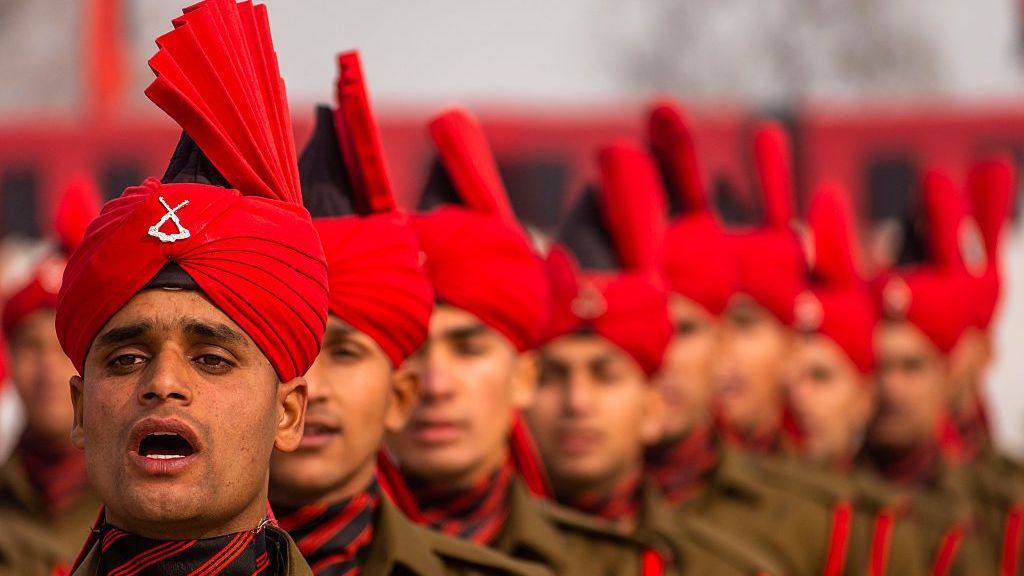
For decades, military service in India stood as one of the most coveted career paths for young people across the country, promising lifelong job stability, guaranteed post-retirement pensions, robust social security benefits, and the profound prestige of serving the nation. That long-standing status quo was completely upended in 2022, when the federal government rolled out the landmark Agnipath (translated as \”Path of Fire\”) reform programme, a radical overhaul of decades-old armed forces recruitment rules. Under the original framework, new enrollees dubbed Agniveers would serve a fixed four-year non-permanent tenure, with only 25% of each intake cohort eligible to transition to regular, long-term military service. The remaining 75% would exit the forces with a one-time lump sum severance package, but be denied the generous pension and lifelong welfare benefits that had made military employment a life-changing opportunity for generations of working and lower-middle class households. Nearly three years after the scheme’s turbulent launch, Indian defence authorities have unveiled a major policy adjustment as the very first batch of Agniveers nears the completion of their initial four-year contracts. On November 4, Chief of Defence Staff General NS Raja Subramani formally announced that Agniveers who do not secure a spot in the permanent 25% quota will be offered an optional additional two years of service, at enhanced pay scales, followed by a second shot at qualifying for permanent regular force positions if they meet all required selection benchmarks. General Subramani emphasized that the revision was introduced based on on-ground feedback from all three service branches, and that the core Agnipath policy framework would remain intact. More than 18,300 recruits from the inaugural 2022 cohort are set to finish their original four-year tenure by the end of 2026, and defence officials confirm that the new extended tenure option will be available to all 300,000 Agniveers currently serving across the Indian Army, Navy and Air Force. Authorities have not yet clarified whether future incoming batches of Agniveers will also be covered by the revised rules, and the BBC has submitted a formal request for clarification to the national Defence Ministry. The ministry has repeatedly defended the Agnipath scheme, stating internal official assessments confirm Agniveers are exceptionally physically fit, highly motivated, and far more digitally and technologically adaptable than previous generations of long-term recruits. Officials also argue the programme has expanded recruitment reach to previously underrepresented districts across the country, and standardized the entire selection process to eliminate historical inconsistencies. The newly announced extension, however, has reignited fierce public and expert debate over the core trade-offs embedded in the original Agnipath design, and whether the government’s initial stated ambitions for the scheme were ever practically achievable. When Agnipath was first unveiled in 2022, the government framed it as a transformative reform that would lower the average age of the armed forces, slash ballooning long-term salary and pension expenditures, and build a younger, more tech-savvy fighting force better suited to 21st century warfare. The announcement triggered immediate, widespread mass protests across India, particularly in traditional military recruitment hubs where generations of families have built their livelihoods around armed forces service. Thousands of young aspirants who had spent years preparing for military selection were left disillusioned, as the Covid-19 pandemic had already paused all military recruitment for nearly two years, leaving them waiting for promised vacancies that were replaced by the new short-term Agniveer contracts. Kulbeer Singh Chaudhary, who operates a military recruitment training academy in the northern city of Dehradun, reported that youth interest in joining the armed forces plummeted so sharply after Agnipath’s launch that he had to suspend all Agniveer preparation batches entirely. He now hopes the revised extension policy will reverse that downward trend, noting that the prospect of longer service and a second path to permanent absorption will restore much-needed confidence among young candidates. The policy adjustment also comes against a backdrop of critical personnel shortages across the Indian armed forces: a November 2023 report from *The Indian Express* revealed that the Indian Army alone was facing a shortfall of nearly 180,000 active soldiers, prompting service leaders to explore accelerated recruitment pathways. Nevertheless, military veterans and independent analysts have raised a cascade of lingering concerns over the revised scheme. Retired Major General Yash Mor, a prominent long-time critic of Agnipath, points out that traditional military doctrine dictates it takes a minimum of 8 to 9 years to turn a raw young recruit into a seasoned, dependable soldier capable of operating complex tank, artillery, or small frontline detachments, and to develop the unit camaraderie, shared ethos, and battle-hardened experience that are the backbone of military effectiveness. Former Border Security Force Additional Director General Sanjiv Krishan Sood notes that the original four-year tenure was particularly problematic for technical roles requiring years of specialized training on advanced military hardware, though he acknowledges the additional two years of extended service will go a long way toward addressing that skills gap. Even so, experts warn that the new three-tier personnel structure – consisting of permanent regular soldiers, four-year Agniveers, and two-year extended contract staff – will create unprecedented disparities in pay, promotion pathways, and post-service benefits that risk eroding the unit cohesion that is critical for operational effectiveness. Critics also question whether the revised policy will undermine one of the government’s central original goals for Agnipath: reducing long-term defence spending. Nearly half of India’s entire annual defence budget is currently allocated to salaries and pensions, leaving limited fiscal room for much-needed military modernization and procurement of new combat equipment. Retired Major General Birender Singh Dhanoa argues that the revised longer tenure structure makes far more financial sense than the original four-year model, given the massive investment the government makes in training personnel to operate increasingly sophisticated modern weapon systems, and that cutting service tenures short means wasting that critical training investment. The policy revision is also unfolding in a highly charged political environment, with upcoming state elections scheduled in Punjab, Uttar Pradesh and Uttarakhand – three states that have historically supplied the vast majority of India’s frontline troops, and where military recruitment remains one of the most reliable sources of stable, upward mobility employment for young people. The opposition Congress party has derided the announcement as a full “u-turn” by the government, alleging the revision is a panicked electoral move designed to avoid losing votes in those high-stakes recruitment hub states. For the hundreds of thousands of Agniveers currently in service, the new extended tenure offer delivers a measure of long-awaited reassurance, but no concrete guarantees: while the extra two years of service will bring higher pay, more operational experience, and a second shot at a permanent military career, it also requires them to put their civilian career plans on hold for an additional two years, with no certainty of long-term job security at the end of the extended contract.