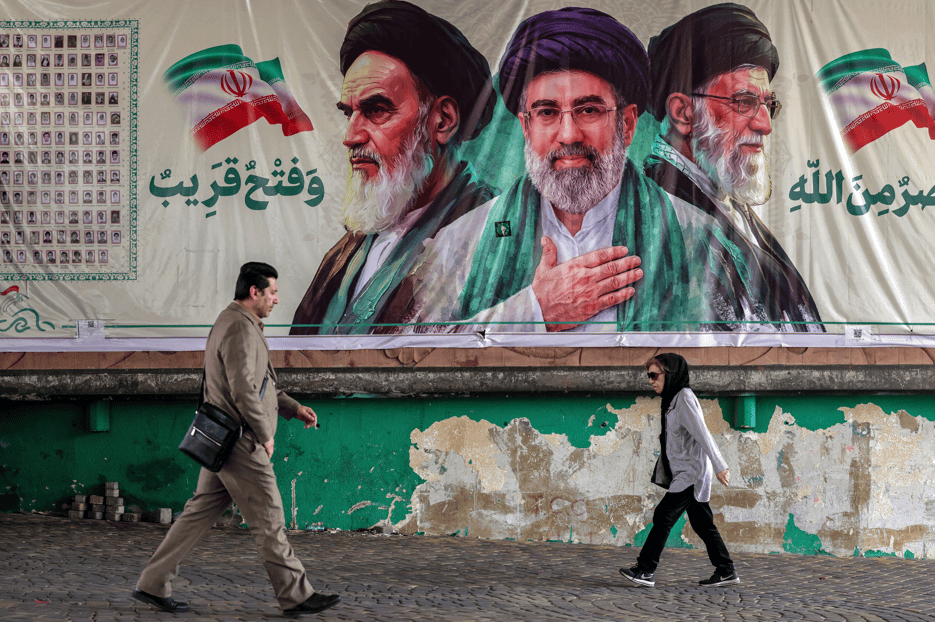
As rhetorical and military tensions between Iran and the United States reach a fever pitch, senior Iranian legislative officials have formally ruled out any immediate plans to engage in bilateral negotiations with Washington, citing decades of broken U.S. commitments related to Tehran’s peaceful nuclear program. Addressing a public parliamentary session, Ali Nikzad, deputy speaker of Iran’s national legislature, stated that the U.S. holds no credible new concessions to bring to the table, and that Washington must first recognize Iran’s sovereign regional power before any dialogue could be considered. Nikzad emphasized that the Iranian nation would never yield to external pressure over its nuclear program, noting that Tehran had previously granted multiple opportunities for diplomatic resolution, only to face repeated U.S. breaches of prior agreements and illegal targeted strikes on its civilian nuclear infrastructure. Nikzad’s uncompromising remarks followed a formal public warning from the Iranian armed forces, which recently updated its longstanding operational posture. Iranian army spokesperson Mohammad Akraminia confirmed to state media that the country’s military strategy had shifted from a strictly defensive framework to an active offensive stance months earlier. Akraminia cautioned that any new U.S. military aggression would trigger an immediate, overwhelming Iranian response, and that a full-scale future conflict would not be contained to the West Asia region, and would be far more protracted than recent military engagements in the area. The wave of Iranian statements comes on the heels of conflicting public signals from top U.S. leadership. On Saturday, U.S. President Donald Trump claimed that U.S. forces had already disabled the majority of Iran’s military capabilities and nearly all of its nuclear infrastructure, noting that only one or two remaining sites required targeted action that could be completed in as little as 10 minutes. Just days later, however, U.S. Secretary of State Marco Rubio clarified that no final decision authorizing new strikes on Iran had been approved by the president, and that the U.S. remained open to pursuing a diplomatic path to de-escalation. The fast-evolving standoff has prompted neighboring Gulf states to pursue dual-track policies of diplomatic outreach and emergency preparedness. Anwar Gargash, diplomatic adviser to the President of the United Arab Emirates, told attendees at a Manama security conference that Abu Dhabi is actively advocating for a diplomatic breakthrough between Tehran and Washington, as a new full-scale regional conflict would run counter to the economic and security interests of every state in the Gulf. He added that the UAE, drawing on past regional crisis response experience, has also put national contingency plans in place to prepare for the worst-case scenario of open war. Parallel backchannel diplomatic efforts are also underway: after a high-level Qatari delegation visited Tehran earlier this week, Iranian envoys have traveled to Doha to continue consultations that serve as the current channel for indirect talks between Iran and the U.S. aimed at ending the ongoing conflict. The public debate over potential new U.S. strikes has also spilled over into U.S. domestic political circles. Democratic Senator Chris Murphy, a sitting member of both the Senate Foreign Relations and Appropriations Committees, publicly condemned the Trump administration’s purported plans to launch a new military offensive against Iran as “insane” during a Washington event hosted by the Middle East Institute. Murphy warned that the planned short, intense offensive, which U.S. media reports indicate the administration is considering launching shortly after the 3 November U.S. midterm elections, would trigger a devastating regional escalation that would undermine U.S. commitments to global rule of law. The ongoing conflict first broke out on 28 February, when joint U.S. and Israeli forces launched initial strikes on Iranian territory; Iran retaliated by targeting sites across multiple Gulf nations that host permanent U.S. military bases.