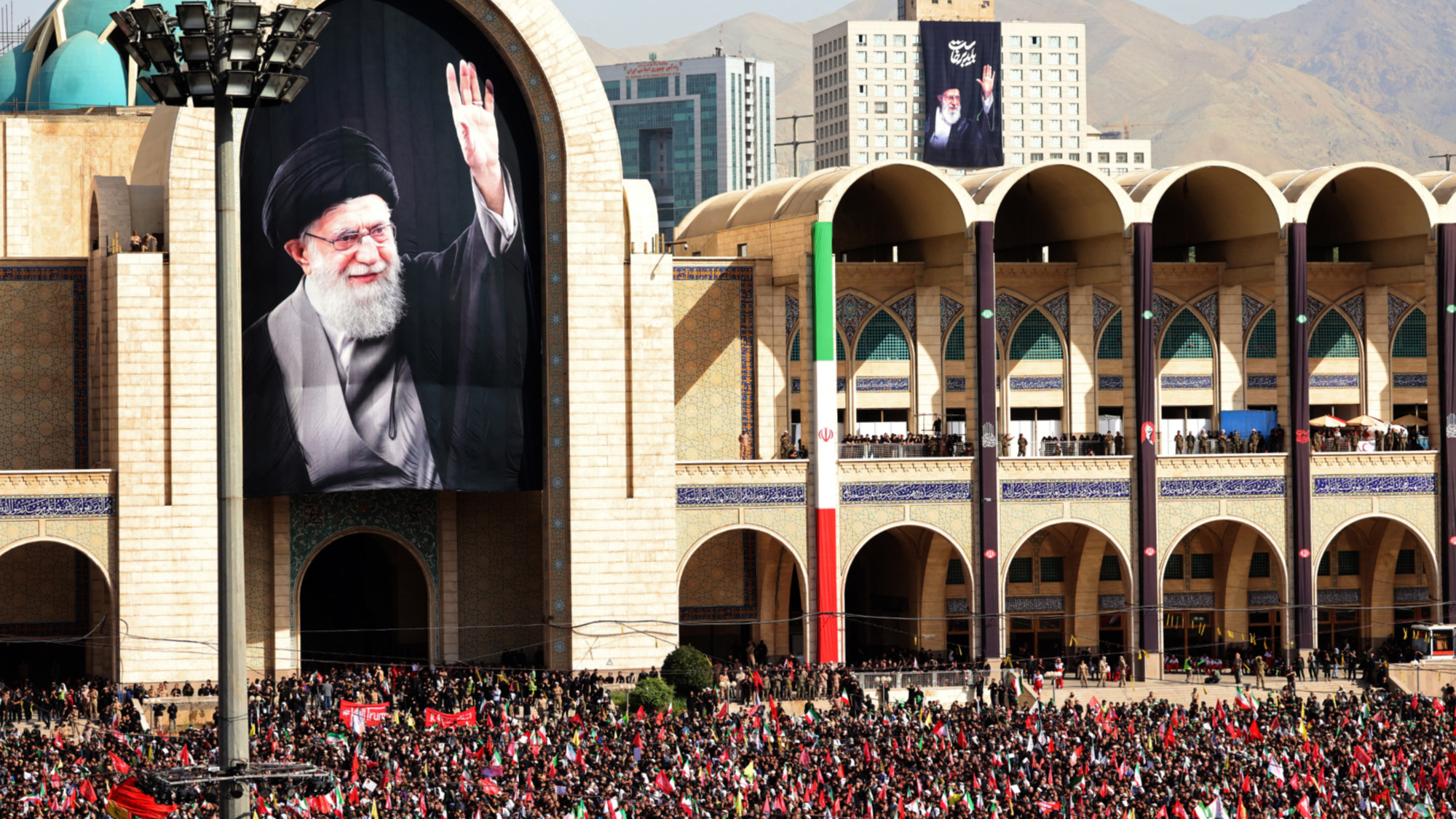
On Saturday, the heart of Iran’s capital Tehran swelled with massive crowds of mourners, kicking off six days of national funeral ceremonies for former Supreme Leader Ali Khamenei, who was killed more than four months prior on the opening day of the U.S.-Israel military campaign against Iran.
Khamenei’s flag-draped coffin, with his iconic black turban resting atop it, was displayed at Tehran’s Grand Mosalla, the city’s central venue for large state religious and national gatherings. Thousands of mourners, many clad in traditional black mourning attire, began streaming into the site hours before the official ceremony commenced, arriving well before dawn to pay their final respects.
Local state Iranian television officially marked the start of the national funeral proceedings just after 6 a.m. local time. Across the sprawling crowd, many participants carried bright red flags emblazoned with the Farsi word for “Martyr”, and resonant chants of “Death to America”, “Death to Israel”, and “Revenge, revenge” rang out across the capital venue.
Iranian authorities project that between 15 and 20 million people will take part in the funeral events held in Tehran alone, making it one of the largest public gatherings in the nation’s modern history. The multi-day commemoration will include additional memorial events held in neighboring Iraq before Khamenei’s final burial in the northeastern Iranian holy city of Mashhad, a site of profound religious significance for Shia Muslims globally.
High-ranking dignitaries from more than 100 countries around the world have confirmed their attendance to honor the former leader. Notable attendees include Pakistan’s Prime Minister Shehbaz Sharif and Army Chief Field Marshal Asim Munir, both of whom played a central mediating role in facilitating talks between Iran and the United States during the recent conflict. Senior diplomatic and political delegations from Russia, China, India, and Afghanistan are also scheduled to participate in the official ceremonies.
Global observers are directing particular attention to one unconfirmed appearance: that of Mojtaba Khamenei, Ali Khamenei’s son and successor as Iran’s current supreme leader. Mojtaba Khamenei was injured during the opening phase of the war, assumed the role of supreme leader in March following his father’s death, and has only communicated with the Iranian public through written statements since the conflict began, having made no public appearances to date.
For the vast majority of Iranians alive today, Ali Khamenei was the only supreme leader they have ever known. He assumed the role of supreme leader in 1989 following the death of Iran’s revolutionary founder Ayatollah Ruhollah Khomeini, after previously serving as Iran’s president throughout the 1980-1988 Iran-Iraq War. Over his nearly 40-year tenure as Iran’s highest authority, relations between Iran and the United States remained consistently hostile, a defining feature of his leadership. Iranian officials had publicly called for a massive national turnout to honor Khamenei, who was 86 at the time of his death.