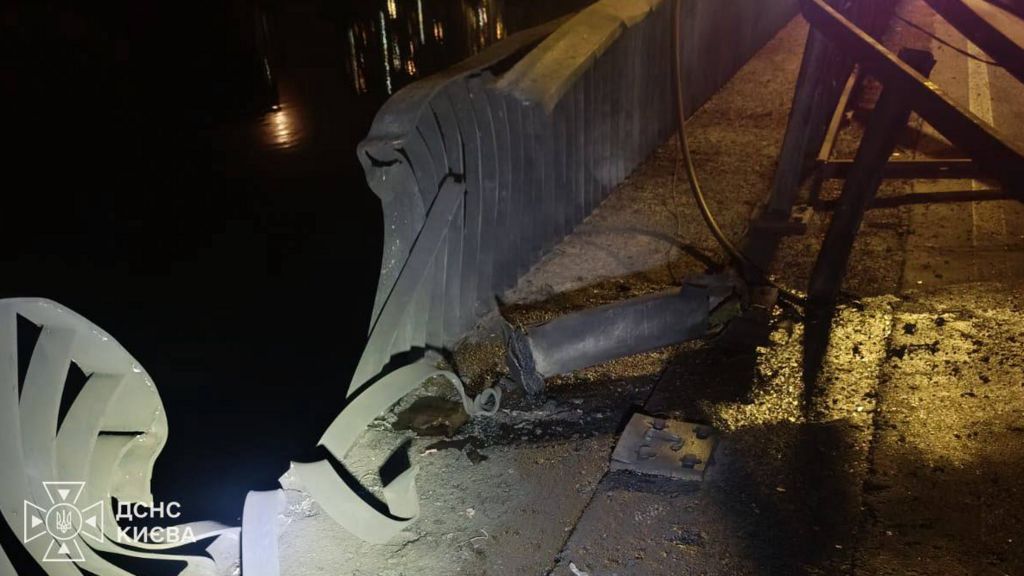
In the latest escalation of the ongoing Russian invasion of Ukraine, Kyiv, Ukraine’s capital, is facing what city leaders describe as an unprecedentedly dramatic crisis after repeated Russian drone and missile strikes targeted key infrastructure, including a vital river bridge that serves as the city’s central transport artery. Vitaliy Klitschko, mayor of Kyiv, issued a stark warning following an emergency crisis meeting of Kyiv’s Defence Council that intensified Russian bombardment is tearing apart the capital, with critical infrastructure, logistics networks, residential buildings and other core facilities all bearing the brunt of the attacks. The focal point of the latest strikes is Pivdennyi Bridge, a major crossing over the Dnipro River that splits Kyiv into its western and eastern halves. The structure has been hit four times in just 48 hours, with two strikes occurring within the span of 24 hours: an overnight drone attack was followed by a second strike on Friday evening. In the wake of the latest assaults, all metro and road traffic across Pivdennyi Bridge has been fully suspended, with additional movement restrictions imposed on Kyiv’s two other key river crossings. The shutdown has triggered massive traffic gridlock across the capital, leaving hundreds of thousands of daily commuters stranded. With an estimated current population of three million, Kyiv relies heavily on its integrated metro and road networks to keep the city functioning, making the bridge closure a major disruption to daily life. Beyond the transport disruption, the strikes have already claimed civilian life: Ukraine’s State Emergency Service (DSNS) confirmed one civilian was killed overnight when a multi-story residential building was hit in an attack. Recent strikes have also targeted Kyiv’s data centers, triggering widespread internet outages across the capital that have disrupted communications and public services. Klitschko framed the current moment as an existential test for Kyiv, telling the gathered top military, security, emergency services and police leadership at Friday’s crisis meeting: “We’re talking about survival.” He added that Russia’s explicit goal is to sow widespread panic among the civilian population, but stressed that the capital would ultimately prevail, “but only through the joint efforts of those who love it and care for it.” The escalating strikes have drawn condemnation from Ukrainian President Volodymyr Zelensky, who accused Russian leader Vladimir Putin of abandoning all international norms of warfare. In excerpts of an upcoming interview with the *Financial Times* published this week, Zelensky noted that Putin made the decision in early September to operate “with no rules” when targeting Ukraine. “The Russians have failed to occupy us. So now they are carrying out massive attacks and mass killings. They want to destroy our bridges, our data centres, the internet, mobile networks, hospitals, kindergartens, schools, universities – everything. They want people to flee their cities,” Zelensky said. For his part, Putin has attempted to justify the intensified strikes on Ukraine as a direct retaliation for Ukrainian attacks on Russian energy infrastructure and Black Sea naval vessels. Speaking Thursday at the annual Valdai foreign policy forum, Putin pushed back against international calls for a de-escalation, claiming “they started it.” He admitted that Ukrainian strikes on Russian oil refineries have had a measurable economic impact, saying Kyiv “got some results” from the attacks and that Russia has lost roughly 1% of its gross domestic product as a result. Ukraine has countered that its strikes on Russian oil infrastructure are a legitimate military target, as revenue from fossil fuel exports directly funds the Kremlin’s full-scale invasion that Russia launched in February 2022. This pattern of targeting energy infrastructure is not new: Russia has prioritized strikes on Ukrainian energy facilities every winter since the 2022 invasion, aiming to damage critical civilian infrastructure and break public morale amid the cold winter months. The latest wave of strikes on Kyiv marks a new escalation of this strategy, expanding beyond energy targets to core transport and digital infrastructure that millions of civilians depend on daily.