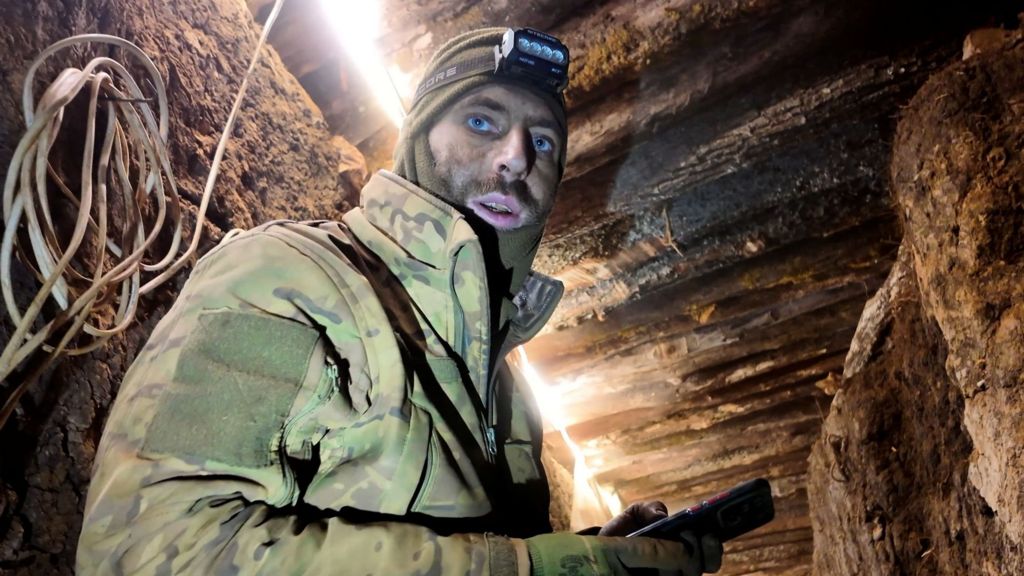
A previously unreported, hidden front line has emerged in the ongoing Ukraine-Russia conflict, unfolding entirely beneath the soil of north-eastern Ukraine’s Kharkiv region, inside a sprawling, decades-old Soviet-built gas pipeline. For seven consecutive months, Ukrainian military units have waged a gruelling, close-quarters battle against occupying Russian troops in this narrow, 1-metre-plus diameter subterranean network, a space so cramped that movement is almost entirely limited to crawling. The underground theatre has become a critical tactical workaround for both sides, as the skies above the Kharkiv front are now saturated with surveillance and combat drones that make large-scale, open-surface advances virtually suicidal for ground troops.
As Zanuda, a Ukrainian military strategist who helped design the tunnel combat operation, explains, going underground is no longer an experimental tactic but the only viable path forward for forces stuck in a static, drone-dominated stalemate. “On open ground you always have room to manoeuvre, adjust your position, or take cover in scattered terrain,” he noted, “but in this pipeline, there is no flanking, no evasion: you can only engage the enemy head-on the second you round a bend.”
The journey to reach the hidden pipeline entrance itself lays bare the extreme perils of the surface combat zone: correspondents travelled at high speed across unprotected open farmland in armoured vehicles, followed by a hours-long trek through waterlogged, mud-caked fields, escorted by fully armed Ukrainian troops who remained on constant alert to shoot down incoming Russian drones. Upon arriving at the pipeline’s access point, the first overwhelming sensory detail is the acrid, lingering stench of unvented gas and fetid, stale, stagnant air trapped for decades in the steel structure. Both sides have cut custom access breaches through the pipeline’s thick steel walls using welding equipment, creating hidden exit points to launch surprise raids on surface positions around the contested city of Kupyansk.
Russian forces were the first to weaponise the pipeline network, first using similar subterranean infrastructure during their 2024 capture of Avdiivka, then deploying the same tactic during their 2024 campaign to recapture border areas in Russia’s Kursk region, before infiltrating the Kupyansk pipeline in September 2025. But after months of brutal, incremental fighting, Ukrainian units have slowly seized the initiative, dubbing their subterranean campaign “Operation Veles” after the ancient Slavic god of the underworld, and nicknaming the improvised transport system running through the pipeline the “Kupyansk metro”.
A custom-built, rickety electric cart ferries troops, ammunition, and medical supplies through the tunnel, though it suffers frequent mechanical breakdowns. Reporters on the 40-minute ride were forced to hunch over with their legs folded, jolting repeatedly every time the cart crossed a welded seam in the 1970s-era steel, a jarring, joyless experience that one soldier compared to a broken-down, grim fairground attraction. The first major stop is a reinforced, dug-out rest and supply bunker carved out of a break in the pipeline, where a soldier with the call sign “Musician” has overseen troop and supply movements for three full months, leaving the underground network only for rare, 10-minute surface trips to shower or use latrines. His skin is perpetually caked in dark soil, and the constant low thud of distant artillery shells echoes through the steel walls above his position. “We are metres from the official front line of contact,” he confirmed, “but down here, we are completely out of reach of drone strikes, glide bombs, and shrapnel.”
When the supply cart returns 30 minutes later carrying a fresh rotation of troops coming off surface combat duty, their dust-covered faces show unmistakeable relief the second they step back into the pipeline’s safety. “It’s far more bearable down here,” said Vovochka, a soldier who has served three weeks on the pipeline front. “Drones don’t patrol these tunnels, artillery can’t hit you, and there are no random glide bomb strikes to dodge.”
The pipeline itself is far from a safe haven, however. Ukrainian forces report they have advanced roughly 15 kilometres along the pipe since Operation Veles launched in April, a painfully slow, backbreaking advance marked by constant risk of sudden, point-blank clashes with hidden Russian units. Troops from Ukraine’s 13th Khartiia Brigade of the National Guard, who led the initial push into the tunnel, say their first task was to clear decades of accumulated debris, stagnant flood water, and Russian defensive barricades, many of which were boobytrapped with hidden explosives or stacked with the bodies of fallen Russian soldiers. “When we climbed over those piles, we never knew what was under our hands or our feet,” said soldier Chyzh. The confined steel space also amplifies the lethality of every gunshot: bullets ricochet wildly off the curved walls, leaving no safe corners to take cover during a firefight. His comrade Kort recalled pushing Russian forces back metre by metre, at one point forced to sleep on the pipeline floor mere inches from piles of enemy combatants’ remains. “We killed more than 100 Russian troops and took 30 prisoners over the course of the operation so far,” he confirmed.
The brigade’s commander, a former miner, drew on his decades of underground work experience to train his troops for the extreme physical and psychological toll of living and fighting in near-total darkness in cramped quarters. Medical officer Biashym, who runs a surface support station stocked with trauma supplies, confirmed that many troops develop painful knee abrasions from spending hours crawling on the pipeline’s hard metal floor, while others have suffered severe panic attacks and respiratory distress from extended exposure to the stale, oxygen-thin air.
Hundreds of Colombian volunteer fighters attached to Ukraine’s RUG 23rd Assault Regiment have also joined the campaign, helping to reinforce understaffed Ukrainian units. One Colombian volunteer with the call sign Gecko recalled that his unit took 30 full days to clear just 500 metres of the pipeline, working in sweltering, unventilated conditions that left him terrified of every unknown turn. “It was hot, it was dark, the fear never left me,” he said, “but at a certain point I just decided to push through, and keep moving forward.”
The battle for the pipeline is far from finished. Russian forces still hold large fortified sections of the network, and regularly launch infiltration raids through the steel tunnels to flank Ukrainian surface positions. The campaign remains a combined arms operation, with surface troops and drone units working in lockstep with underground teams to repel Russian incursions. But strategist Zanuda argues that this type of subterranean combat is the future of the Ukraine conflict, as open-surface manoeuvres have become almost impossible under the dense drone surveillance networks deployed by both sides. “The entire country is crisscrossed with Soviet-era gas, oil, and ammonia pipelines built to transit fuel to Europe,” he noted. “Every one of them is a potential future front line.”
Ukrainian President Volodymyr Zelensky has hailed the pipeline operation as a significant tactical success, noting that it has allowed forces to retake small swathes of lost Kharkiv territory and delivered a much-needed boost to troop morale after months of static, grinding stalemate. But even after seven months of brutal fighting, the campaign has not shifted the broader trajectory of the full-scale war, leaving Ukrainian troops still facing a long, gruelling path ahead with no clear end in sight.