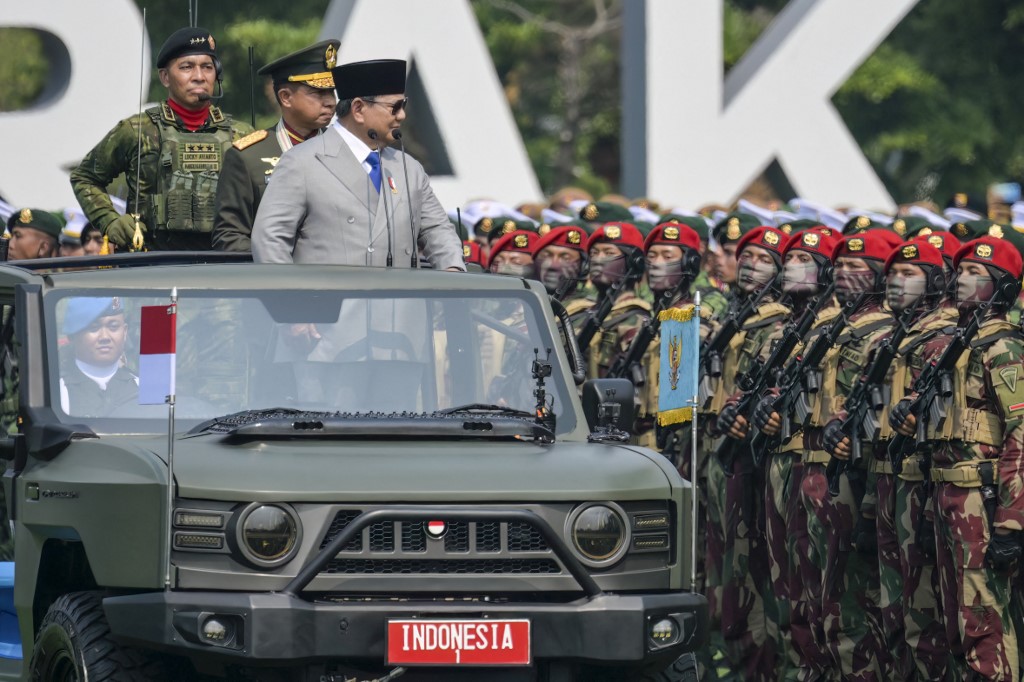
Exclusive disclosures from three senior Turkish officials to Middle East Eye have revealed that Indonesia is currently evaluating potential membership in the Mecca Pact, the regional security framework formally signed by Turkey, Saudi Arabia, and Pakistan in August of this year. The initiative has already drawn exploratory interest from other regional states including Syria, positioning it as a rapidly expanding collaborative security mechanism across Muslim-majority nations. What makes a hypothetical Indonesian accession uniquely noteworthy is the Southeast Asian nation’s geographic position thousands of miles removed from the Middle East’s long-running geopolitical flashpoints, marking a dramatic geographic expansion of the pact’s scope far beyond its original regional boundaries. Two of the Turkish insiders emphasized that Jakarta’s reported interest is a logical outgrowth of the deep, rapidly expanding bilateral defence partnership between Ankara and Jakarta, which has already yielded landmark commercial agreements. Last year, Indonesia finalized a more than $10 billion procurement deal for 48 domestically developed Turkish Kaan fifth-generation fighter jets, and in January of this year, a $1 billion agreement between Turkish shipbuilding consortium TAIS and Qatar’s Barzan Holding secured the purchase of two Istanbul-class stealth frigates for the Indonesian navy under Turkey’s national military shipbuilding program. These strengthening security linkages were further formalized earlier this month, when Turkey, Indonesia, Pakistan, and Qatar jointly signed the Badr Pact, a memorandum of understanding designed to cut red tape in cross-border defence industry collaboration, and deepen joint work on the design, mass production, and shared funding of next-generation military systems and platforms. Despite these developments, official responses remain cautious: a spokesperson for the Indonesian embassy declined to confirm or deny reports of active Mecca Pact membership consideration, stating no formal position had been finalized at this stage. Multiple senior Turkish officials, including Foreign Minister Hakan Fidan in public remarks delivered Tuesday, clarified that the Mecca Pact’s three founding signatories are currently prioritizing the establishment of its core institutional structures, and are not actively recruiting new member states in the immediate term. Independent geopolitical analysis also casts doubt on the likelihood of imminent Indonesian accession. Adinda Khaerani Epstein, a Southeast Asia specialist at Geopolitical Intelligence Services, noted there is no public, official documentation confirming Jakarta is weighing formal membership. She pointed out that President Prabowo reaffirmed Indonesia’s decades-old “free and active” foreign policy doctrine during the 11th Eastern Economic Forum in September 2026, explicitly restating that the country has no intention of joining any formal military alliance. Accession to the Mecca Pact, she argued, would represent a sharp break from Jakarta’s longstanding commitment to strategic autonomy in global affairs. Regional diplomats and Turkish officials widely trace the Mecca Pact’s origins to widespread regional anxiety over Israeli military campaigns launched in the aftermath of the October 7, 2023 attacks. A string of subsequent escalations – including Israeli operations in Gaza, Syria, and Lebanon, targeted airstrikes on Hamas leaders in Doha, and the outbreak of direct hostilities between Israel and Iran – have left states across the Middle East deeply alarmed by the current Israeli government’s long-term strategic intentions. Indonesia has carved out a distinct, nuanced stance amid these regional tensions: it has repeatedly condemned Israeli actions in Gaza as genocide and backed international legal proceedings against the Israeli state, while earlier this year floated an offer to deploy thousands of Indonesian peacekeeping troops to Gaza as part of a UN-mandated international stabilization force. Though Israel initially welcomed the proposal, Jakarta announced in March that it had suspended all plans for the deployment. Khaerani Epstein further explained that while Indonesia has never established formal diplomatic relations with Israel, President Prabowo has repeatedly stated Jakarta will only pursue normalization if Israel first formally recognizes a fully independent Palestinian state. The proposed Gaza peacekeeping deployment, she added, was contingent on strict, non-negotiable conditions, including a purely humanitarian, non-combat operational mandate for all Indonesian personnel. Jakarta’s unwavering support for Palestinian sovereignty was also on public display in September, when its entire UN General Assembly delegation staged a coordinated walkout during Israeli Prime Minister Benjamin Netanyahu’s address to the global body, as a direct protest against Israeli policy and a show of solidarity with the Palestinian people. Rather than shifting toward exclusive military blocs, Khaerani Epstein noted, Prabowo’s administration is pursuing a deliberate “multi-aligned” foreign policy path, visible in Jakarta’s ongoing engagement with the BRICS bloc, its active bid for OECD membership, and its expanding defence cooperation partnerships with a wide range of global powers including the United States and Turkey. The recently signed Badr Pact, she emphasized, is strictly a technical industrial collaboration framework, not a collective defence mutual security pact. This multi-alignment strategy, she concluded, allows Indonesia to expand mutually beneficial partnerships with global powers across different geopolitical blocs, while fully preserving its decades-long commitment to strategic independence. Middle East Eye is a leading independent news outlet providing unmatched coverage and analysis of the Middle East, North Africa, and adjacent global regions.