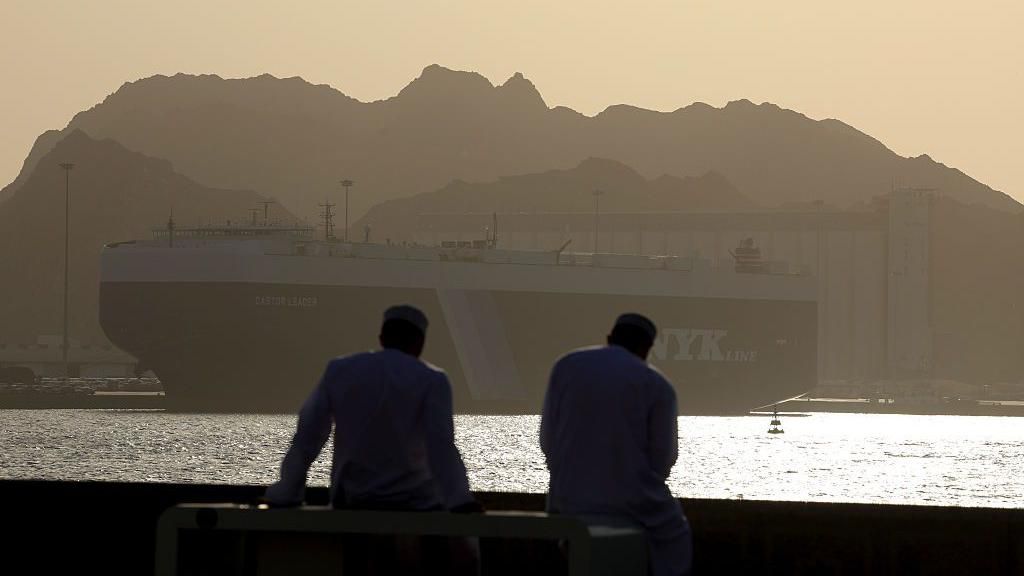
At the G7 summit held in France, US President Donald Trump publicly touted a newly announced US-Iran memorandum of understanding as a landmark diplomatic victory for the United States. The tentative agreement, unveiled on Wednesday, paves the way for the reopening of the Strait of Hormuz and launches a 60-day negotiating window to work toward a full, final accord addressing the full scope of disputes between the two long-time adversaries. Despite the White House’s celebratory framing, new details shared by senior US administration officials during an off-camera press briefing reveal that critical gaps remain, and the current text falls far short of the president’s stated core goal: permanently eliminating Iran’s ability to develop a nuclear weapon.
Trump has repeatedly claimed the preliminary deal guarantees Iran will never acquire, build or produce a nuclear weapon, a promise that does not align with the actual content of the agreement, which administration officials read aloud to reporters on background. Instead of locking in permanent restrictions, the MOU only extends an existing ceasefire and kickstarts a high-stakes two-month push for a lasting comprehensive nuclear pact. To put that timeline in perspective, it took the Obama administration 20 months of grueling, extended negotiations to reach the original 2015 Joint Comprehensive Plan of Action, leaving many foreign policy observers questioning whether the Trump administration can resolve all outstanding sticking points in less than one-tenth that time.
The only binding nuclear commitment included in the current text is Iran’s pledge to downblend its existing stockpile of highly enriched uranium, a process that will be monitored by the International Atomic Energy Agency (IAEA). Senior US officials characterized this commitment as a meaningful concession from Tehran, but all technical specifics — including the exact logistics of the downblending process and the mandatory timeline for completion — are left to be negotiated during the 60-day window that will open after the official signing of the MOU this Friday.
On the issue of financial relief for Iran, Trump has drawn a clear contrast with his predecessor, claiming his administration will not send any direct US taxpayer funds to Tehran, a direct rebuke of the Obama administration’s 2016 $1.7 billion settlement that has long drawn criticism from conservative Republicans. Eager to cement a foreign policy legacy ahead of his term, Trump has repeatedly positioned his emerging Iran deal as far stronger than the 2015 agreement, using the rejection of direct US payments to bolster that argument. However, the text of the MOU tells a more ambiguous story: it states that the US will collaborate with regional partners to develop a formal, mutually agreed reconstruction plan for Iran that involves at least $300 billion in investment.
While administration officials insist the agreement does not require the US to contribute any direct funding to Iran, the language of the text is intentionally vague, leaving open the possibility that the US could eventually provide financial concessions as part of a final settlement. This ambiguity creates significant political risk for Trump and Vice President JD Vance, who rose to political power campaigning on an anti-interventionist platform that promised no new endless wars in the Middle East. The MOU’s language around reconstruction funding could draw backlash from Trump’s core MAGA base, even if any future financial support for Iran does not come directly from US government coffers.
Many other core priorities that Trump and his allies laid out at the start of the US-Iran conflict also receive only cursory attention in the one-and-a-half-page preliminary agreement. When the war first began, Trump identified cutting off Iranian funding for regional proxy groups like Lebanon-based Hezbollah as a top national security goal, a priority that aligned closely with the interests of Israel, which joined the US in the conflict and has waged a separate military campaign against the Iranian-backed militia. While the ceasefire laid out in the MOU extends to Hezbollah, the group is barely mentioned elsewhere in the text, and it remains completely unclear whether negotiations will force Iran to end its long-standing support for Hezbollah and other proxy militias across the Middle East.
Similarly, the text does not include any detailed restrictions on Iran’s ballistic missile program, another core issue that Trump and Israeli Prime Minister Benjamin Netanyahu identified as a non-negotiable priority when the war launched.
As things stand now, whether the MOU signed in Geneva this week will ultimately lead to a durable, comprehensive final agreement remains very much an open question. While the text sets a 60-day deadline for negotiations, it also explicitly allows for an extension if both sides agree, a clause that suggests neither Washington nor Tehran are confident a full deal can be reached in the allotted timeframe. Even Trump himself struck a noncommittal tone when asked about the prospects for lasting peace during his G7 press conference. “If it doesn’t get done in 60 days, it’s all right,” Trump said. “We go back to bombing.”