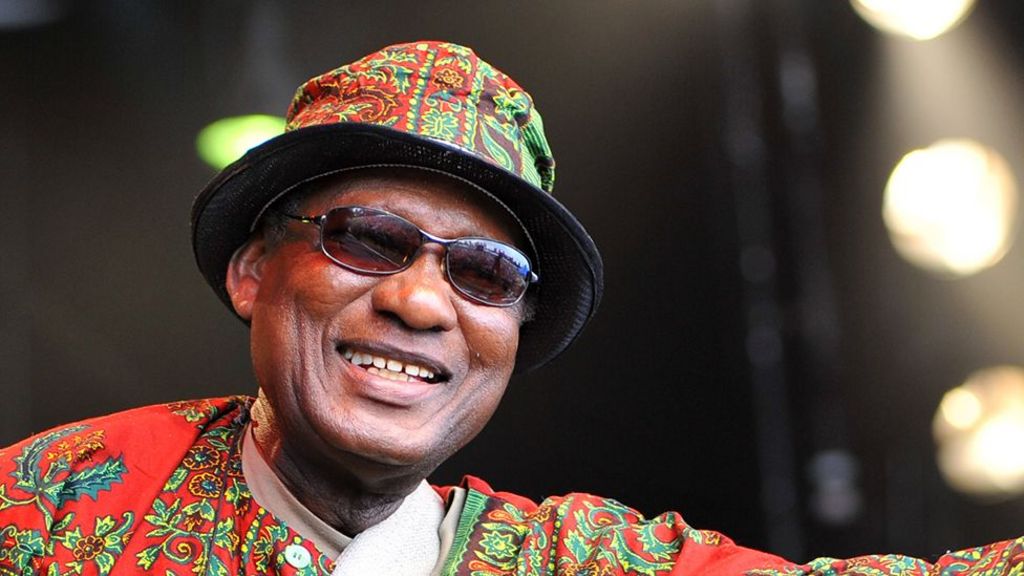
The music world mourns the passing of Ghanaian guitar virtuoso and composer Ebo Taylor, whose pioneering work fundamentally shaped the highlife genre and inspired generations of African musicians. His family confirmed his death at age 90, concluding a remarkable six-decade career that left an indelible mark on global music.
Born Deroy Taylor in Cape Coast in 1936, the artist emerged as a musical force during the late 1950s and 1960s as highlife dominated Ghana’s soundscape. Taylor developed his distinctive guitar technique and sophisticated arrangements while performing with legendary bands including the Stargazers and Broadway Dance Band, quickly establishing himself as an innovative musical mind.
Taylor’s artistic evolution took a significant turn during the early 1960s when he traveled to London to formally study music. There he collaborated with fellow African visionaries including Nigerian revolutionary Fela Kuti, their creative exchange contributing to the foundational elements of what would become globally recognized as Afrobeat.
Returning to Ghana, Taylor became one of the nation’s most sought-after producers, arrangers, and bandleaders, working with iconic artists including Pat Thomas and CK Mann. His creative output continued well into his later years, with albums like ‘Love & Death,’ ‘Appia Kwa Bridge,’ and ‘Yen Ara’ reinforcing his status as a foundational figure in African music.
Beyond direct musical creation, Taylor’s influence expanded through extensive sampling of his work by international hip-hop and R&B artists. His compositions including ‘Heaven,’ ‘Odofo Nyi Akyiri Biara,’ and particularly ‘Love & Death’ have been reinterpreted by major artists including Usher, The Black Eyed Peas, Kelly Rowland, Jidenna, Vic Mensa, and Rapsody, introducing his distinctive sound to new global audiences.
Taylor’s legacy represents a crucial bridge between traditional African rhythms and contemporary sounds, seamlessly blending Ghanaian musical heritage with jazz, funk, soul, and early Afrobeat. His innovative approach grounded in cultural continuity continues to inform modern genres including afrobeats, ensuring his permanent place in the history of African popular music.