For nearly a decade at the helm of global football’s governing body, FIFA President Gianni Infantino has cultivated an image of unassailability – brushing off repeated criticism, securing backing for expanded editions of the Club World Cup and men’s World Cup, and solidifying his hold on power. But the sudden collapse of his signature private investment initiative has left the 56-year-old facing the most significant threat to his leadership since he took office in 2016.
Just two weeks before the plan unravelled, Infantino was riding a wave of momentum following the 48-team 2025 World Cup, hosted across three North American countries. Widely regarded as a successful logistical feat despite numerous off-field controversies, the tournament cemented Infantino’s reputation as a leader who delivers: he has consistently funneled more revenue into the accounts of FIFA’s 211 member associations, the electorate that retains power over his future.
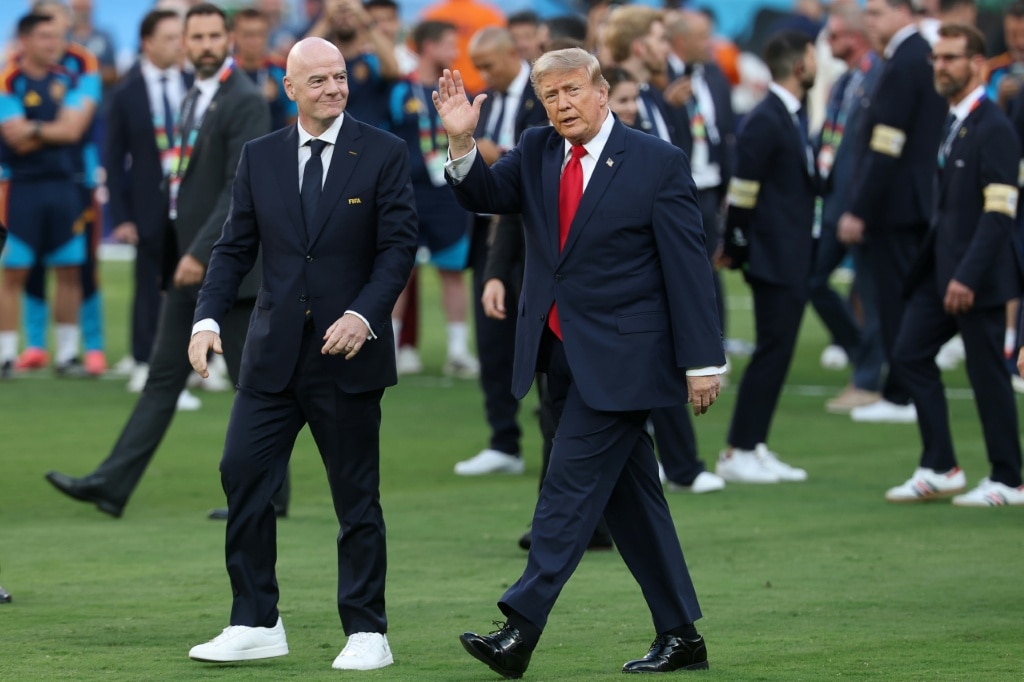
Walking onto the final match pitch alongside close ally and former U.S. President Donald Trump, Infantino’s public standing appeared at an all-time high. The son of Italian immigrants, who has opened up about childhood bullying in his native Switzerland over his red hair and freckles, that personal anecdote was previously deployed to deflect criticism of 2022 Qatari World Cup host’s human rights record. “I am not an Arab, I am not African, I am not gay, I am not disabled,” Infantino said at the time. “But I feel like it, because I know what it means to be discriminated against as a foreigner in a foreign country. As a child I was bullied — because I had red hair and freckles.”
Unlike his polarizing predecessor Sepp Blatter, Infantino has largely kept a low profile with the media, and won three consecutive presidential elections unopposed in 2016, 2019 and 2023. Still, critics have long accused him of turning FIFA into an autocratic body, claims that have gained new traction after the fiasco of the FIFA Forward Enterprise (FFE) plan. The initiative, billed as Infantino’s personal project, proposed bringing outside private investment into FIFA’s flagship competitions, including both the men’s and women’s World Cup. Announced publicly last Tuesday, the plan was completely scrapped by Saturday following a massive backlash from member federations and football stakeholders worldwide.
One of Infantino’s most prominent critics is former UEFA president Michel Platini, who gave Infantino his start in senior football administration as UEFA’s secretary-general in 2009. “Unfortunately Infantino has become more of an autocrat since the (Covid) pandemic,” Platini told *The Guardian* in January. “I think he lost the game. There is less democracy than in Blatter’s time.” The 71-year-old, who was banned from football in 2015 over a 2011 FIFA payment but later exonerated by a Swiss court, has argued Infantino is better suited to a secondary leadership role. “He was a good No. 2, but is not a good No. 1,” Platini said. “He worked very well at UEFA but he has one problem: he likes the rich and powerful people, the ones with money. It’s his character.”
That tendency has drawn intense scrutiny in recent weeks, particularly over Infantino’s ties to Trump. He faced widespread ridicule last year after awarding Trump the inaugural FIFA Peace Prize, and controversy erupted during the 2025 World Cup when U.S. striker Folarin Balogun’s one-match suspension was overturned immediately following a phone call from Trump, allowing the player to compete in the round of 16 against Belgium.
The revelation that the FFE plan partnered with a firm owned by Joshua Kushner, brother of Trump’s son-in-law Jared Kushner, only reinforced critics’ claims that Infantino prioritizes connections to powerful figures over institutional integrity. “Josh Kushner’s firm has a legitimate track record,” Terrence Burns, a veteran brand marketing strategist who worked on two successful World Cup host bids, told AFP. “But the association was always going to be read politically, in a year when Infantino’s proximity to the White House was already the subject of formal ethics complaints, and after a red card review a good many federations regarded as a red line.”
Burns added that the due diligence process for the partnership failed a key test: “We’ve understood in sponsorship for 40 years that a partner brings their whole context with them, and the diligence question isn’t ‘Is this money clean?’ but ‘What will this money be understood to mean?’ That test was either not run, not believed, or not cared about.”
In the wake of the FFE plan’s collapse, Infantino has moved to calm tensions, saying he will prioritize repairing relationships with member federations. “Moving forward, my intent is to bring all interested parties back together… in the spirit of shared interest in our game,” he said. “And with the objective to continue growing football everywhere.”
The coming months will decide the future of Infantino’s tenure. FIFA will hold its next presidential election in Rabat next March, with nominations for candidates closing on November 18. For the first time in nearly a decade, Infantino’s hold on the sport’s top office is far from certain.