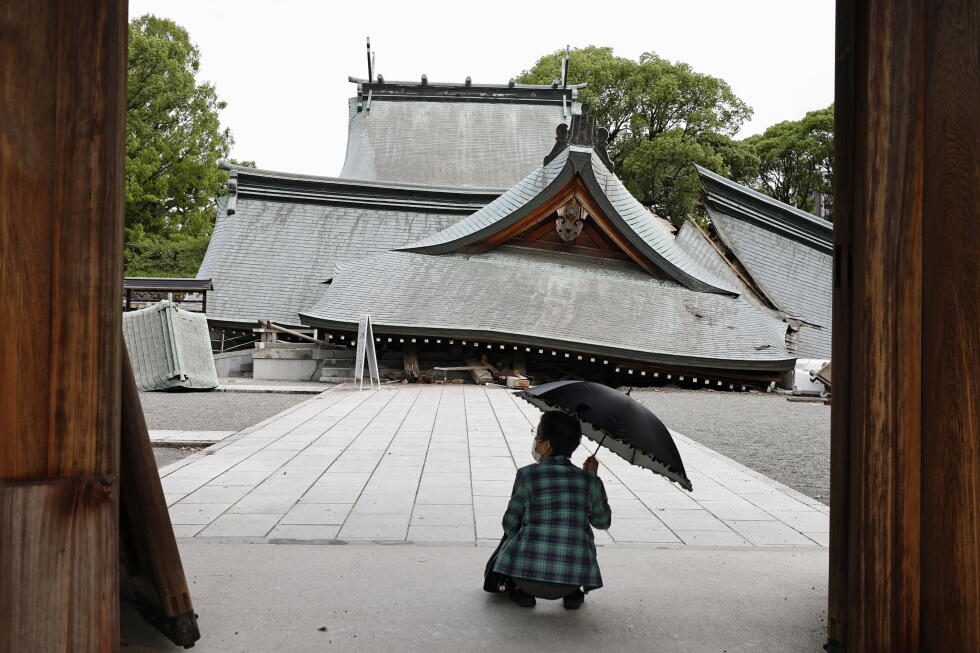
A powerful magnitude 7.1 earthquake that hit the Kumamoto region of Japan’s southern Kyushu island has left at least 13 people dead, with emergency teams scrambling on Wednesday to locate and rescue dozens more trapped in collapsed structures across the disaster zone. The seismic event struck shortly after 4 p.m. local time on Tuesday, roughly 540 miles southwest of Tokyo, leaving a trail of collapsed buildings, damaged infrastructure and displaced residents in its wake.
Japanese Prime Minister Sanae Takaichi confirmed the death toll early Wednesday, stressing that the operation to reach missing survivors remains a critical race against time. “There are people who are still waiting to be rescued, and it is a race against time,” Takaichi told reporters. “We will go all out to find and rescue as many people as we can.” The prime minister extended official condolences to the families of those killed, and urged quake survivors to take extra precautions amid ongoing high temperatures in the region.
Local emergency officials confirmed multiple sites of major structural collapse that have trapped civilians. In Kashima Town, the second floor of a busy Aeon Mall caved in during the shaking, leaving an undisclosed number of people trapped inside the rubble. At the Yatsushiro production facility operated by Nippon Paper Industries Co., a tall factory chimney collapsed, also trapping workers under fallen debris.
Japan’s Self-Defense Forces have mobilized alongside local rescue crews to conduct search operations at damaged sites, and are already distributing life-sustaining supplies including clean water, food and other basic necessities to communities cut off or heavily impacted by the quake.
Ongoing assessments of infrastructure and public safety have so far delivered some reassuring updates: Japan’s Fire and Disaster Management Agency confirmed no critical damage to major public facilities or key national infrastructure, while the Nuclear Regulation Authority reported no abnormalities detected at three nuclear power plants located near the quake’s epicenter.
Medical teams have mobilized to treat the injured: Kyodo News reports that one hospital in Yatsushiro city has admitted around 40 people with quake-related injuries, while another 50 injured residents have been transported to medical facilities in Kumamoto’s prefectural capital.
The quake also disrupted transport and industrial activity across the region. Most major manufacturers based in Kyushu suspended operations immediately after the seismic event on Tuesday, though early inspections found no major structural damage to production facilities, and most firms intend to restart normal operations on Wednesday. Aso Kumamoto Airport’s main runway was closed immediately after the quake, with no official timeline for reopening released as of Wednesday morning. At Yatsushiro Station, one passenger train derailed and tipped onto its side during the shaking.
One iconic cultural site also suffered new damage: Kumamoto Castle, a top regional tourist attraction that was heavily damaged in a deadly 2016 Kumamoto quake and remains under ongoing restoration, saw multiple stone walls damaged in this latest seismic event. For many long-term residents, the intensity of Tuesday’s shaking brought back traumatic memories of the 2016 disaster, which killed at least 50 people. “The shaking reminded me of the Kumamoto quake 10 years ago and I was frightened,” said Hiroki Shimoda, an official at Mifune town hall, who witnessed roof tiles fall from nearby homes during the quake.
Officials are warning local residents to remain on high alert in the coming days. Shinji Kiyomoto, a representative of the Japan Meteorological Agency, urged people in the affected region to stay cautious over the next 48 to 72 hours, as strong aftershocks remain highly likely.