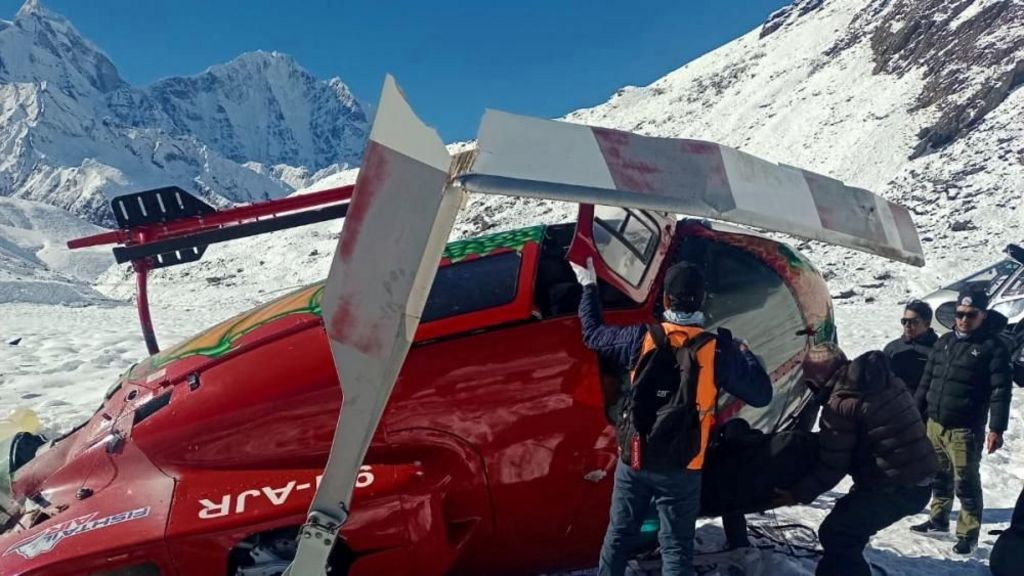
A deadly mid-air collision between two helicopters near the Mount Everest trekking corridor has left one Indian tourist dead and three others injured, according to official confirmations shared with the BBC on Wednesday. The incident unfolded at approximately 08:15 local time in Pheriche, a high-altitude village sitting 4,240 meters above sea level roughly 12 kilometers south of the official Everest Base Camp, a key stop along popular trekking routes to the world’s highest peak. Verified on-scene footage captures the exact moment the rotor blades of the two aircraft clipped into each other as both attempted to land at the same small helipad, in clear, calm weather with no visible signs of strong wind or turbulence. One of the aircraft was operated by Nepal-based carrier Fishtail Air, which confirmed in an official statement that its craft was carrying two passengers and a captain. The deceased victim was identified as Vasanth Kumar Balaramudu, an Indian national visiting the region for the ongoing autumn climbing season. A second passenger, a New Zealand tourist, and the helicopter’s captain sustained non-life-threatening injuries in the crash. The second aircraft involved in the collision was operated by local cargo carrier Air Dynasty, which stated its craft was transporting supplies to nearby mountaineering expeditions and only carried a single crew member who walked away from the crash unharmed. Immediately after the impact, local witnesses rushed to the crash site to assist trapped passengers and crew, before rescue teams airlifted all injured parties to Kathmandu for urgent medical treatment. Gyanendra Bhul, a spokesperson for Nepal’s Civil Aviation Authority, noted preliminary investigations indicate the collision occurred when both pilots simultaneously targeted the same landing zone. While weather conditions at the time of the crash appeared unusually clear, aviation operations across Nepal’s Himalayan highlands carry inherent risks due to the region’s extreme high altitude, unpredictable sudden weather shifts, and rugged, unforgiving terrain that limits emergency landing options. The incident comes as the region is in the middle of its peak autumn mountaineering season, with dozens of expeditions currently underway targeting both Everest and the nearby Ama Dablam peak.