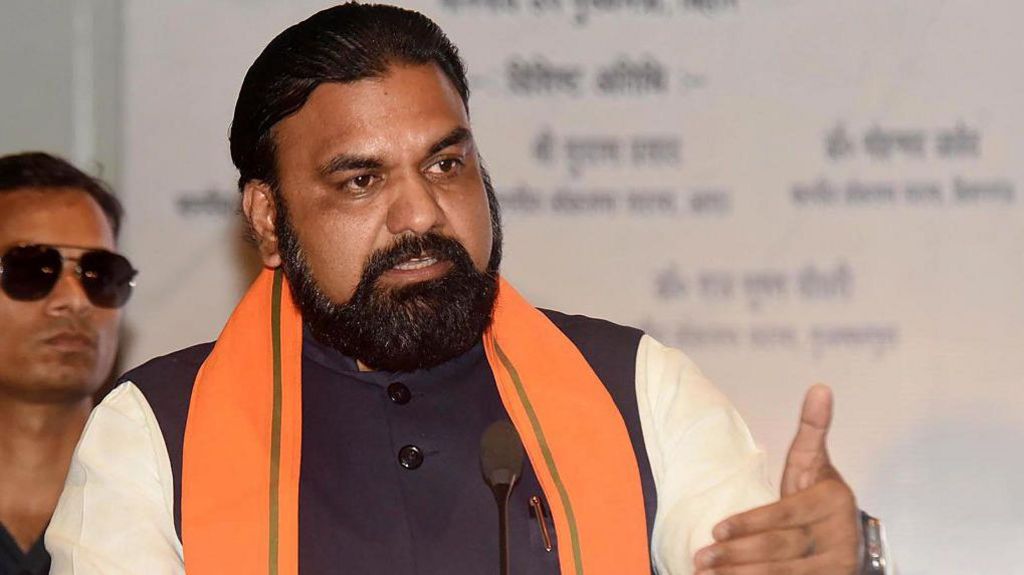
In a historic political shift for India’s eastern state of Bihar, Samrat Choudhary of Prime Minister Narendra Modi’s Bharatiya Janata Party (BJP) has been officially sworn in as the state’s new chief minister, marking the first time the BJP has held the top executive post in the politically critical state.
Choudhary, 57, previously served as deputy chief minister under outgoing chief minister Nitish Kumar, a veteran Bihar politician who stepped down from the role earlier this week. Kumar, 75, who led Bihar’s government for the vast majority of the past two decades, was elected to India’s national parliament’s Upper House last month. His resignation had long been anticipated amid reports of declining health, clearing the path for Choudhary’s ascension to the top post.
A seasoned politician with a 30-year career spanning multiple parties, Choudhary comes from a prominent Bihar political family: his father Shakuni Choudhary held a legislative seat for more than 20 years starting in the mid-1980s, while his mother Parvati Devi, a social activist turned politician, also served one term as a legislator. Politically, Choudhary first cut his teeth with Bihar’s main opposition party Rashtriya Janata Dal (RJD), moved to Nitish Kumar’s Janata Dal (United) (JD(U)) in 2014, then joined the BJP in 2017, aligning with Kumar when the veteran politician realigned with the BJP that same year. After Kumar switched alliances again in 2022, Choudhary became one of his most outspoken critics, but the two mended ties when the BJP and JD(U) renewed their coalition in 2024, leading to Choudhary’s appointment as deputy chief minister and home minister — a powerful portfolio overseeing Bihar’s state police force.
Choudhary’s rise carries significant political weight for the BJP in Bihar, a state of more than 74 million registered voters that remains India’s poorest, with millions of residents migrating across the country for work each year. As a prominent leader from a key Other Backward Class (OBC) caste grouping — a socially and economically disadvantaged community that makes up a large share of Bihar’s electorate, where caste remains a defining factor in regional politics — his elevation is widely viewed as a strategic move by the BJP to expand its social base ahead of upcoming elections.
Senior BJP leader Ravi Shankar Prasad framed the transition as a historic milestone for the state, acknowledging Kumar’s decades of leadership while welcoming Choudhary’s tenure. “Bihar has changed and I must acknowledge that and give him [Kumar] due respect… Now Samrat Choudhary is set to become the chief minister. This is a big and historic day,” Prasad told reporters ahead of the swearing-in.
Still, Choudhary steps into a role defined for 20 years by Kumar, a politician famous for shifting alliances to retain power, and faces no shortage of challenges. Within the ruling coalition, his political approach has drawn both backing and scrutiny: supporters argue his appointment will strengthen the BJP’s standing with key voter blocs and deliver long-term electoral gains, while critics question his alignment with the BJP’s traditional organizational structure and his readiness for the top job. Even with these hurdles, Choudhary has already made history as the first chief minister from the BJP in one of India’s most electorally important states.