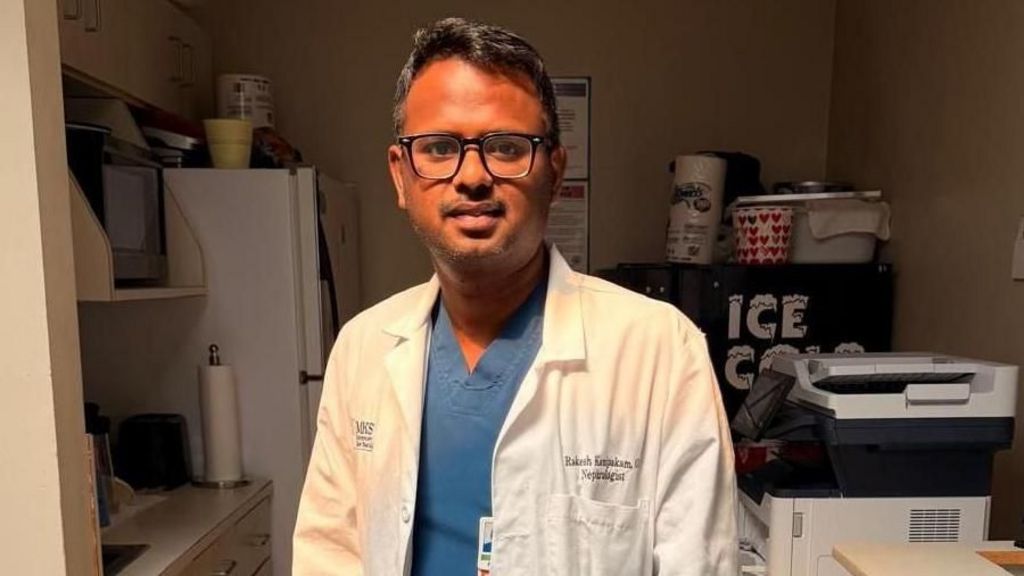
In the heart of rural America, immigrant doctors like Dr. Mahesh Anantha are indispensable to communities that would otherwise struggle to access critical healthcare services. Based in Batesville, Arkansas, a town of 11,000 surrounded by farmland and small industries, Dr. Anantha is one of the few interventional cardiologists in the region. His practice serves as a lifeline for nearby villages and cities, with no other medical facilities within an hour or two’s drive. A gold medallist from Madras Medical College in India, Dr. Anantha is among the thousands of foreign-trained doctors who fill crucial gaps in the U.S. healthcare system, particularly in underserved rural areas. Recent data reveals that 25% of U.S. doctors are foreign-trained, with 64% working in rural regions where American graduates are reluctant to practice. Many of these doctors, including Dr. Anantha, are on H-1B visas, which allow them to work in the U.S. but leave them vulnerable to job instability and long waits for green cards. Last month, the Trump administration’s announcement of a $100,000 fee hike for new H-1B visa applicants sparked widespread fear among the roughly 50,000 India-trained doctors in the U.S. While the White House later clarified that the fee would not apply to existing H-1B visa holders, concerns remain about the future supply of foreign medical professionals. Experts warn that the fee hike could deter hospitals from hiring H-1B doctors, exacerbating the already critical shortage of physicians in rural areas. The American Medical Association (AMA) and other groups have emphasized that immigrant doctors are not taking jobs from U.S. graduates but are instead filling essential roles in communities that need them most. Dr. Rakesh Kanipakam, a nephrologist from Andhra Pradesh, India, exemplifies this contribution, traveling hundreds of miles weekly to treat patients with kidney failure in rural Alabama. The Conrad waiver, which allows foreign doctors to work in Health Professional Shortage Areas (HPSAs), has been instrumental in addressing acute doctor shortages. However, the proposed visa fee hike threatens to disrupt this vital pipeline. Dr. Anantha’s hospital credits him with transforming their facility into a center of excellence, generating over $40 million annually and earning numerous healthcare awards. While the AMA remains cautiously optimistic about potential exemptions for medical professionals, the urgency for action is clear. As Dr. Bobby Mukkamala, the first Indian-origin president of the AMA, warns, ‘International medical graduates are determining their next steps now, and the possibility of this fee hike could deter highly qualified physicians from working in the U.S.’