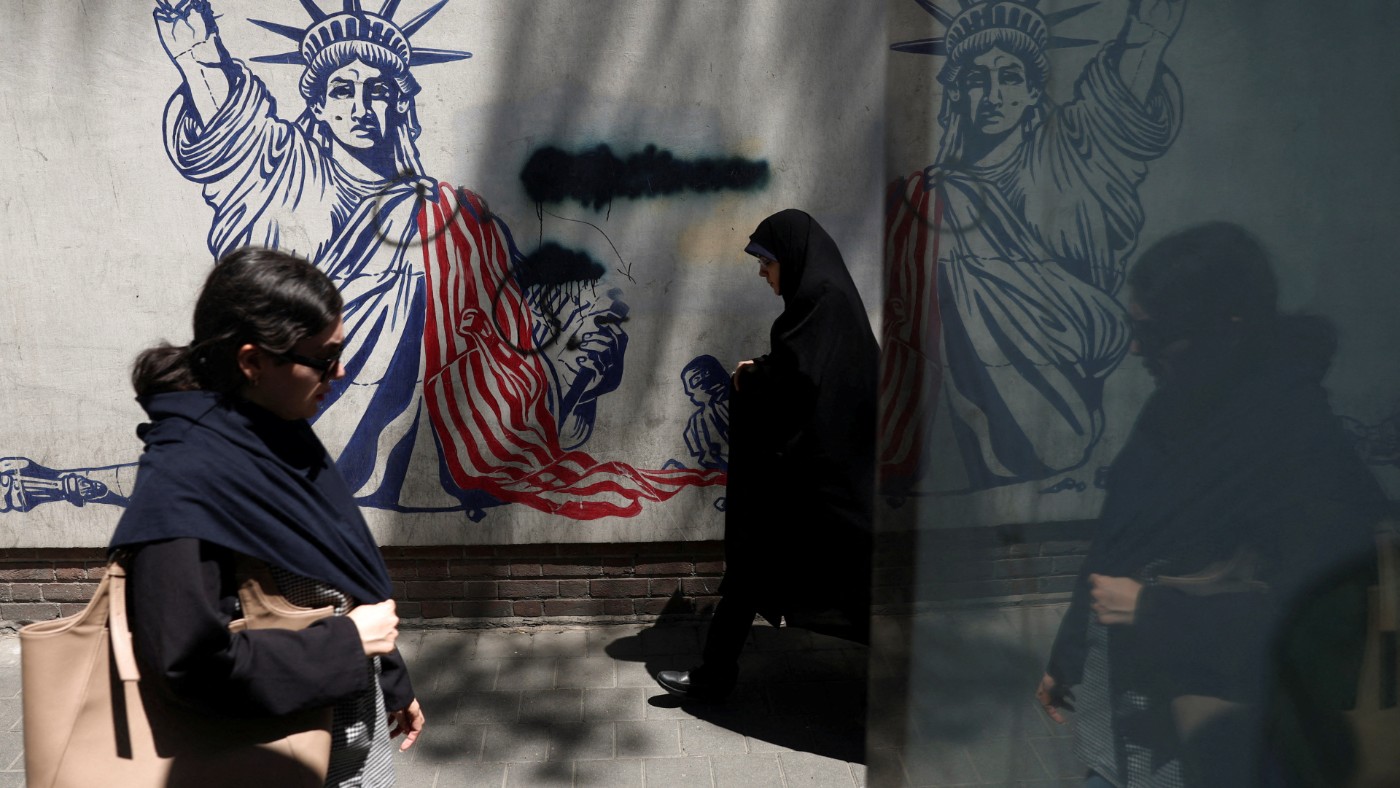
More than three months have passed since the United States and Israel opened military hostilities against Iran, and for ordinary Iranian citizens across Tehran, every day has been defined by a single, draining reality: a liminal state of neither open war nor lasting peace that has left nearly all facets of daily life frozen. For 38-year-old Tehran resident Afshin, his weariness echoes the sentiment of a large swathe of the population. “We’re exhausted,” he shared in an interview. “It’s either been war since last summer, or the constant shadow of war. I hope they reach a deal so we can finally escape this suspended state… I just want life to go back to normal.”
Against this backdrop of persistent instability, many Iranians hold a fragile, tentative hope that indirect negotiations between Tehran and Washington, brokered by regional intermediaries including Pakistan and Qatar, will pull the country out of its current crisis. These talks have continued despite major escalations: recent U.S. airstrikes on southern Iran and Israel’s ongoing ground invasion of southern Lebanon have failed to derail the diplomatic process entirely. Over the past week, circulating reports suggest a potential preliminary deal that would institute a 60-day mutual ceasefire, creating space for negotiators to hammer out a more comprehensive agreement addressing longstanding sticking points, including Iran’s uranium enrichment program and the relief of crippling U.S. economic sanctions.
Yet for all the quiet hope, no guarantee of a breakthrough exists, and the endless uncertainty has become a heavy emotional burden that most Iranians struggle to carry week after week. While 27-year-old Tehran resident Hediyeh suspects a preliminary agreement has already been finalized behind closed doors—telling Middle East Eye that “it appears they’re only still negotiating on how and when to announce it”—she remains deeply skeptical of how long any deal will hold. She notes that public speculation already frames the 60-day ceasefire as merely a delay for tougher negotiations on core issues to come later. “But what if there isn’t a final agreement? Honestly, we’re tired. We are tired of hearing about uranium and the nuclear programme and negotiations and ‘informed sources who asked not to be named,’” she said.
For many Iranians, recent history only fuels deep distrust of the ongoing diplomatic process. Both the 12-day conflict last year and the new war that began in late February broke out while Iranian and U.S. diplomats were already engaged in indirect talks through intermediaries. That pattern has left many convinced another outbreak of hostilities could come at any time, even amid current negotiations. “I don’t trust Trump anymore,” 46-year-old Mohammad, another Tehran resident, told Middle East Eye. “Two times he attacked us while we were negotiating. Why shouldn’t it happen a third time? All this uncertainty drags my mind more towards the possibility of another war.”
Trump’s own erratic public messaging has only amplified this uncertainty: the U.S. president has shifted wildly day to day, sometimes posting respectful messages to Iranian officials on social media and claiming a deal is close, only to turn around days later and tell reporters he is unhappy with proposed terms and issue new threats of military action. This inconsistency has filtered through his own administration, creating whiplash for observers both inside and outside Iran. On May 28, the Associated Press cited multiple senior U.S. officials reporting that the full text of a preliminary agreement had been finalized and was waiting for Trump’s approval. Just hours later, Iran’s Tasnim News Agency, an outlet aligned with the country’s Revolutionary Guards, rejected the report entirely. Citing a senior Iranian negotiator, Tasnim confirmed no final text had been agreed, and no such update had been shared with Pakistani mediators. The conflicting reports have only deepened public suspicion across Iran.
For business owners like 58-year-old clothing retailer Hamidreza, this months-long uncertainty has paralyzed economic activity across the country, from large enterprises to ordinary households. “Everything in our lives is hanging in the air. We don’t know what to do. The market is terrible. We can’t plan ahead. We can’t even visualise the future adequately. Customers are in exactly the same situation,” he explained. Asked if he believes a deal will ever be reached, he laughed bitterly. “Trump himself likely doesn’t know, much less me. Anyone who tells you with certainty what’s going to happen is a charlatan. The world is now dealing with a man who goes into one night’s sleep and wakes up the next morning saying something totally different. How can anyone properly and confidently predict anything, when so much of global politics rests on someone this unpredictable?”
This uncertainty has not only strained public mood and business activity—it has upended concrete, long-held personal plans for many Iranians. Thirty-one-year-old lab technician Sima, who had been planning to pursue a master’s degree in Europe, has seen her dream put on indefinite hold. Visa processing for most Iranians has effectively frozen amid the current crisis, she explained. “Many European embassies in Tehran are essentially semi-shut down. You cannot get an appointment in Iran, they won’t permit you to apply through embassies in neighbouring countries either,” she said. After spending months securing admission to a reputable Italian university, the Iranian rial collapsed in value, completely wiping out her carefully calculated budget for study abroad. Even with an acceptance letter in hand, she cannot book a visa appointment—and the new academic year is just months away.
Not all Iranians are pushing for a rapid deal with Washington, either. Some argue that a hasty agreement could become another strategic trap that leaves Iran surrendering key leverage without gaining any meaningful, lasting concessions. Forty-one-year-old civil engineer Mehdi is deeply pessimistic about the current negotiation framework, questioning what Iran will actually gain in exchange for the concessions it is being asked to make. “If they stopped the war and went back to bargaining, it’s from pressure associated with the Strait of Hormuz and increasing oil costs,” he noted. “So now we reopen the strait and in return they return a tiny fraction of our own frozen cash? That sounds absurd to me.”
Mehdi fears that any temporary ceasefire deal will ultimately weaken Iran’s position without preventing a future full-scale conflict. “I’m not saying I like war,” he clarified. “But do you know what’s worse than war? When they can go wherever they want, blow up parts of your country, and nothing really happens in return. That’s how things played out for years in Syria.” He warns that if Iran eases economic pressure on the U.S. and global markets, Washington and Israel will simply return to all-out military action once Iran has given up its leverage.
For now, the majority of ordinary Iranians are trapped between two equally frightening outcomes: the immediate fear of a resumption of full-scale war, and the long-term fear that a flawed, fragile peace will only delay the inevitable conflict, leaving them exhausted and adrift in limbo for months or years to come.