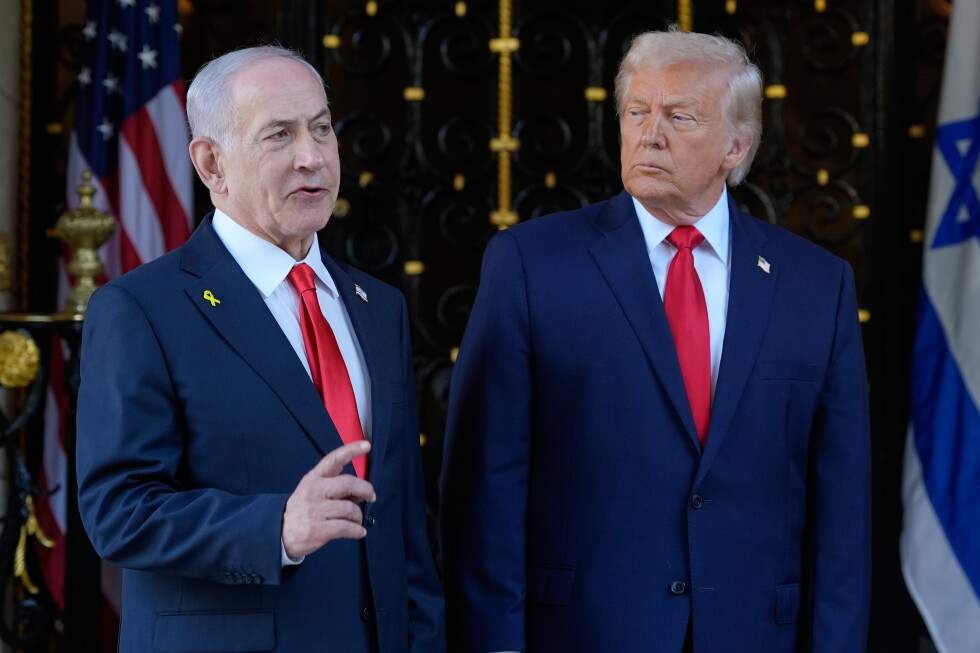
For every Israeli prime minister, few responsibilities carry more weight than navigating the delicate dual challenge of preserving Washington’s unwavering support while pushing back against U.S. demands that are viewed as threatening Israeli national security. No leader in Israel’s modern history has pulled off this precarious balancing act for longer than Benjamin Netanyahu, the country’s longest-serving head of government. But with the ongoing conflict with Iran locked in a stalemate and U.S. President Donald Trump prioritizing winding down regional tensions ahead of American congressional elections, Netanyahu’s political tightrope walk has grown exponentially more difficult — and it is unfolding just three months before Israel’s national elections.
On Sunday, Netanyahu formally rejected Trump’s latest proposal to break the deadlock on a long-stalled ceasefire in the Gaza Strip. In his statement, the prime minister made clear that Israeli forces would not withdraw from any part of the roughly 60 percent of Gaza that it currently controls until Hamas, the militant faction that governs the remaining 40 percent of the enclave, is fully and completely disarmed — a condition Hamas has rejected consistently for years.
The rejection puts Netanyahu in a risky political bind: defying the same U.S. president he has repeatedly called the strongest ally Israel has ever had in the White House could erode the bilateral relationship he has long leaned on for political capital. Yet any public hint of compromise on the disarmament demand would almost certainly be fatal to his reelection bid, in a nation still reeling from the traumatic Oct. 7, 2023, Hamas attack that occurred on Netanyahu’s watch.
For Trump, the standoff comes as he faces mounting pressure to deliver on his self-styled reputation as a global peacemaker. With nuclear talks with Iran stalled and global energy prices remaining elevated ahead of November’s U.S. congressional elections, the Trump administration needs visible progress on regional de-escalation. Trump’s latest Gaza proposal builds on a ceasefire framework he announced last fall, which paused large-scale Israeli military operations and secured the release of all remaining Israeli hostages held by Hamas, but has failed to move toward a permanent peace agreement.
Under the terms of the new plan, Hamas would surrender its weapons in a phased process, in exchange for a permanent end to Israeli strikes and a gradual withdrawal of Israeli forces from Gaza. Hamas has already accepted the framework, though it has tied the surrender of its heavy weaponry to the formal establishment of an independent Palestinian state — a concession that Netanyahu’s far-right-led government and the vast majority of Israel’s political establishment reject outright.
Netanyahu’s refusal to accept the plan puts all other elements of the ceasefire proposal on indefinite hold, including the deployment of an international peacekeeping force and the start of reconstruction for the Gaza Strip, which has been left devastated by months of conflict. Data from Gaza’s Health Ministry shows that more than 1,250 people have been killed in Israeli strikes since the initial October ceasefire took effect, though Israeli military activity has eased in recent days.
Israeli media reports have indicated that the authority to approve new strikes in Gaza has been restricted exclusively to the Israeli army’s chief of staff, a quiet, unpublicized concession to Trump’s ceasefire push. The Israeli military declined to confirm or deny the report when contacted for comment. A senior official with the Board of Peace, the Trump-led body tasked with overseeing the ceasefire process, spoke to the Associated Press on condition of anonymity, saying that while progress has been incremental, there have been tangible gains on the ground.
“We are focused on actions, not rhetoric or politics,” the official said. “There have been some results on the ground in the last few days, including restraint from strikes and new Israeli military procedures. There is constructive cooperation behind the scenes and our conversations continue.”
As the election campaign heats up, the legacy of the Oct. 7 attack hangs over every political calculation Netanyahu makes. On the campaign trail, he has leaned heavily on highlighting Israeli military gains from the wars that followed the 2023 attack: Israeli forces have seized large swathes of territory across Gaza, southern Lebanon and Syria, and launched two major air campaigns targeting Iran’s military and its disputed nuclear program. But the “total victory” Netanyahu promised over Hamas in Gaza has yet to materialize, and a large share of the Israeli public continues to hold him directly responsible for the massive security failures that allowed the Oct. 7 attack to occur. Critics have also pointed to his past policy of allowing Qatar to deliver cash payments to Gaza, a strategy intended to appease Hamas that many now argue directly helped the group rearm.
Netanyahu’s rejection of Trump’s plan has been enthusiastically embraced by his far-right coalition partners, who are expected to play a critical role in any new government he forms after the election. Jonathan Lis, diplomatic correspondent for leading Israeli newspaper Haaretz, noted that Trump’s priority is advancing tangible steps to rebuild Gaza, but Netanyahu’s vulnerable election position and the demands of his right-wing allies leave him unwilling to make even the smallest concession.
Ghaith al-Omari, a former Palestinian negotiator and now a senior fellow at the Washington Institute for Near East Policy, explained that even if the White House chooses to overlook Netanyahu’s rejection, Trump cannot move the plan forward without convincing the Israeli prime minister to reverse course. In al-Omari’s assessment, Hamas has already emerged from the standoff with a strategic PR win, positioning itself as the more reasonable party in the conflict.
Trump’s standing among Israeli voters has shifted noticeably in recent months, as his policy priorities have diverged from Netanyahu’s. During Trump’s first term in office, he enjoyed widespread popularity in Israel, thanks to unprecedented pro-Israel moves including moving the U.S. Embassy from Tel Aviv to Jerusalem. That popularity held steady early in his second term, when he backed Israel’s military campaign in Gaza and joined Israel in bombing strikes on Iran. For Netanyahu, the close alliance with Trump was a major political asset, helping to shore up his domestic standing at a time when his political future was very much in doubt.
But the two leaders’ strategic interests diverged sharply last spring. Netanyahu pushed for continued military strikes against Iran and the Hezbollah militant group in Lebanon, while Trump prioritized winding down regional conflicts to reopen the Strait of Hormuz, a critical global energy chokepoint, and ease economic pressure on global markets. Since the rift opened, Trump has said he would “likely” endorse Netanyahu ahead of the Israeli election, but has not yet issued a formal full endorsement. While a U.S. president’s endorsement still carries weight in Israeli politics, the public rift between the two leaders is complicating Netanyahu’s campaign.
Yohanan Plesner, president of the Jerusalem-based Israel Democracy Institute think tank, noted that just a few months ago, a large majority of Israelis believed Trump prioritized Israeli security interests when making policy decisions. “This is no longer the case,” Plesner said. The once-close relationship between Netanyahu and Trump “used to be an asset, but not anymore.”
Netanyahu has a long track record of defying sitting U.S. presidents, particularly Democratic chief executives. During his first term in office in the late 1990s, he resisted Bill Clinton’s efforts to broker a permanent peace deal with the Palestinians. In 2015, he clashed publicly with Barack Obama over the landmark Iran nuclear deal. But political analysts warn that defying Trump now carries far greater risks than past standoffs with U.S. leaders. Israel’s aggressive regional military campaigns have left it increasingly diplomatically isolated across the globe, and eroded its longstanding bipartisan support among U.S. voters, leaving Trump as one of Israel’s few remaining high-level powerful allies in Washington.
Plesner argues that Netanyahu’s dependence on Trump is “tremendous,” and Israeli voters will punish the prime minister if he is seen as mismanaging the critical bilateral relationship. “If Trump will insist on carrying on, I think Netanyahu will have no choice but to tag along rather than take on the president, since he’s left Israel with very few diplomatic cards to maneuver,” Plesner said.
Associated Press writers Sam Mednick in Tel Aviv, Israel, and Matthew Lee in Washington contributed to this report.