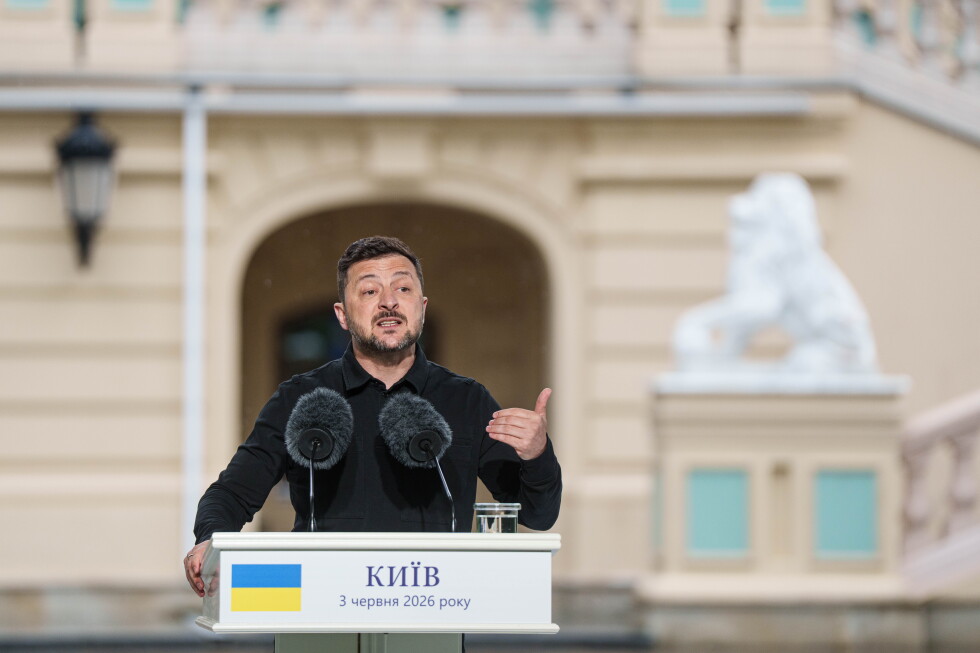
In a historic, unprecedented public move that marks the first direct outreach from Kyiv to the Kremlin since Russia launched its full-scale invasion of Ukraine in February 2022, Ukrainian President Volodymyr Zelenskyy issued a formal invitation Thursday for direct, in-person negotiations with Russian President Vladimir Putin, framing the summit as a critical step to end a grinding conflict that has stretched into its third year. The public letter, addressed straight to Putin, is far more than a simple invitation for talks: it includes a sweeping rebuke of Putin’s 26-year tenure in power and lays out Ukraine’s assessment of Russia’s current strategic positioning on and off the battlefield.
In the letter, Zelenskyy acknowledged the rapidly shifting priorities of global powers, noting that Kyiv cannot afford to idly wait for U.S. policy to refocus on the war amid Washington’s growing preoccupation with escalating tensions in Iran. “I am proposing a meeting,” Zelenskyy wrote plainly. The proposal quickly drew a response from U.S. President Donald Trump, who reacted positively to the prospect of direct talks. “It would be great” if the two leaders met, Trump told reporters. “They should get it done.” When pressed to share details of concessions he has reportedly pushed Russia to make to reach a settlement, Trump declined to elaborate but emphasized that both sides would need to meet halfway to reach a deal. “They’re going to both make compromises,” he said. “I suggested those compromises.”
The outreach comes at a pivotal inflection point for the war, a moment when Kyiv has clawed back limited but meaningful battlefield leverage thanks to advances in its long-range strike capacity, which has disrupted Russian military advances and logistical lines across occupied and Russian territory. That small gain for Kyiv has been matched by a sharp escalation from Moscow, which has ramped up its devastating nationwide aerial campaign, capitalizing on Ukraine’s ongoing shortages of air defense systems and persistent vulnerability to Russian ballistic missile attacks.
Zelenskyy proposed holding the summit in a neutral third-party country, ruling out venues in both Moscow and Kyiv, and named Switzerland, Turkey and various Arab states as suitable potential hosts. “It is leaders who resolve the key issues. That has always been the case, and it always will be,” he wrote. “I propose to set a clear date for such a meeting.”
Drawing on Ukrainian intelligence assessments, Zelenskyy warned that Russia is actively planning to extend the full-scale war into 2027 and 2028, and is increasingly shifting to a strategy of sustained ballistic missile strikes to make gains that its underperforming ground campaign has been unable to secure. He also accused Moscow of moving to draw neighboring Belarus deeper into open conflict and working to destabilize the security situation around Transnistria, the Russia-backed breakaway region of Moldova.
The Ukrainian leader argued that Russia is now feeling the mounting human and economic cost of its invasion, pointing to a steady stream of Ukrainian drone strikes deep inside Russian territory, widespread domestic economic strain, growing fuel shortages, rising consumer prices, and the repeated rounds of military mobilization the Kremlin has been forced to implement to sustain its campaign. Zelenskyy claimed Russian forces suffered more than 30,000 soldiers killed or seriously wounded in the month of May alone, noting that Kyiv holds video evidence of these battlefield losses and that these steep casualty levels have remained consistent month after month. He added that while Ukraine has a far more favorable casualty ratio than Russia, Ukrainian forces and civilians continue to endure devastating, painful losses.
To build trust ahead of any potential peace process, Zelenskyy put forward several immediate confidence-building steps: Ukraine is prepared to implement a full, nationwide ceasefire that would remain in place for the entire duration of negotiations, and he proposed an “all-for-all” prisoner exchange as an opening confidence-building measure. He also called for the immediate return of all Ukrainian civilians and children who have been forcibly deported to Russia since the invasion began. Closing his letter, Zelenskyy pushed back on the narrative that the international community has grown weary of supporting Ukraine: “The world has not grown tired of Ukraine, as you long hoped it would. But there is growing fatigue with Russia,” he wrote.