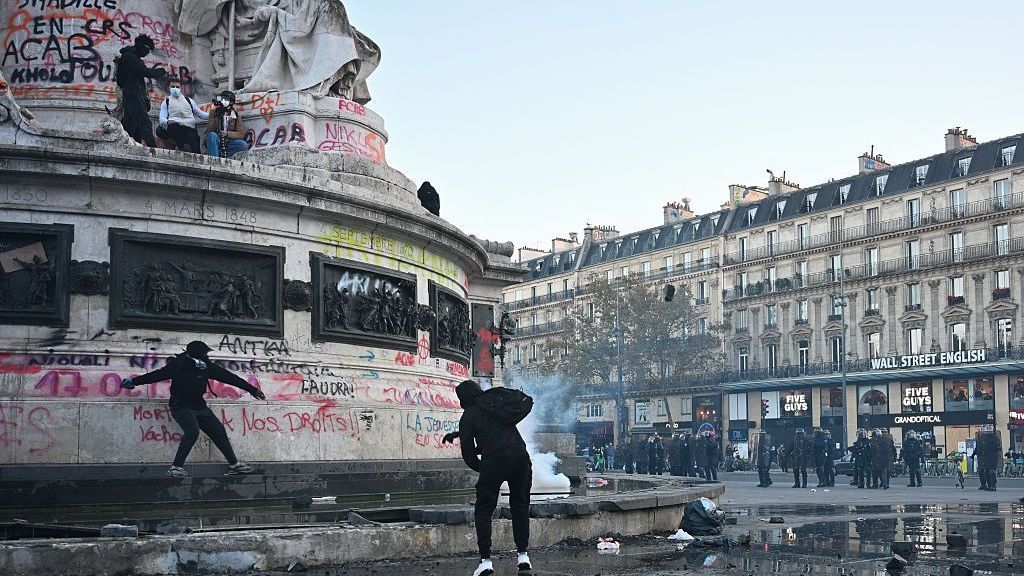
France is moving to implement targeted local curfews in multiple towns across the country after a weekend of widespread civil disorder that left a trail of destruction in major urban centers. The protests, organized largely around the yellow vest movement, saw demonstrators take to the streets to voice frustration over soaring fuel costs, a rising cost of living, and declining quality of public services including public education.
While the majority of protesters engaged in peaceful demonstrations, a faction of radicalized demonstrators, many clad in black clothing and hiding their identities behind masks and balaclavas, carried out coordinated acts of arson, vandalism, and looting that shocked a nation long accustomed to street protest movements. The scale of damage, which extended even to historic landmarks, marked a sharp escalation in unrest that caught security forces off guard.
In Paris, the capital, the destruction was widespread: storefronts were smashed, retail locations were looted, and vehicles, public kiosks, and small businesses were set ablaze in iconic central districts including Place de la Republique and Champs-Élysées. The 19th-century Statue of the Republic at Place de la Republique was defaced, with protesters draping a yellow vest, a symbol of the movement, around the statue’s neck. Rioting groups built barricades on the Champs-Élysées, burned rental bicycles in the middle of city streets, and set fire to parked vehicles near Porte Saint-Denis. French security forces deployed tear gas and stun grenades to disperse crowds, but struggled to contain the roving, small groups of attackers that targeted commercial infrastructure across the capital. The full scope of the damage was only revealed at sunrise on Sunday.
The unrest was not limited to the capital. In the southern port city of Marseille, protesters used a metal fence as a battering ram to storm the city hall, ransacking the building and damaging a bust of Marianne, a longstanding symbol of the French Republic. Marseille Mayor Benoît Payan publicly condemned what he described as an “almost total lack of control” by security forces, stating “The world’s sixth largest power does not deserve this. The world is watching us, this morning we are the shame of Europe.”
In Lyon, the city’s 19th-century tourist office was burned to the ground, an act Mayor Grégory Doucet called “a tragedy.” In Limoges, rioters deliberately set fire to the city’s 143-year-old town hall, causing a partial collapse of the structure that led local officials to declare the building “largely lost.” The historic spire atop the ornate town hall was completely destroyed in the blaze. Haute-Vienne department prefect Maurice Barate described the attackers as a “wild horde” that intentionally targeted public infrastructure.
French national authorities have acknowledged that security forces lost control of urban areas during the worst of the unrest. Interior Minister Laurent Nuñez submitted his resignation following the disorder, which Prime Minister Sébastien Lecornu rejected. Lecornu has now granted local mayors the authority to implement partial curfews in their jurisdictions, a measure designed to protect civilian residents and local businesses. As France works to clean up the damage from the weekend’s violence, the nation remains on edge, with organizers planning another round of protests next Saturday.