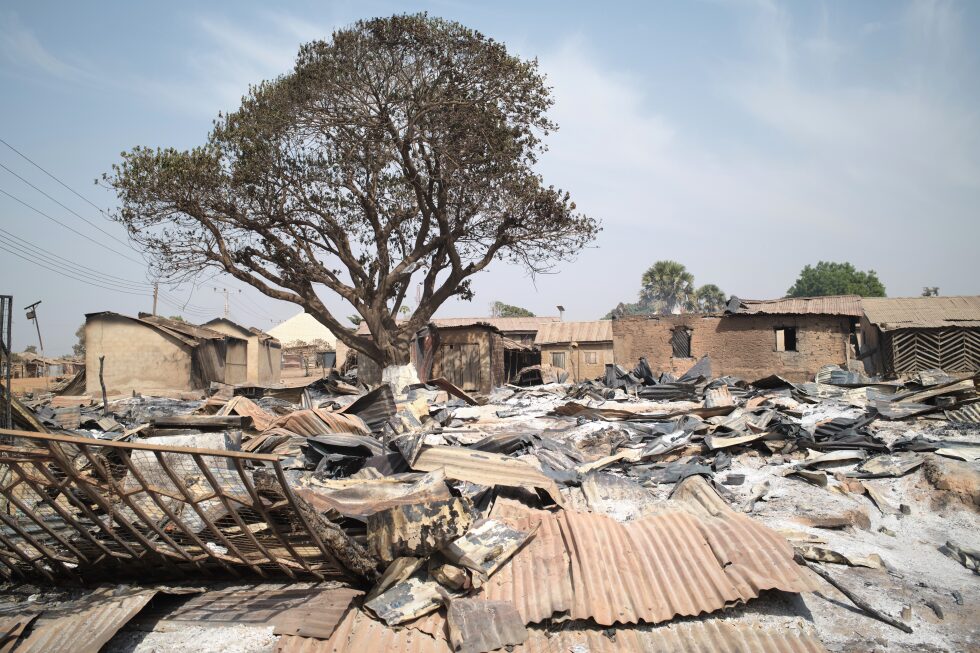
In a brutal display of escalating violence, extremist militants carried out a meticulously planned massacre across two remote Nigerian villages, leaving communities shattered and raising alarms about the southward spread of the nation’s security crisis. The attacks on Woro and Nuku in Kwara State unfolded over a terrifying ten-hour period, marking one of the deadliest incidents in Nigeria in recent months.
Prior to the assault, residents had received written warnings from militants proclaiming their intent to impose an extreme interpretation of Islam. These threats were largely disregarded until armed gunmen arrived on motorcycles, initiating a systematic campaign of violence. The attackers moved methodically from dwelling to dwelling, executing residents, setting structures ablaze, and ultimately desecrating local mosques by conducting fake prayer calls before murdering those who gathered.
Official reports confirm at least 162 fatalities, though survivors indicate the actual death toll approaches 200, with numerous others abducted. The aftermath revealed scenes of profound devastation: charred remains, abandoned properties, and a pervasive stench of blood hanging in the air. Distraught survivors, assisted by a handful of remaining villagers, undertook the grim task of collecting bodies using pickup trucks while struggling with insufficient manpower for proper burials.
This tragedy highlights critical failures in Nigeria’s security apparatus. Residents reported no intervention by security forces throughout the extended attack, despite police claims to the contrary. The incident reflects broader patterns of violence spreading from northern regions, where multiple armed groups—including Boko Haram, Islamic State West Africa Province (ISWAP), and various bandit factions—operate with increasing impunity.
The Nigerian government has responded by announcing new military operations in Kwara State and declaring a state of emergency to address the deteriorating security situation. International observers note the complexity of Nigeria’s security landscape, where violence transcends religious boundaries despite recent geopolitical accusations. The United States has engaged in military cooperation with Nigeria, conducting airstrikes against ISIS-affiliated militants and providing weaponry to combat the expanding threat.