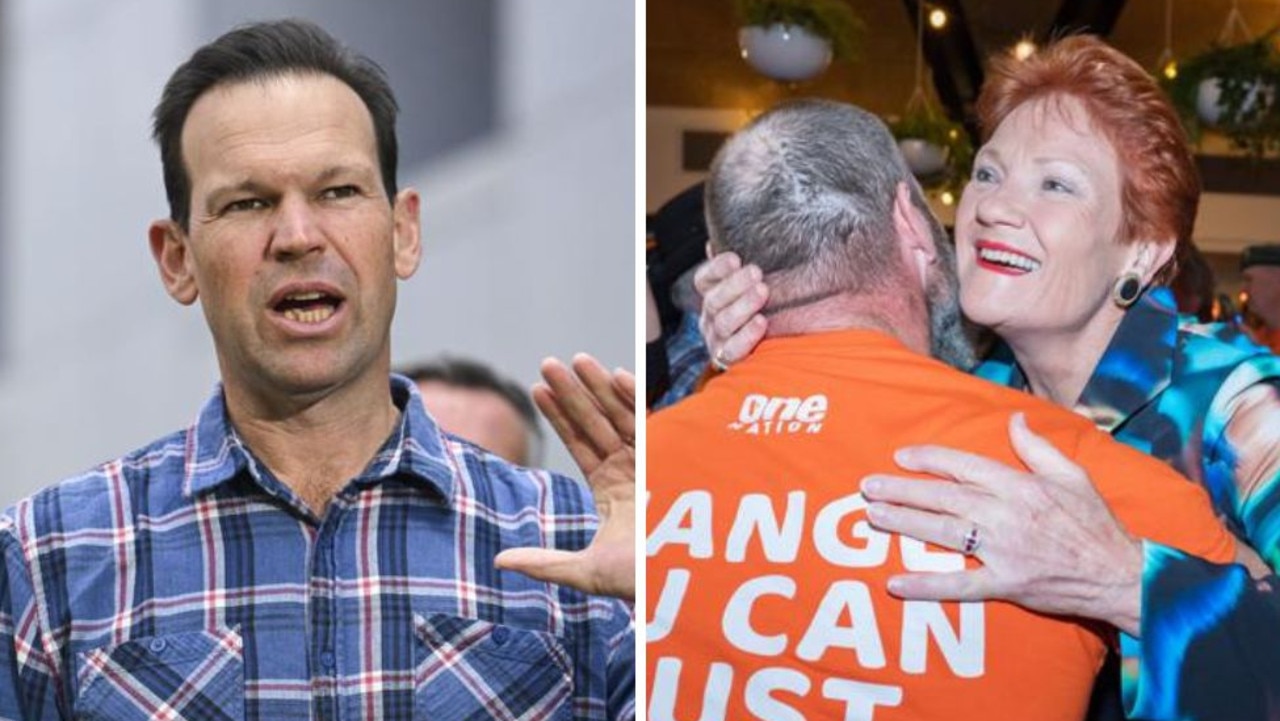
Australia’s main conservative opposition bloc, the Liberal-National Coalition, is refusing to back down from its demand that Prime Minister Anthony Albanese call an early federal election — even as independent polling projects the group faces an unprecedented electoral collapse that would see far-right party One Nation seize its position as the country’s official opposition. The demand comes in response to the ruling Labor government’s recent reversal of a pre-election pledge on key housing tax policies, a shift that has ignited fierce partisan debate across the nation’s capital.
Last week, joint polling conducted by the Redbridge Group and Accent Research painted a grim picture for the Coalition if an election were held this May. The survey projected that One Nation could capture as many as 59 lower house seats, ousting the Coalition from most of its electorates across the country, with only the Liberals holding onto seven seats and the Nationals losing all of their lower house representation entirely. The only states and territories where the Coalition would retain a foothold, the data found, are New South Wales, Victoria and the Northern Territory.
The projections are even more striking for two of the Coalition’s most high-profile figures: Opposition Leader Angus Taylor is given a 98% chance of losing his regional New South Wales seat of Hume to a One Nation challenger, while sitting Liberal MP Andrew Hastie of the Western Australian seat of Canning is projected to lose with 100% certainty. In the worst-case outcome laid out by the polling, One Nation would become the largest non-government party in federal parliament, taking the Coalition’s place as official opposition — an existential shift that would upend decades of two-party conservative opposition in Australian politics.
Yet even with these dire projections hanging over the bloc, senior Coalition leaders have maintained their call for an immediate vote, framing the Labor government’s tax policy change as a breach of electoral trust that justifies putting the issue to voters. “I’m not scared of the Australian people,” Nationals leader Matt Canavan told Sky News on Friday. “I’m no fool. Blind Freddy can see we face challenging political circumstances right now, but I also have great faith and courage in the common sense of the Australian people.”
Canavan acknowledged that the Coalition is in a period of deep political trouble, but argued the current headwinds are no more severe than the polling environment ahead of the previous 2022 federal election, when many surveys incorrectly predicted a Labor landslide win. “I think you’d go crazy if you spent your whole time citing your political strategy based on polls,” he said. “What I do is decide what I think is right for our country and fight like hell for it.”
For his part, Taylor echoed the criticism of Labor’s policy shift in an interview with 2GB radio, accusing the prime minister of breaking an explicit promise and attacking the reforms as a de facto tax on aspirational working and middle-class Australians. “It should have gone to an election and we will make sure it does go to an election … we will take to the next election a policy to repeal it,” Taylor said. “The arrogance of this Prime Minister to do what he has done and not take it to an election in the first place, because he hasn’t got the guts. In the end, he hasn’t got the courage, and that’s because he knows, under scrutiny, these policies will pull up at odds with what Australia needs right now.”
The policy controversy at the center of the dispute stems from a pre-election commitment Albanese made ahead of the 2022 federal vote, when he explicitly stated a re-elected Labor government would not make changes to negative gearing or the capital gains tax (CGT). But in the May 12 2024 federal budget, Treasurer Jim Chalmers confirmed the government would follow through on a full policy reversal: it will replace the current 50% CGT discount with an indexation model, and roll back negative gearing provisions for new housing construction.
Albanese and Chalmers have openly defended the shift, acknowledging they have arrived at a new policy position since the last election, but arguing the change is necessary to address growing intergenerational inequality in Australia’s overheated housing market, which has locked millions of younger and low-income Australians out of home ownership. The Coalition has already pledged to block the reform legislation in the Senate, where Labor does not hold a majority, leaving the government dependent on support from the Australian Greens to pass the bill.