Nestled in rural Georgia, the tiny town of Social Circle — population roughly 5,000, founded in 1832 and once famous for its iconic Blue Willow Inn buffet — has found itself at the center of an unlikely fight against federal immigration policy. What began as a quiet community shock last December, when a *Washington Post* report revealed the town’s vacant 1 million-square-foot industrial warehouse was marked as one of 23 new sites for U.S. Immigration and Customs Enforcement (ICE) detention centers, has evolved into a rare bipartisan movement that has forced the U.S. Department of Homeland Security (DHS) to hit pause on the project.
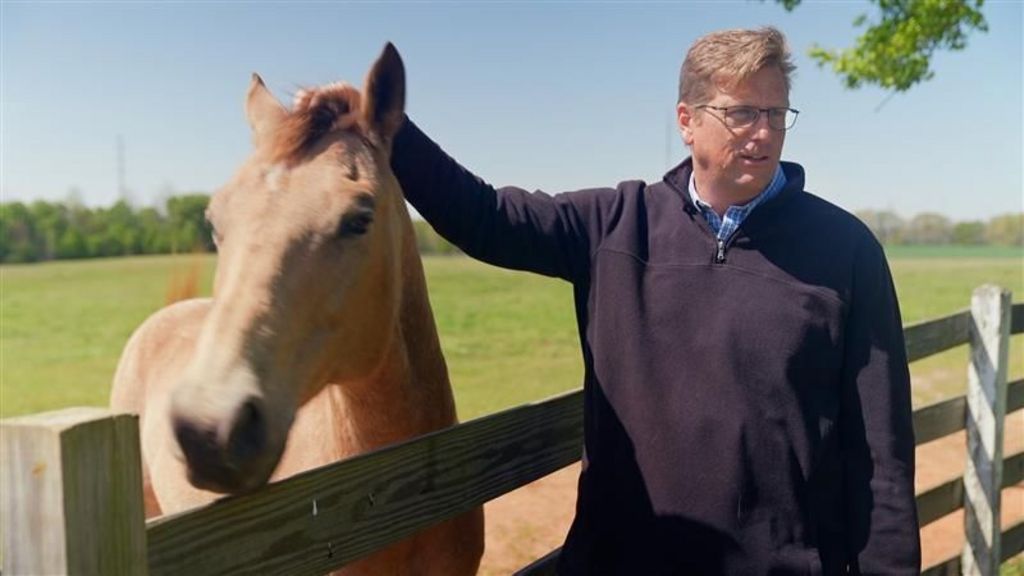
For months, the unlikeliest of allies have led the charge: Gareth Fenley, a local Democrat, and John Miller, a conservative horse farmer and Trump supporter whose property sits directly across the road from the proposed facility. Every morning, the pair drives the tree-lined, farm-dotted roads to the warehouse to check for any sign of construction work, breathing a quiet sigh of relief each time the sprawling gray structure remains untouched.
The proposal to convert the warehouse into a 10,000-person detention center was part of a broader $38.3 billion Trump administration plan to expand the national immigration detention network by opening dozens of new facilities across the country. What has made Social Circle’s resistance notable is that it crosses deep political lines: the town voted overwhelmingly for Trump in the most recent election, and most residents support his pledge to deport millions of undocumented immigrants. But shared concerns over strained infrastructure, community identity and public safety have united conservatives and progressives under a single slogan: *Detention center, not welcome here.*
“People have different reasons for aligning with the exact same message,” Fenley explained. For Fenley and other local progressives, the opposition stems from deep concern over human rights abuses widely reported in ICE facilities. Between January and early March 2026 alone, 13 immigrants have died in ICE custody, and civil rights groups have documented systemic issues including overcrowding, insufficient food and medical neglect. Proponents also argue the massive, empty industrial structure was never designed for long-term human habitation. For local conservatives like Miller, the core issue is basic infrastructure that simply cannot support a population that would triple the town’s size overnight.
Social Circle’s aging public utilities have emerged as the flashpoint of the fight. City Manager Eric Taylor explains the town is only permitted to draw 1 million gallons of water per day from the nearby Alcovy River, and summer demand already hits 800,000 gallons daily. The proposed detention center alone would require a full 1 million gallons per day — more than the entire town’s current peak usage. The town’s sewage system, first built in 1962 and in need of full replacement for 20 years, also lacks the capacity to handle the additional outflow from the facility.
In March, Taylor took the extraordinary step of locking the warehouse’s water meter, cutting off access to the city’s water supply and turning the one-stoplight town into the national face of resistance to the administration’s expansion plans. “If you open up that water meter, it gives them full access to the entire supply of the whole city,” Taylor told the BBC. “I can’t let that happen without knowing what the ultimate impact is going to be.”
Federal officials have floated workarounds: drilling private wells on the warehouse property or trucking in 1 million gallons of water daily. But local residents say both solutions create new problems. Drilling new wells would deplete the groundwater that sustains local farms, while hourly water truck traffic on Social Circle’s narrow two-lane roads would create constant congestion and safety hazards.
Despite early outreach from residents that raised these concerns, DHS purchased the vacant warehouse in February for nearly $130 million — more than four times the property’s initial estimated value. Since then, local residents have organized protests, meetings and advocacy campaigns, drawing support from Georgia’s Democratic Senator Raphael Warnock, whose office confirms it still has many unanswered questions about the project. Even Social Circle’s Republican U.S. Representative Mike Collins has publicly come out against the facility, writing, “Although I am aligned with the mission of ICE to detain and deport the criminal illegal aliens who have flooded across our border due to Joe Biden’s reckless policies, I agree with the community that Social Circle does not have the sufficient resources that this facility would require.”
Social Circle is not alone in its pushback. Just last week, Michigan filed a lawsuit to block a similar ICE facility conversion in Romulus, citing risks to nearby residential neighborhoods and flood hazards. New Jersey and Maryland have also filed lawsuits to halt planned detention projects, while residents in Merrimack, New Hampshire, successfully lobbied local officials to block a facility in their town.
Recent changes at the top of DHS have thrown the Social Circle project into limbo. Early in March, President Trump fired Homeland Security Secretary Kristi Noem following backlash over a controversial immigration raid in Minneapolis that left two U.S. citizens dead. He nominated Senator Markwayne Mullin to replace her, and DHS has since announced it is conducting a full review of all ongoing detention expansion policies under the new leadership. The department canceled a scheduled public meeting on the Social Circle project, and has signaled it is pausing plans to purchase additional warehouse sites across the country — though it has not clarified the future of sites like Social Circle’s that have already been purchased.
Local residents remain cautiously optimistic about the pause. The facility was originally scheduled to open in April, but no construction contracts have been awarded, and no conversion work has begun on the empty warehouse. “We’re anxious to see what happens out of this review. They have already pulled the trigger on it. They have already bought the building, so there’s going to be some effects no matter what’s done or not done,” Miller said. “We’re still whispering up the chain as much as we can to make sure that if they are indeed reviewing it, we can give input.”
For many long-time residents, the fight is as much about community identity as it is infrastructure or policy. Miller, who supports ICE’s core mission of immigration enforcement, acknowledged the contradiction of his opposition: “You can’t say that it’s something that’s needed and then not be somewhat willing to allow a facility to be there. But realistically, no community wants such a facility tarnishing the reputation of their town. I miss the days we were known for the Blue Willow Inn. Now we’re going to be known as Georgia’s greatest little detention center.”
For the time being, however, residents can breathe a little easier. The pause gives the small town extra time to continue its advocacy, and lets residents hold onto their quiet small-town life just a little longer. “The decision gives locals ‘a little time to breathe, since we wake up nearly every day wondering if today will be the day the trucks start rolling in,’” said local resident Valerie Walthart. “We can enjoy our small town life, for at least a little while longer, we hope.”