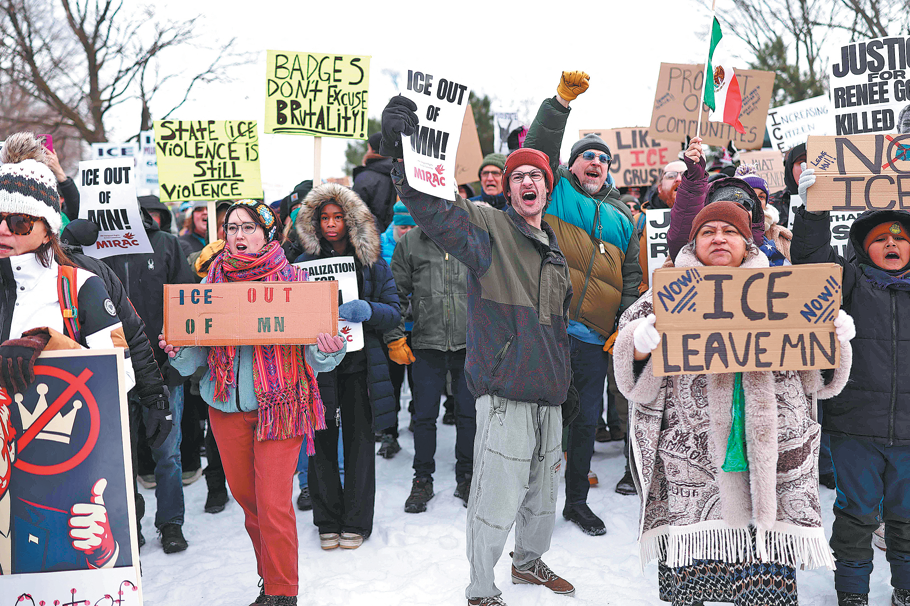
MINNEAPOLIS/NEW YORK — A massive wave of civil demonstrations swept across the United States this weekend as tens of thousands of protesters mobilized in response to the fatal shooting of Renee Nicole Good, a 37-year-old mother, by a U.S. Immigration and Customs Enforcement (ICE) agent. The incident, which occurred last Wednesday in Minneapolis, has ignited nationwide condemnation and intensified the ongoing debate surrounding federal immigration enforcement practices.
Under the unifying banner “ICE, Out for Good,” organizers coordinated more than 1,000 rallies and vigils from coast to coast. Major urban centers including New York, Washington D.C., Boston, Philadelphia, Chicago, and Seattle witnessed significant public gatherings. While some events featured candlelight vigils honoring Good’s memory, others involved direct marches to ICE field offices demanding structural reform and accountability.
The Minneapolis shooting has exposed deepening tensions between federal immigration authorities and local communities. The Trump administration maintains that the agent acted in self-defense, a claim vigorously contested by Minnesota officials who cite video evidence suggesting Good’s vehicle was moving away from the agent when shots were fired.
This tragedy occurred amidst the administration’s largest immigration operation to date, which deployed approximately 2,000 agents to Minneapolis and neighboring St. Paul. The 30-day enforcement initiative specifically targets alleged immigration violations within the local Somali immigrant community, creating what critics describe as an atmosphere of widespread fear and community distrust.
Civil rights organizations have amplified their criticisms following the incident. The American Civil Liberties Union characterized the shooting as symptomatic of broader systemic issues within federal immigration enforcement. Meanwhile, protest organizers emphasized that ICE’s actions have tangible human consequences affecting real families and communities.
The nationwide mobilization reflects growing public skepticism toward current immigration enforcement methodologies and signals increasing pressure on federal authorities to reconsider their approach to community interactions and deportation procedures.