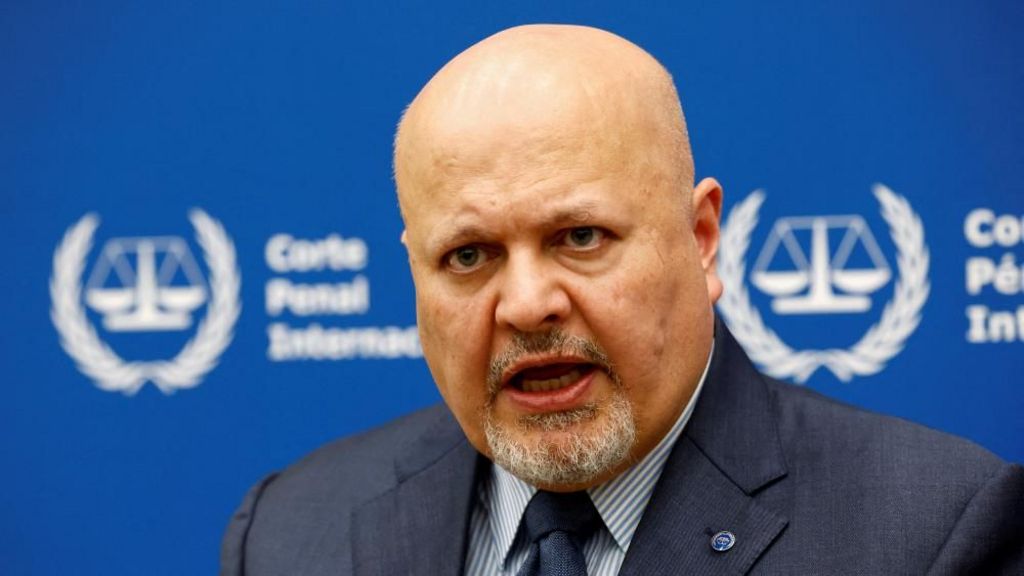
The International Criminal Court (ICC), the world’s permanent tribunal for prosecuting genocide, war crimes, and crimes against humanity, has announced the immediate suspension of its chief prosecutor Karim Khan amid a prolonged investigation into formal allegations of misconduct. The unprecedented step was taken by the Bureau of the Assembly of States Parties (ASP), the ICC’s top management oversight body, which has formally referred the entire case to the court’s 125 member nations for a final vote on Khan’s future. A special session of member states will be assembled as quickly as possible to deliberate on the outcome, with oversight officials emphasizing that the temporary suspension does not predetermine the final findings of the investigation.
Khan, a prominent British lawyer who has led the ICC’s prosecutorial division since 2021, has consistently denied every accusation of sexual misconduct leveled against him. His legal team has publicly decried the suspension decision as “unlawful, procedurally unfair and unsupported by evidence,” rejecting the findings that led to the action. Unconfirmed prior media reports have outlined the core accusations, which include claims of unwanted sexual touching and abuse of professional authority.
The controversy surrounding Khan stretches back more than a year, marking a period of prolonged institutional upheaval for the already strained ICC. The first formal allegations of sexual misconduct involving a female ICC staff member were submitted to the court by an anonymous third party in May 2024. The court’s Independent Oversight Mechanism (IOM) launched an initial probe, but the investigation was quickly closed after the alleged victim declined to participate in the process. The handling of this first inquiry drew heavy criticism from observers who argued the investigation was mismanaged, eroding public trust in the IOM’s ability to conduct a fair probe. Investigators ultimately concluded there was insufficient evidence to support the claims, closing the first case.
A second formal referral of the allegations was submitted in October 2024, prompting the ICC to transfer the matter to the United Nations Office of Internal Oversight Services (OIOS) for an independent, broader inquiry into claims of both sexual misconduct and abuse of authority. OIOS investigators carried out their probe between November 2024 and December 2025, collecting more than 5,000 pages of evidence and witness testimony over the 14-month investigation. The OIOS findings were then reviewed by an independent panel of three external judges, who were tasked with advising the ASP Bureau on whether Khan’s actions constituted serious misconduct, minor misconduct, or no misconduct at all, leading to the suspension decision announced this week.
Khan has already been on voluntary administrative leave since May 2025 as he worked to combat the allegations against him. Under ASP rules, upholding a finding of serious misconduct will require a two-thirds majority vote of the court’s 125 member states, followed by a separate standalone vote on whether to remove Khan from his position permanently.
The unfolding controversy has put the ICC under unprecedented global scrutiny at a moment when the institution is already facing extraordinary external and internal pressures. Within the Office of the Prosecutor, current staff members have publicly warned that allowing Khan to return to his role would cause irreversible damage to public confidence in the ICC, while also raising serious concerns about potential retaliation against staff members who spoke out during the investigation. On the other side of the debate, Khan’s supporters maintain that the multi-year investigation has failed to produce concrete evidence to substantiate any of the allegations against him, framing the process as a politically motivated smear campaign.
The controversy has also overlapped with already heightened geopolitical tensions surrounding the ICC, particularly in the wake of Khan’s high-profile decision to pursue arrest warrants for Israeli Prime Minister Benjamin Netanyahu and former Israeli Defense Minister Yoav Gallant over alleged war crimes committed during the ongoing conflict in Gaza. In response to that announcement, the United States imposed harsh economic sanctions on Khan, later expanding the penalties to include two of his deputy prosecutors, eight sitting ICC judges, the UN Special Rapporteur on the Occupied Palestinian Territories, and multiple Palestinian organizations that submitted evidence to the court supporting the arrest warrant application. It is important to note that the United States, Russia, and Israel are not member states of the ICC, though the court retains jurisdiction over crimes committed by the nationals of non-member states that occur on the territory of any ICC member nation.
Even if the Assembly of States Parties votes to remove Khan from office, legal analysts note the process is far from over. Khan has the right to challenge any removal decision before the Administrative Tribunal of the International Labour Organization (ILOAT), the independent body that hears employment-related appeals for all ICC staff. A legal challenge would almost certainly extend the process for months or even years, and if the tribunal finds that the disciplinary process against Khan was procedurally flawed, it could order his reinstatement to the position of chief prosecutor and award him significant financial compensation. Regardless of the final outcome of the vote and any subsequent legal battles, the controversy is widely expected to continue roiling the ICC for the foreseeable future, deepening existing divisions and testing the institution’s ability to uphold its mandate amid internal and external pressure.