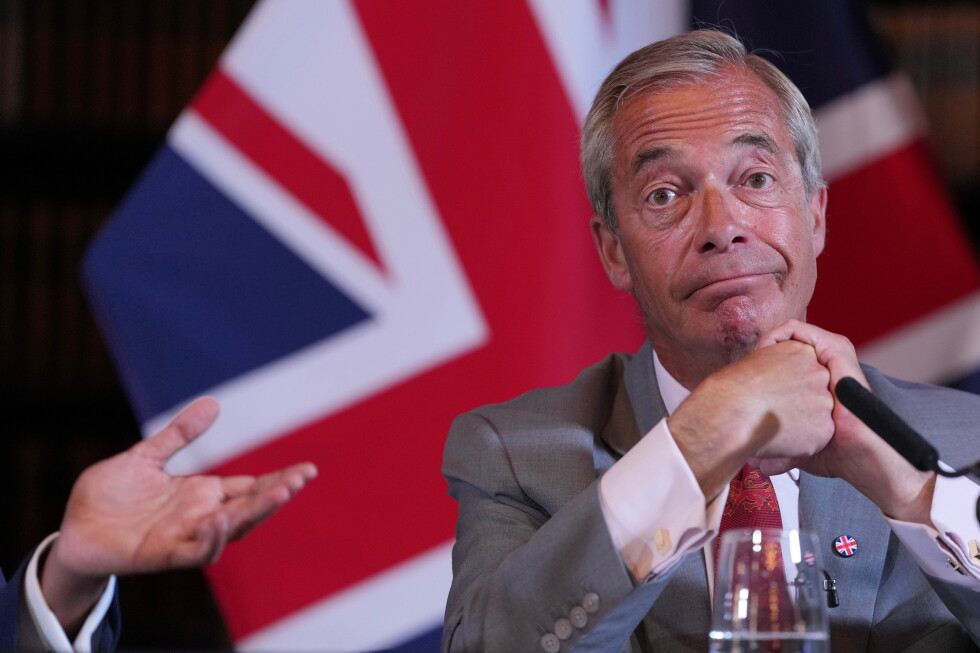
On the sun-kissed coast of eastern England, the quiet seaside town of Clacton is hosting one of the most surreal special elections in modern British political history. What began as a political gamble by Nigel Farage, the firebrand leader of anti-immigration party Reform UK and a long-time ally of former U.S. President Donald Trump, has turned into a contest that upends every expectation of how British elections work.
For nearly 20 years, Farage has built his entire political brand on positioning himself as an anti-establishment outsider, a plain-speaking populist who took on the elite to deliver Brexit, the defining political upheaval of 21st-century Britain. His charismatic, everyman persona—often described as “the bloke you’d have a pint with at the local pub”—fueled the 2016 Leave campaign’s unexpected referendum victory, and later shifted to galvanizing support around hardline policies on small boat migration across the English Channel. After eight failed attempts to win a seat in Parliament, Farage finally claimed Clacton, a deeply pro-Brexit constituency, in 2024.
But that victory brought unforeseen trouble: the scrutiny of public office that comes with being a lawmaker. Just months after taking his seat, Farage triggered a snap special election by resigning, amid growing awkward questions about his personal financial dealings and undeclared political donations. Farage framed the move as a chance for Clacton’s voters to deliver a verdict in a classic “people versus the establishment” showdown, but major parties across the political spectrum dismissed the election as a self-serving political stunt and refused to field candidates. That decision left an open field that defied all political norms.
Today, Farage—who has spent his career painting himself as an outsider taking on mainstream politics—finds himself cast as the prohibitive incumbent favorite, with his most high-profile opponent being Count Binface: a comedy candidate who portrays himself as a space alien with a trash can for a head, performed by comedian Jon Harvey. Farage is not laughing. He and his allies have framed Binface’s candidacy as yet another plot by the political establishment to undermine him, with Reform UK board member and former Farage press officer Gawain Towler claiming the establishment is using “every means available, fair and foul” to discredit the Reform leader before voters cast their ballots.
Count Binface, a veteran of joke British elections, has centered his entire platform on the contrast with Farage, with a key pledge that he “will not accept 5-million-pound gifts from crypto billionaires (on Earth)”—a clear jab at the controversies that sparked the election. Farage is currently under investigation by Britain’s parliamentary standards watchdog over an undeclared £5 million ($6.7 million) donation received in 2024 from Thailand-based cryptocurrency billionaire Christopher Harborne. Farage defends the transaction, arguing the sum was a personal gift to fund his personal security received before he took office, and thus not required to be declared under parliamentary rules, which mandate disclosure of gifts over £300 ($400) tied to political activity for incoming lawmakers.
A second investigation is also ongoing into Farage’s financial ties to George Cottrell, a 32-year-old aristocratic crypto and gambling entrepreneur who served eight months in a U.S. prison a decade ago after pleading guilty to fraud charges connected to a proposed money laundering scheme with undercover agents posing as drug traffickers. Cottrell remains a close ally of Farage, who has publicly stood by him, saying “I don’t ditch my allies” in comments from August 3. British media have reported that Cottrell and his mother have been interviewed by police as part of a broader probe into Reform UK donations, though no arrests have been made.
Beyond Binface, the Clacton ballot features 33 other candidates, ranging from single-issue pro-Rejoin EU campaigners to representatives of the long-running Official Monster Raving Loony Party, making it one of the most crowded candidate fields in recent British electoral history. While most political analysts predict Farage will win the seat comfortably, as he did in the 2024 general election, the outcome of the vote carries far broader implications for British politics than a single parliamentary seat.
If Farage secures victory, the parliamentary investigations into his finances will immediately resume. A finding of wrongdoing could result in his suspension from Parliament and force yet another special election for the constituency. For Reform UK, which has led national opinion polls for more than a year and currently holds just seven parliamentary seats (eight if Farage retains Clacton), the election comes at a tense moment for the party. After a long stretch of leading national polling, Reform has suffered a string of recent defeats in special elections, including a June loss that saw Labour’s Andy Burnham elected prime minister. Farage’s party is also facing pressure from multiple sides: Labour is enjoying a post-Burnham polling boost, Conservative leader Kemi Badenoch has stabilized her party after a rocky start, and the far-right Restore Britain party, which holds one seat and enjoys amplified social media reach via Elon Musk, is chipping away at Reform’s right-wing base.
Political analysts note that Farage’s greatest political strength has always been his charismatic outsider persona, but that same image has now created a trap for him. “It’s that very charismatic aspect of Farage that is both his strength and his weakness,” explained Simon Usherwood, professor of politics and international studies at the Open University. “He has fallen into a trap of thinking that he is somehow immune from the kind of scrutiny that would undo other politicians.”
There is also the long-running question of Farage’s commitment to holding office: the 62-year-old politician has a history of stepping down from the parties he founded, having resigned from both the UK Independence Party and its successor, the Brexit Party, over the past decade. Outside of his parliamentary salary, Farage has earned more than £2 million ($2.7 million) in the past two years from speaking engagements, media appearances, and promotional work—far outstripping his income as a lawmaker—leading to speculation he could walk away from politics again if the financial scrutiny continues to mount.
Martin Farr, a contemporary historian at Newcastle University, noted that regardless of the final vote count, the election will reinforce the existing perceptions of Farage among both supporters and opponents. “To his supporters, this will be an example of how he’s fearless and he’s prepared to fight against, as he will put it, the tyranny of the majority, the tyranny of the establishment,” Farr said. “To his opponents, it suggests a thin-skinned demagogue who has reacted petulantly to scrutiny and has been embarrassed by the fact that no one else has taken his stand seriously.”