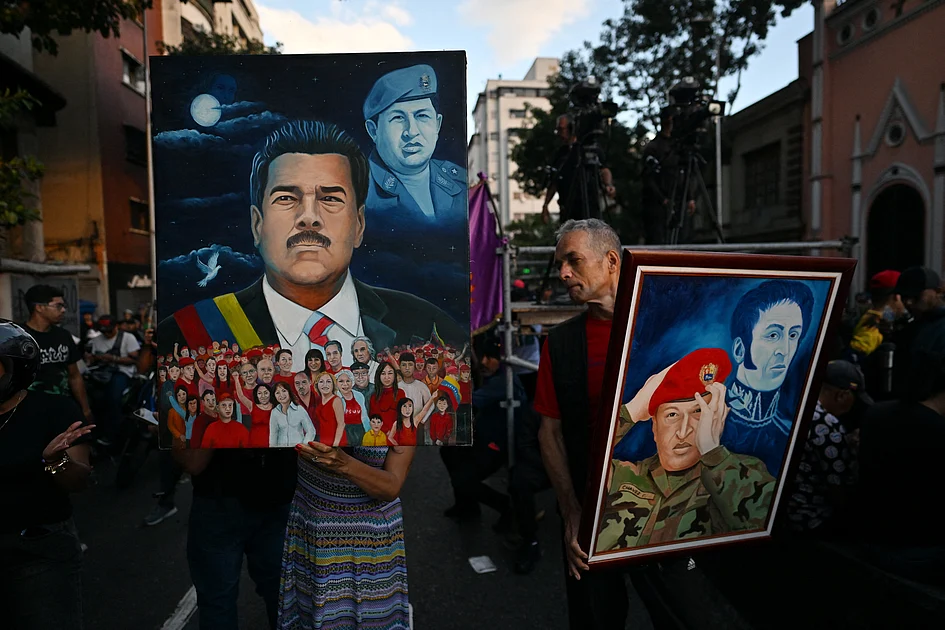
In a dramatic courtroom appearance that has ignited international controversy, ousted Venezuelan leader Nicolas Maduro vehemently pleaded not guilty to narco-trafficking and weapons charges in a New York federal court on Monday. The 63-year-old, who maintains he remains Venezuela’s legitimate president, denounced the US military operation that resulted in his capture from his Caracas residence as an illegal act of aggression.
The extraordinary legal proceedings follow a stunning weekend raid conducted by US commandos with aerial and naval support, marking an unprecedented escalation in Washington’s approach to regime change. President Donald Trump subsequently announced that the United States would assume control of Venezuela’s governance and its substantial but dilapidated oil infrastructure, triggering both domestic celebrations and widespread international condemnation.
Global leaders expressed alarm at the intervention, with UN Secretary-General Antonio Guterres emphasizing the fundamental importance of respecting “sovereignty, political independence and territorial integrity” during an emergency Security Council session. Mexican President Claudia Sheinbaum declared that the Americas “do not belong” to any single nation, while Colombian President Gustavo Petro issued a fiery statement suggesting he would “take up arms” against Trump’s administration.
Meanwhile, Venezuela’s political future remains uncertain as interim president Delcy Rodriguez, previously Maduro’s vice president, has signaled willingness to cooperate with US demands. The Trump administration has indicated preference for continuity with existing structures rather than installing previously recognized opposition figures.
The geopolitical shockwaves extend beyond Venezuela, with Trump simultaneously threatening action against Cuba and reiterating US claims to Greenland. Financial markets responded positively to the prospect of accessing Venezuela’s vast oil reserves, with shares in major US energy corporations surging significantly.
Casualty reports from the military operation continue to emerge, with Cuban officials reporting 32 nationals killed during the assault. The US has acknowledged some service members were wounded but confirmed no American fatalities.
Outside the Manhattan courthouse, polarized demonstrations reflected the deep divisions surrounding the intervention, with protesters both condemning and celebrating the unprecedented shift in US foreign policy.