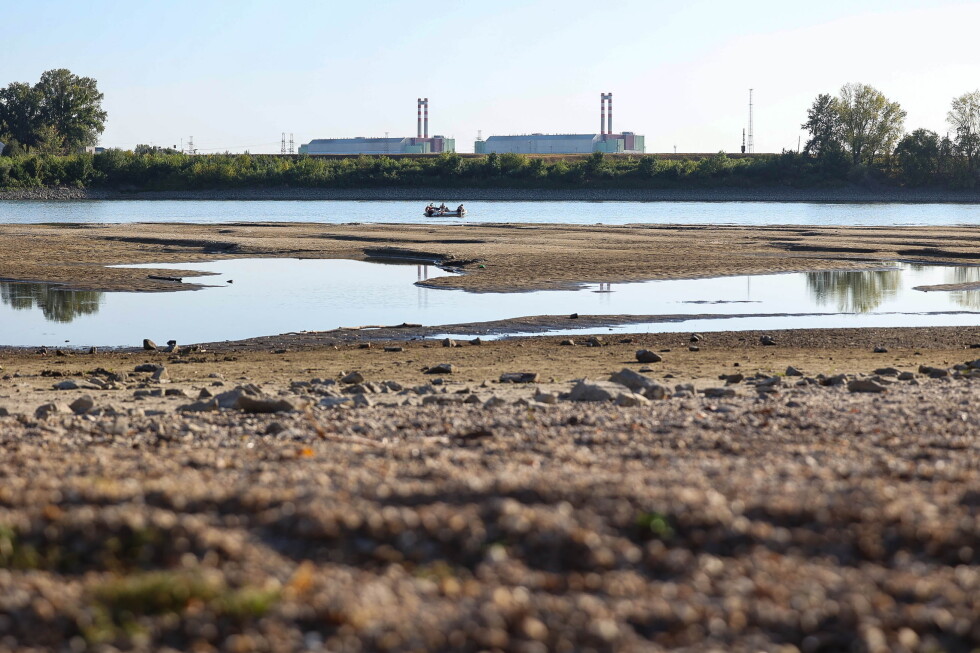
BUDAPEST, Hungary — A historic unprecedented event is set to unfold in Hungary’s energy sector this week, as the country’s sole nuclear power plant will power down completely for the first time in its 40-plus year operational history, driven by crippling drought that has pushed Danube River water levels to all-time lows. Prime Minister Péter Magyar confirmed the development during an on-site press conference at the Paks facility Friday, warning that the plant could remain offline for multiple weeks with no meaningful rainfall forecast to reverse the river’s steady decline.
Located roughly 90 kilometers south of Budapest, the Soviet-built, four-reactor Paks plant already operates at less than 50% of its standard generating capacity. Currently producing just 965 megawatts of electricity, far below its typical 2,000 megawatt output, the facility relies on Danube water to cool its active reactors. With the river dropping to unprecedented lows, the plant’s pumping infrastructure can no longer draw enough cooling water to maintain safe operations.
Magyar outlined that further gradual output cuts would begin later Friday, with a full shutdown of the entire facility expected to be completed by either Tuesday or Wednesday. The prime minister emphasized that the controlled shutdown will follow all strict safety protocols, stressing there is no elevated risk to public safety or surrounding ecosystems from the planned outage.
For context, Paks supplies nearly half of Hungary’s total annual electricity generation, making its impending 44-year first shutdown a major test of the country’s energy stability. The crisis is just the latest symptom of a months-long prolonged drought that has gripped Hungary and much of Central Europe, hammering tourism, agriculture, and industrial operations while forcing communities to confront the tangible impacts of accelerating climate change. Current meteorological projections offer no immediate relief: no significant precipitation is forecast in the region for the coming days, and even weeks, meaning Danube water levels are not expected to rebound anytime soon.
Magyar noted that over the past two decades, Danube water levels have only risen during the month of August three times. Current projections indicate the water level at Paks could drop as low as negative 144 centimeters, a measurement that sits far below the 2018 previous record low of negative 98 centimeters. It is important to clarify that negative readings do not mean the river is dry; rather, they indicate the water level has fallen below the gauge’s standard zero reference point. Per Magyar, a full plant shutdown is triggered when levels drop to negative 134 centimeters.
To mitigate potential energy shortages, the Hungarian government has issued a formal request to large energy-intensive companies to voluntarily cut their electricity consumption, particularly during peak demand hours between 5 p.m. and 10 p.m. So far, the country’s leading energy conglomerate MOL has already pledged to slash its power usage by 65 megawatt-hours, representing a 40% reduction from its typical consumption levels.
Beyond asking private firms for cooperation, Magyar announced additional energy conservation measures from the government: his political bloc has recommended suspending upcoming parliamentary sessions scheduled for Monday and Tuesday to cut unnecessary energy use, and he has issued an order requiring all state institutions to shut off all decorative outdoor and indoor lighting by Monday at the latest.