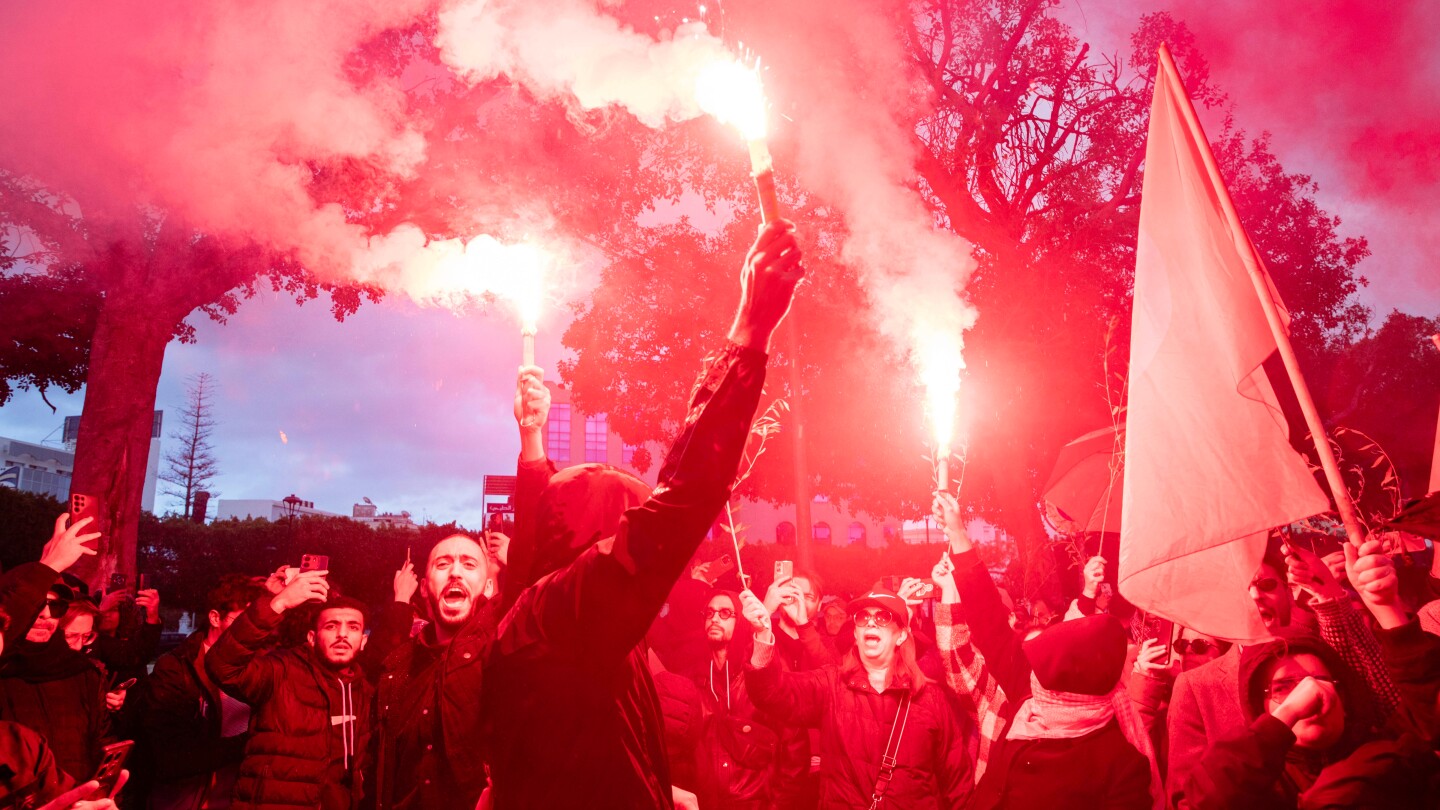
In a powerful display of dissent, thousands of Tunisians flooded the streets of downtown Tunis on Saturday to protest against President Kais Saied’s increasingly authoritarian governance. The rally, organized under the slogan “Against Injustice,” united families of political detainees, activists, and citizens from diverse ideological backgrounds. Over 1,000 demonstrators, some clad in black, chanted slogans such as “The people want to overthrow the regime,” “What a great country! Oppression and tyranny!” and “No fear no terror, the street belongs to the people.” The protest reflects a broader wave of unrest across Tunisia, fueled by political repression and economic instability under Saied’s rule. Earlier in the week, journalists staged demonstrations against the government’s crackdown on press freedom and the suspension of prominent civil society organizations. Protesters also condemned Saied’s interference in the judiciary and accused him of using law enforcement to target political opponents. Ayoub Amara, one of the protest organizers, emphasized the rally’s dual focus: highlighting the plight of political prisoners and addressing broader grievances, including environmental protests in Gabes and arbitrary arrests under anti-terrorism laws. Monia Brahim, the wife of jailed opposition figure Abdelhamid Jlassi, joined the march, stating, “Many Tunisians are facing deep injustice.” She asserted that political prisoners are being held hostage for their principles and activism. Among the detainees is constitutional law professor Jawher Ben Mbarek, who has been on a hunger strike for over 20 days. Human Rights Watch has raised alarms over the escalating repression, noting that over 50 individuals, including politicians, lawyers, journalists, and activists, have been arbitrarily arrested or prosecuted since late 2022. The rights group criticized the misuse of anti-terrorism and cybercrime laws to suppress dissent. Saied, who suspended parliament and centralized power in July 2021, claims his actions are necessary to combat corruption and restore state institutions. However, critics argue that his measures have undermined Tunisia’s democratic progress since the 2011 revolution.