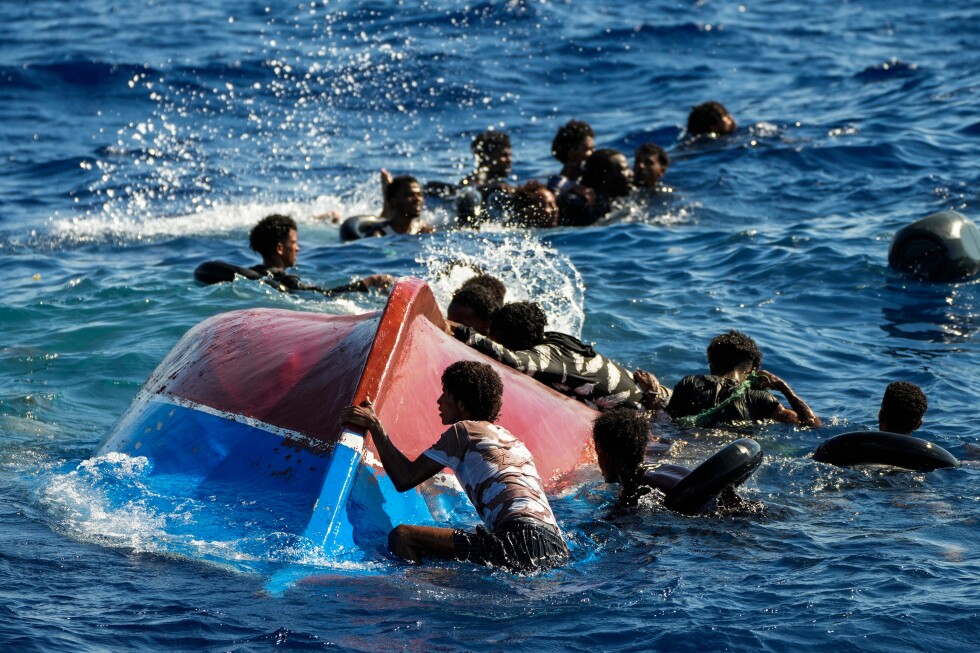
A humanitarian catastrophe is unfolding across the Mediterranean Sea as migrants attempting to reach European shores vanish in record numbers through what aid organizations term ‘invisible shipwrecks.’ Government authorities in Italy, Tunisia, and Malta have systematically restricted information flow regarding migrant rescues and maritime disasters along the world’s deadliest migration route.
The first quarter of 2026 has witnessed an unprecedented death toll, with the United Nations’ International Organization for Migration confirming at least 682 missing persons as of March 16—the deadliest opening period ever recorded. However, human rights groups assert the actual figure is substantially higher due to systematic underreporting and verification challenges.
This information vacuum intensified following Cyclone Harry’s devastating impact in late January, which generated 9-meter waves and 100 kph winds across the central Mediterranean. Despite reports from Refugees in Libya indicating over 1,000 missing migrants after the storm, national authorities have neither confirmed nor denied these allegations.
Julia Black, who leads IOM’s Missing Migrants Project, revealed the organization has created a secondary dataset for unverifiable cases due to the escalating information gap. ‘Last year, at least 1,500 reported missing persons could not be confirmed,’ Black stated, noting that 2026 has already produced over 400 such cases.
The Associated Press conducted multiple inquiries with Italian, Tunisian, and Maltese authorities regarding their rescue policies and information disclosure practices. None provided substantive responses.
Matteo Villa, migration researcher at the Italian Institute for International Political Studies, characterized the situation as ‘a strategy of silence’ designed to suppress public awareness. This opacity extends to Tunisia, which ceased sharing interception data in 2024 after previously publicizing numbers under a EU migration control agreement.
The human impact is devastating for families awaiting news. ‘Europe should know that these people who got drowned in the sea have family members, have dreams, have passions,’ expressed Josephus Thomas, a Sierra Leonean migrant community leader in Tunisia.
While Frontex, the EU border surveillance agency, reported spotting eight migrant vessels during the cyclone period, the fate of two boats carrying approximately 160 people remains unknown. Only one survivor has been confirmed from the Cyclone Harry period—a man rescued by merchant vessels who reported traveling with 50 others.