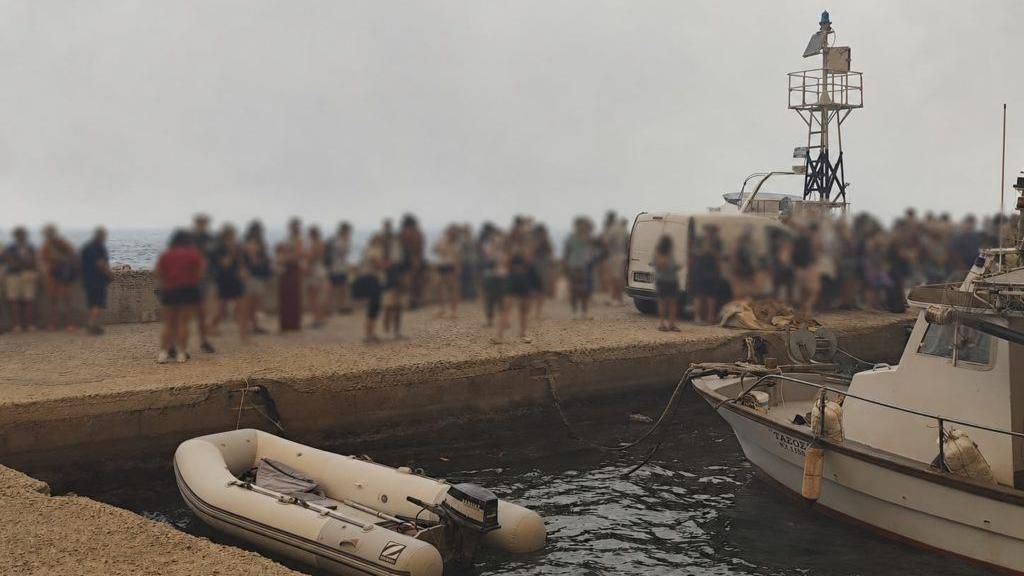
A fresh wave of destructive wildfires fanned by high winds has forced hundreds of people, the majority of whom are international tourists, to flee coastal communities in central Greece, marking the latest crisis in a season of record-breaking blazes across Southern Europe. The inferno first ignited early Friday near the small town of Agios Vasileios in the Viotia region, spreading with unexpected speed when gusty winds pushed flames toward the coast and trapped residents and visitors against the sea. Local Greek news agency Amna, quoting senior fire service officials, reports that more than 200 evacuees have already been extracted by sea, with an additional 100 people scheduled for rescue in the coming hours as emergency teams work to clear every last person from the fire-encircled town. Authorities had initially ordered the town’s population to move inland ahead of the fire’s advance, but rapidly shifting wind patterns cut off that escape route, leaving emergency planners with no option but to launch a maritime evacuation. A second large blaze broke out just a short distance along the central Greek coast, burning through hundreds of acres of agricultural farmland before advancing into the rural town of Xironomi. This fresh outbreak comes as firefighting teams across Greece have been stretched thin by simultaneous blazes across multiple popular tourist islands. On Crete, crews have spent days battling a massive wildfire that has already scorched thousands of hectares of land and forced the temporary evacuation of 8,000 local residents and visitors; teams are still working to extinguish persistent hotspots that threaten to reignite. Smaller but still dangerous fires have also broken out on the Aegean islands of Paros, Andros, and Kalymnos, stretching national fire resources even thinner. Greece is far from alone in facing this unprecedented wildfire crisis: a months-long string of record-breaking heatwaves across Southern Europe has created near-perfect conditions for large blazes to ignite and spread, turning much of the region into a tinderbox. In neighboring Portugal and Spain, firefighting crews are still working to contain blazes that have already burned thousands of hectares of forest, farmland, and vineyards, and a new heatwave rolling through the region this week has raised fears that a large blaze outside Madrid could reignite after being partially contained. Experts point to a combination of long-term climate change and short-term seasonal conditions that have amplified wildfire risk across the continent. While nearly all wildfires are triggered by human activity, whether accidental or intentional, rising average global temperatures driven by climate change have extended wildfire seasons and made extreme fire conditions far more common. A mild, wet winter across much of Southern Europe encouraged lush vegetation growth across the landscape, and that extra vegetation has since completely dried out amid back-to-back heatwaves, creating an abundant supply of flammable fuel for any fire that starts. EU statistical data confirms the severity of this year’s fire season: as of late July 2026, more than 200,000 hectares of land have burned in Spain alone, an area roughly five times the average amount burned by this point in a typical year. Portugal has also seen far more fire activity than the historical average. In northern Portugal’s Valpaços region, hundreds of firefighters have been battling a single large blaze since Tuesday that has torn through 15,000 hectares of land, including commercially valuable vineyards and olive groves. Portuguese news agency Lusa reports five people have already been injured in the fire. In Spain, the country’s largest ever recorded wildfire, burning in the Ávila region, has finally been stabilized after weeks of effort, while a separate blaze that scorched 66,000 hectares west of Madrid is fully contained. Even with these gains, Spanish officials have warned that high temperatures and dry conditions will keep the risk of new or rekindled fires at critical levels across most of the country through at least the end of the weekend. The wildfire crisis has also spread to Turkey’s Mediterranean coastline, where four active blazes are burning as of Friday, including one near the major tourist hub of Antalya. Turkey’s agricultural ministry reports that 206 separate wildfires have broken out across the country since just Wednesday, overwhelming local firefighting resources.