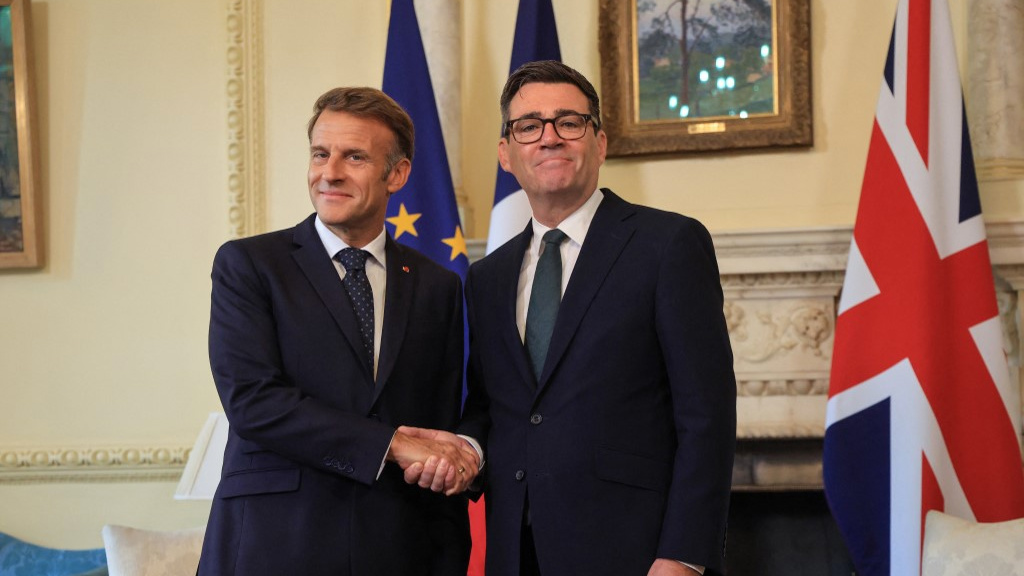
For weeks leading up to a historic diplomatic announcement, tensions simmered between the United Kingdom and its closest transatlantic ally over a planned UK crackdown on illegal Israeli settlements in the occupied Palestinian territories. British media had been saturated with reports that the Trump administration was gearing up to forcefully block the Andy Burnham-led UK government’s sanctions plan, sparking fierce domestic pushback from opposition lawmakers and pundits who warned the move would provoke Washington and leave Britain isolated on the global stage.
Behind closed doors, the pressure campaign was real: senior government sources confirmed to Middle East Eye that U.S. officials had repeatedly lobbied the Burnham government to abandon the plan ahead of Tuesday’s scheduled announcement. The pressure campaign reached extraordinary heights last week, when U.S. President Donald Trump openly suggested the U.S. would not defend the Falkland Islands if Argentina launched an invasion, a comment widely interpreted as a veiled threat tied to the settlement dispute. Over the weekend, U.S. Ambassador to Israel Mike Huckabee escalated the rhetoric further, accusing the British government of “Jew hate” and warning that U.S. states could retaliate by sanctioning British firms.
But when Burnham spoke directly with Trump to outline the UK’s plan on Monday afternoon, the expected pushback never materialized. What Washington had not anticipated was that Burnham and Foreign Secretary Ed Miliband had quietly built a broad international coalition ahead of the announcement: France and Canada, both core U.S. allies, had already committed to enacting their own bans on Israeli settlement goods alongside the UK. In total, 12 Western nations signed on to a joint public statement released Tuesday: alongside the UK, France and Canada, Denmark, Finland, Iceland, Ireland, Norway, Poland, Portugal, Spain and Sweden added their signatures. The document confirmed participating nations either intended to introduce national trade restrictions on illegal settlement goods, back broader European Union-level restrictions, or were actively evaluating such measures in line with domestic legislative processes.
In a landmark address to UK Parliament on Tuesday, Miliband went further than any Western government has gone in recent decades, formally recognizing the ongoing ethnic cleansing of Palestinians in the occupied West Bank, declaring Israel’s 57-year occupation of Palestinian territory illegal under international law, and announcing a full package of measures: comprehensive sanctions on Israeli settlements, plus an immediate ban on all arms licenses and exports that could “materially contribute to the occupation.”
Unsurprisingly, Israel responded with immediate, fierce anger. Israeli Foreign Minister Gideon Saar announced a slate of retaliatory measures, including closing the British consulate in East Jerusalem and banning 11 sitting British MPs from entering the country. Most notably, however, the U.S. reaction was far quieter than observers had predicted. On a working trip to Colombia, Secretary of State Marco Rubio told reporters the administration had been notified of London’s decision in advance, acknowledged the UK’s rationale, and stated only that the U.S. shared the goal of avoiding renewed violence and rising tensions in the already volatile West Bank. Significantly, Rubio declined to issue any formal criticism of the British move. Trump has not yet commented publicly on the decision, a silence that itself signals reluctance to publicly condemn three key U.S. allies simultaneously – even amid existing trade tensions with Canada.
While British diplomats privately told U.S. counterparts that the new sanctions are largely symbolic, with too small an economic footprint to force an immediate shift in Israeli policy, analysts widely frame the move as a consequential turning point with broad geopolitical implications. For the UK, the decision marks a stark shift in official rhetoric: the explicit recognition of ethnic cleansing and war crimes in Gaza and the West Bank sets a new standard for Western governments, one that government sources say is just the first step in a broader policy shift toward the Israeli-Palestinian conflict.
The coordinated 12-nation action also represents a major diplomatic rebuke of long-standing U.S. policy in the Middle East, and signals a tectonic shift in Western attitudes toward Israeli settlement expansion. Even historically pro-Israel Western European nations like the UK and France have now taken formal punitive action, leaving Germany as an outlier in its continued strong support for the Netanyahu government, a shift that has left Israeli officials particularly outraged.
Beyond the Middle East, the coordinated effort also puts into practice the so-called “Carney Doctrine” coined by Canadian Prime Minister Mark Carney, which calls for a coalition of middle-sized global powers to act as an independent counterweight to larger great power influence – particularly the United States. By successfully building and leading this coalition on an issue where Washington holds an opposing position, the UK has effectively projected independent soft power and established itself as an agenda-setting global actor. The move has already won broad praise from Arab nations: Qatar and Jordan, both key British partners in the region, were quick to welcome the sanctions, followed shortly by the Arab League. Far from isolating Britain, as domestic opposition leaders warned, the bold stance is expected to boost the UK’s global standing, particularly across the Middle East.
For now, the Trump administration has held back from public rebuke. It remains to be seen whether that stance will hold in the coming weeks, and if pressure does mount, whether Burnham and Miliband will maintain their ground in what would be an unprecedented test of post-Brexit British diplomatic independence.