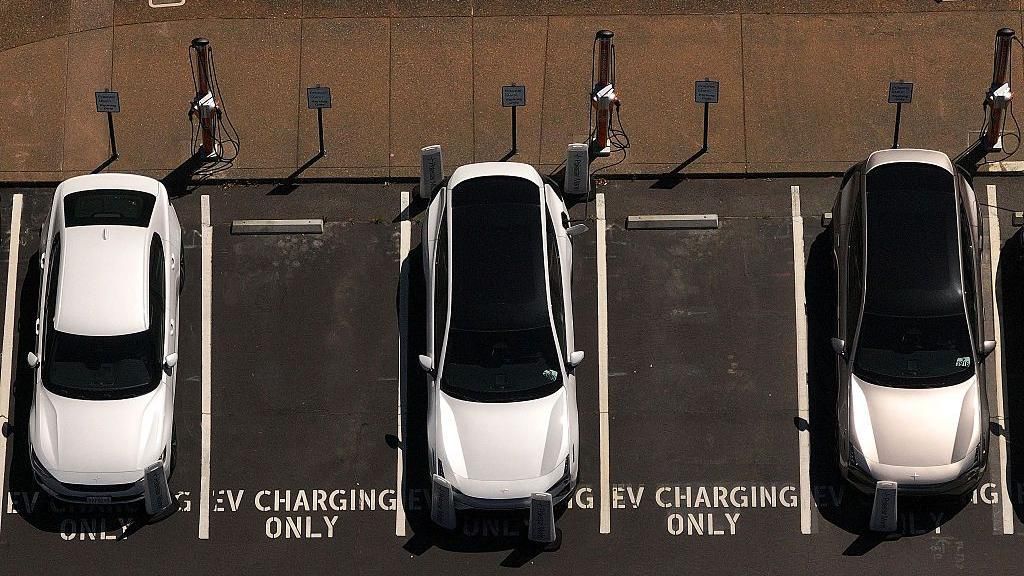
The US electric vehicle (EV) market has shown significant growth in recent years, with sales of battery-powered cars reaching 1.2 million in 2023—a fivefold increase from just four years prior. Hybrid vehicle sales have also tripled, and EVs accounted for 10% of total car sales in August, a record high according to S&P Global Mobility. Major automakers like General Motors, Ford, and Tesla reported record EV sales in the past quarter, providing a bright spot in an industry grappling with high interest rates and economic uncertainty. However, analysts attribute this surge to a rush to purchase before the expiration of a $7,500 federal tax credit for EVs, which ended in September. Without this incentive, automakers anticipate a sharp decline in demand. Ford CEO Jim Farley warned that the EV industry will shrink significantly, while General Motors CFO Paul Jacobson predicted a steep drop in demand. Despite recent gains, the US lags behind global leaders in EV adoption. For instance, EVs and hybrids accounted for nearly 30% of sales in the UK and 20% in Europe last year, while China saw EVs make up almost half of its car market. Norway and Nepal have even higher adoption rates. In contrast, the US has been hindered by weaker government support compared to other regions. Former President Joe Biden’s administration implemented measures to boost EV adoption, including stricter emissions rules, fleet purchases, and investments in charging infrastructure. However, former President Donald Trump has criticized these policies, calling climate change a ‘con job’ and advocating for market-driven decisions. High tariffs on Chinese-made cars, supported by both administrations, have also limited competition in the US market. Analysts warn that the combination of expiring subsidies and new tariffs will make 2026 a challenging year for the industry, with overall car sales expected to decline by 2%. While some automakers, like Hyundai, are lowering prices to offset the loss of incentives, others, such as Tesla, are increasing costs. Researchers caution that Trump’s policy changes could further reduce investments in EVs, leaving the US with significant ground to make up in the global EV race.